
Zimbabwe vs Afghanistan Test Draw: Sharjah Scores and Next Match
Review Zimbabwe's drawn Sharjah Test, the innings scores, Ervine and Madhevere milestones, and the next fixture without confusing a lead with a win.
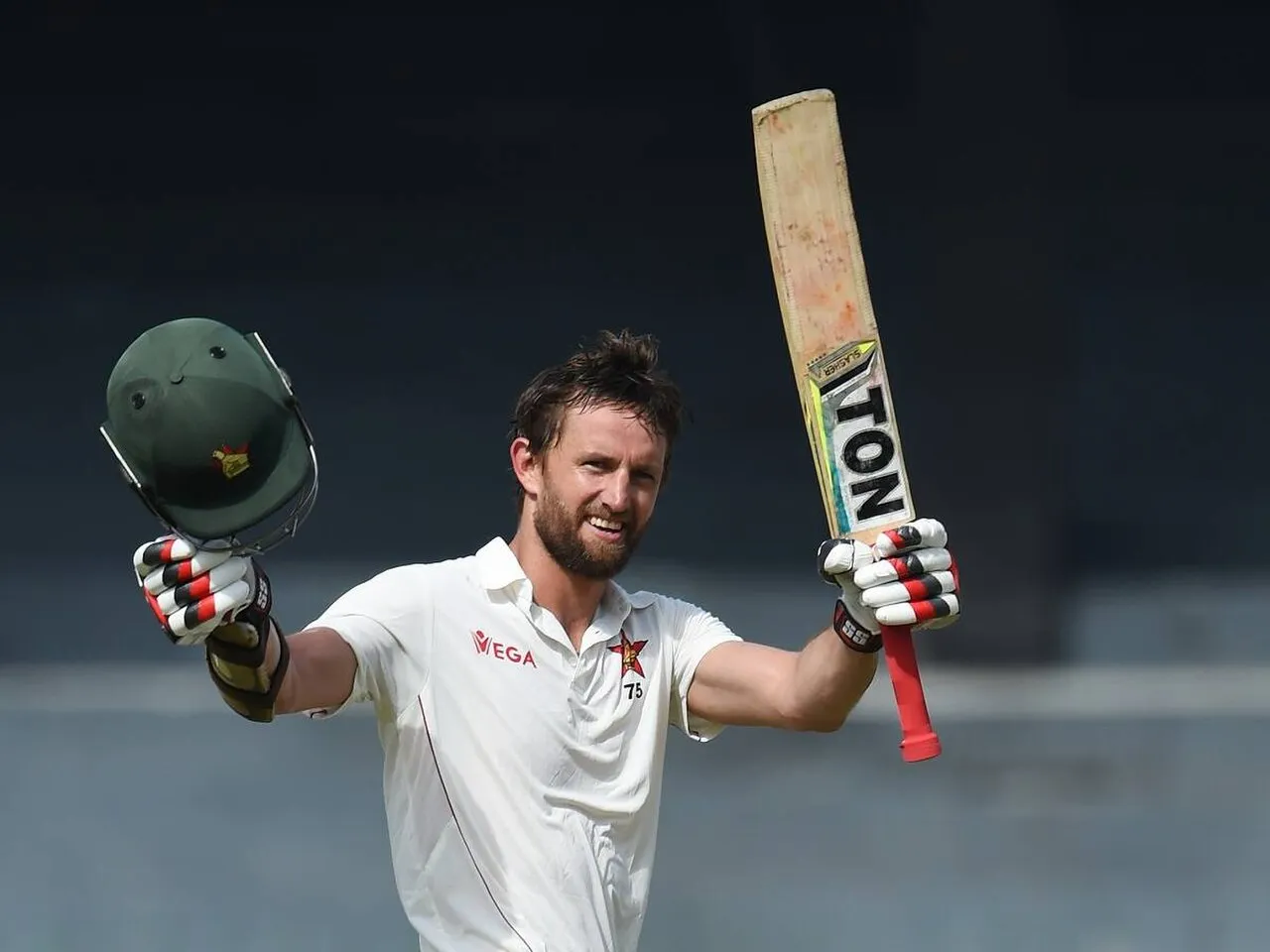
Zimbabwe's Sharjah Test draw: the result and the story behind the numbers
Zimbabwe and Afghanistan drew the first Test at Sharjah on 9 November 2026. Zimbabwe made 504 and 523/5, while Afghanistan scored 514. Craig Ervine finished unbeaten on 206 and Wessly Madhevere on 100. The large totals describe a remarkable batting match, but they do not turn the official draw into a victory.
This guide was checked on 11 November 2026. It separates the completed first Test from the second match scheduled for 13–17 November at the same ground. It also explains how to read a two-innings score, a partnership and the difference between a lead and a winning margin. Those distinctions make the result easier to understand than a headline built around one large number.
The next match's exact Pakistan start time is not stated here because the available listings do not agree consistently. Confirm the latest board or organizer listing before setting a reminder. No second-Test result, playing eleven or live score is being claimed in this article.
The completed first-Test scorecard at a glance
| Item | Verified detail |
|---|---|
| Match | Afghanistan vs Zimbabwe, first Test |
| Venue | Sharjah Cricket Stadium |
| Dates | 5–9 November 2026 |
| Zimbabwe first innings | 504 all out |
| Afghanistan first innings | 514 all out |
| Zimbabwe second innings | 523/5 |
| Official result | Match drawn |
A scorecard needs an innings label as well as a team name. Without it, a reader may compare one side's second innings with the other's first and mistake the difference for the result. The separate rows above preserve the order and show why simply selecting the largest figure is not enough.
Some score services use a different display convention for wickets and runs. A notation written as 5/523 means five wickets for 523 runs, equivalent to 523/5 in the convention used here. Check the provider's labels before assuming that differently arranged numbers describe different performances.
The batting landmarks that stand out
The match report identifies an unbeaten sixth-wicket partnership of 208 between Ervine and Madhevere, a Zimbabwe record for that wicket. It also records Antum Naqvi's debut contribution of 61. The organizer describes the team's twin totals above 500 as a first in Test cricket, making the innings pattern a central part of its report.
For a reader, a record claim has several components: the team or player, the format, the category and the time at which it is asserted. “A partnership record” is incomplete unless you know which wicket, which team and which form of cricket it concerns. Preserve those limits when sharing a summary.
The same care applies to an individual milestone. A century, an unbeaten century and a maiden Test century describe related but different things. The extra words are not decoration; they tell you whether the batter was dismissed and what comparison is being made with earlier performances in that format.
An individual score also sits inside a team innings. A batter's total can be substantial without constituting most of the runs, and a useful innings can include contributions that fall short of a round-number landmark. Read the whole scorecard before reducing a team performance to one name.
Why two high totals can still produce a draw
Test cricket is not decided by choosing whichever side has accumulated the most runs when time expires. The match must reach a recognised result within its conditions. When it does not, a draw is possible even though the two teams have very different aggregate totals at the end.
In this match, the official status is the starting point: drawn. It should not be replaced with an invented margin based on subtraction. Score arithmetic can explain the position at the close, but the result field tells you how the completed contest was recorded.
Think of an innings score as a state of play rather than a verdict. It tells you what happened during a particular turn at batting. To understand the match outcome, you also need the innings sequence and the official status. Leaving those elements out can make a mathematically correct observation into a misleading headline.
This distinction matters especially for readers familiar mainly with limited-overs cricket. A large total in one format can lead to assumptions about a chase in another. Before interpreting a scoreboard, identify the format and whether the match is complete, still in progress or awaiting another innings.
Work out the lead without inventing a target
The first-innings comparison is straightforward: 514 minus 504 gives Afghanistan a lead of ten. To calculate the position after Zimbabwe's recorded second innings, add its two totals and subtract Afghanistan's first innings. The arithmetic is 504 plus 523 minus 514, giving a lead of 513.
That is a calculation of the position, not a statement that Zimbabwe won by 513 runs. It is also not evidence that a particular chase was announced. A lead, a target and a winning margin are different labels, and using the right label is part of reporting the number correctly.
For a separate invented teaching example, imagine Team A making 300 and Team B replying with 320. Team A begins its second innings twenty behind. If it then scores 150, its aggregate lead becomes 130. The calculation describes the relationship between the innings; it does not establish that the match has reached a final result.
Try doing the calculation on paper before looking at a summary. Write each innings on its own line, identify which team you are measuring, and label the answer. A clear label prevents an otherwise correct number from being copied into the wrong part of a match report.
How to interpret an unbeaten score
An asterisk after a batter's score normally indicates that the player was not out at the relevant endpoint. It does not mean the innings was flawless, that every run came in boundaries, or that the batter completed an entire match without facing difficulty. Those are separate claims requiring separate evidence.
A useful reading habit is to ask what the endpoint represents. Is the display a completed innings, the end of a day's play or a live update? A not-out score can appear in each setting. The surrounding status gives the notation its context.
When describing a milestone, avoid turning the figure into a complete technical assessment. The score alone does not show which deliveries were defended, how often an edge occurred, or exactly how the field was set. A scorecard supports some observations directly; detailed tactical judgments usually require more evidence.
You can still appreciate a substantial contribution without inventing those details. State the verified achievement, explain why the notation matters, and identify any broader interpretation as analysis. That approach respects both the performance and the reader's need to know which parts are established facts.
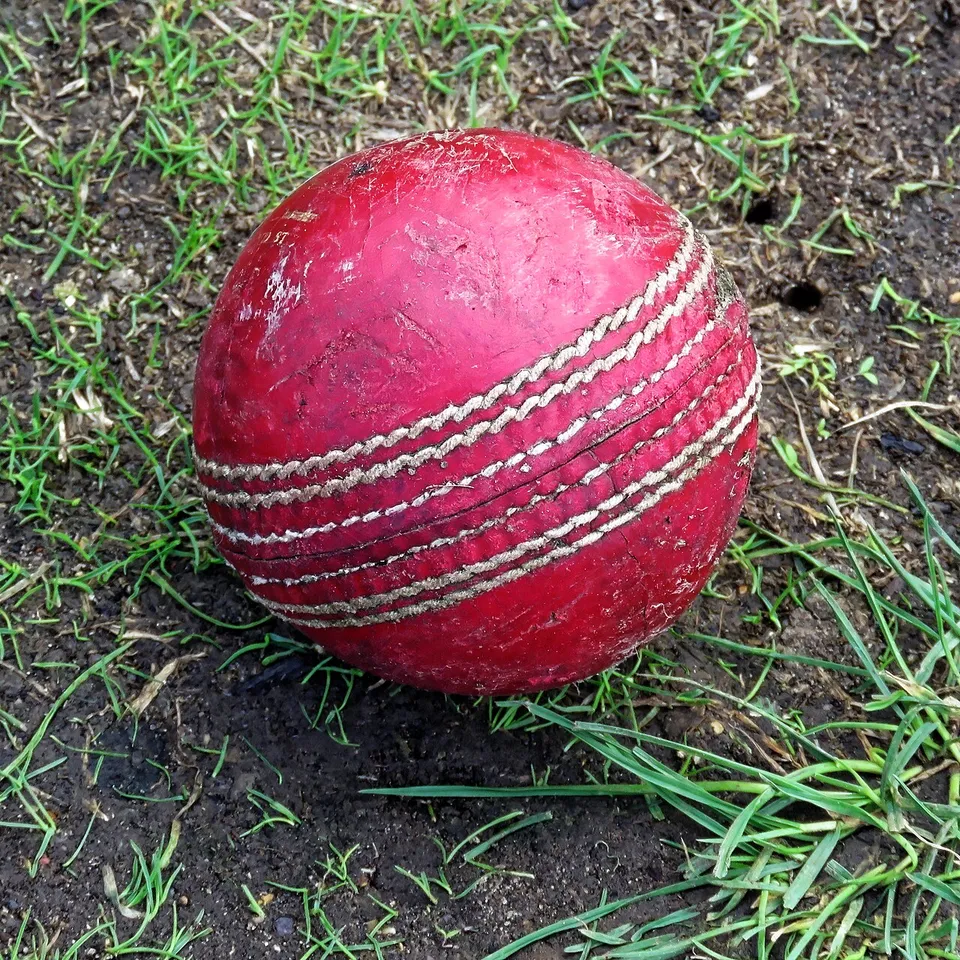
A club-cricket ball photographed in England, illustrating cricket equipment. It is not a match ball or photograph from the November 2026 Sharjah Test.
A partnership is a shared contribution
A partnership total measures runs added while two batters are together for a particular wicket. It is not simply the sum of their final individual scores, because each player may have scored with different partners before or after that stand. Extras can also contribute to the team total during the partnership.
Imagine an invented stand of eighty runs in which one batter contributes forty, the other thirty-five and extras account for five. Reporting only the two personal contributions would leave the partnership five runs short. This small example shows why the partnership section and batting section need to be read together.
The wicket number is important too. A sixth-wicket stand begins after the fifth wicket has fallen. Comparing it with an opening partnership without saying so mixes two different categories. When a report calls something a record, retain the category instead of shortening it into an unrestricted claim.
For a school exercise, take a completed scorecard and compare the fall-of-wickets entries with the partnership listing. Explain which figures can be checked directly and which require another detail, such as a retirement or interruption. The exercise develops careful numerical reading without requiring a prediction about the next match.
Zimbabwe's selection context before the series
The pre-series announcement named Brian Bennett as captain while Richard Ngarava recovered from a back injury. Tanaka Chivanga was also unavailable through injury. The seventeen-player group included experienced red-ball players alongside recalled and newer options, with Graeme Cremer returning and Naqvi included after meeting eligibility requirements.
That announcement is a squad list, not a guarantee of the eleven for every match. The distinction remains important before the second Test. A player can be named in a touring group without being selected in the next game, and availability can change after an earlier announcement.
Use the date of a selection update when reporting it. A November squad story should not be treated as a timeless list of the country's strongest eleven. It reflects a particular assignment, availability situation and point in the team's planning.
For the next match, wait for an official team sheet before describing any combination as confirmed. A likely lineup is an opinion, a squad is a pool of available players, and a playing eleven is the selected team. Those three labels should remain separate even when some names appear in all of them.
What to watch in the second Test
The scheduled 13–17 November fixture gives both sides another red-ball contest at Sharjah. The useful questions concern the actual conditions and decisions when play begins: the selected elevens, the toss decision, the surface being used and how the first sessions develop. None of those should be filled in from an assumption about the previous match.
Start with observations you can verify. Is the game underway? Which side is batting? How many wickets have fallen, and which innings is in progress? Those basic details provide a stronger foundation than declaring a pitch easy or difficult from a single score notification.
As the match develops, consider the relationship between runs, wickets and remaining time. A quick passage of scoring means something different when wickets are falling regularly than when a side is preserving its position. A single rate does not describe all three dimensions.
Keep the first Test and the next fixture in separate notes. An old score can be useful background, but it is not a live update from the new match. When sharing a screenshot, include the match number and date so that a reader does not mistake historical context for the current state of play.
Read overs as cricket notation, not ordinary decimals
In a six-ball-over format, an overs display such as 12.3 means twelve complete overs and three additional legal balls. It is not 12.3 in ordinary decimal arithmetic. That distinction becomes important if you calculate a rate or compare how much play has taken place.
Convert the notation into legal balls first. In the invented example, twelve multiplied by six plus three equals seventy-five balls. If you need the equivalent number of overs for a mathematical calculation, divide seventy-five by six, producing twelve and a half overs.
Do not add ball counts as if the digit after the point could run all the way to nine. Once six legal balls are completed, the next over begins. The notation is a compact sporting convention, and treating it as an everyday decimal can introduce errors even when the arithmetic otherwise looks tidy.
The same habit applies to other scorecard symbols. Read the heading and its units before calculating. A total, average, strike rate, economy rate and overs count answer different questions. Clear units make a cricket discussion more understandable for a new follower and easier to check for an experienced one.
Build a clear match summary
A useful short summary starts with the teams, format, venue, dates and result. Then identify the most relevant verified performances. After those facts, explain what remains open, such as the next scheduled match or a selection decision that has not yet been announced.
Keep commentary separate from reporting. “This contribution helped the side protect its position” is an interpretation you should support with the match situation. “The batter finished not out” is a scorecard fact. Distinguishing the two makes analysis more useful without stripping the article of personality.
Choose photographs with the same care. A historic Zimbabwe player portrait or a cricket-equipment photograph can illustrate a guide, but it must not be labelled as an image of the completed match unless that event is actually documented. An accurate caption prevents a relevant archive image from becoming misleading evidence.
For the broader touring context, read our Afghanistan-Zimbabwe series guide. For more cricket explainers and checked sports coverage, visit Blogs and Updates. This article is a dated match review and reading guide. It is not a continuously refreshed scoreboard, and it should not be used to infer a later result or an unverified local broadcast arrangement.
Questions about Zimbabwe's first Test and the next fixture
Did Zimbabwe win the first Test?
No. The official result was a draw. The side's substantial batting totals and the calculated lead describe the scorecard position, not a winning margin. Always retain the result label when explaining those numbers so that a reader does not confuse an impressive innings with a completed victory.
When is the second Test scheduled?
The published series schedule places it at Sharjah from 13 to 17 November 2026. Exact start-time displays have not been reconciled for this guide, so no Pakistan time is asserted here. Confirm the organizer's latest fixture information before making a viewing plan.
Are the confirmed squad and playing eleven the same thing?
No. A squad announcement identifies a larger group, while the playing eleven identifies the team selected for a specific match. An earlier squad story does not confirm the next match's lineup. Check a current official team announcement rather than treating a predicted list as final.
Sources
- Official first-Test match report
- Completed first-Test scorecard
- Zimbabwe's dated squad and captaincy announcement
- MCC Laws of Cricket, 2026 edition
Image credits: cover: TheCricketer, source, CC BY-SA 4.0. Resized and converted to WebP. inline: Acabashi, source, CC BY-SA 4.0. Resized and converted to WebP.
Found an error or an outdated detail? Report a correction with the article URL and original source.