
Asteroids Explained: Orbits, Close Approaches, Images and Scientific Evidence
Learn what asteroid orbits and close approaches mean, read distances and uncertainty, and distinguish scientific observations from impact claims.
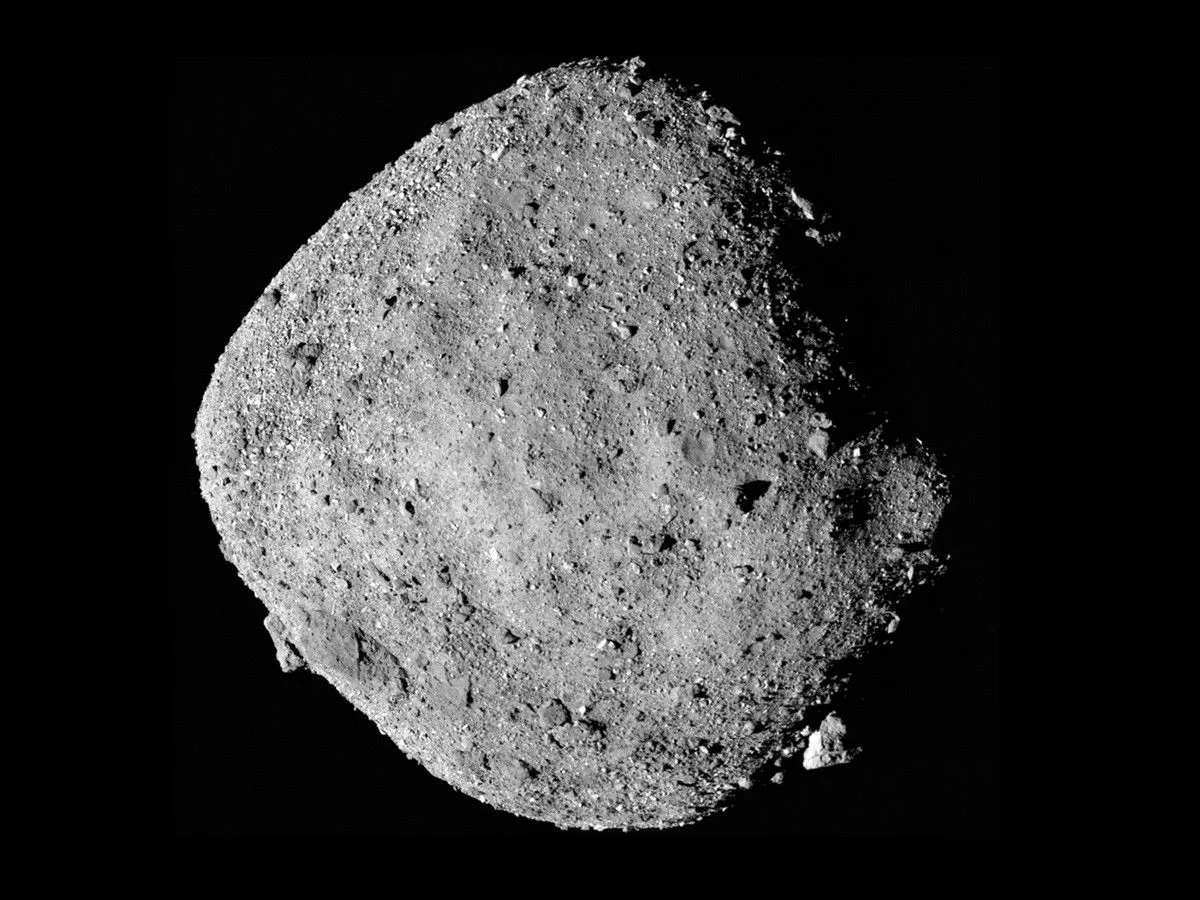
Asteroids are small Solar System bodies whose study helps scientists investigate planetary history and understand objects travelling near Earth's orbit. A report about an asteroid should identify the object, the observation or calculation being discussed and the meaning of any distance or probability. The words approaching Earth do not, by themselves, establish that an impact is predicted.
This guide was checked on 5 November 2026. It teaches the concepts needed to read official asteroid information. It does not announce a newly discovered threat or provide a live risk assessment for a particular object. For an individual object, use current information from the relevant scientific monitoring service.
What is an asteroid?
NASA describes asteroids as rocky remnants associated with the early Solar System. They vary in size, shape, composition and orbit. The familiar picture of a nearly spherical world is therefore not an appropriate model for every asteroid. A small irregular body can have properties very different from those of a planet.
Begin by distinguishing an object's physical properties from its location. Size and composition describe aspects of the body itself. An orbit describes its motion around another body. Saying that an asteroid is large does not tell you where it will travel, while describing an orbit does not establish the object's detailed surface structure.
For a classroom exercise, give an invented object three separate labels: approximate dimensions, material description and orbit. Then explain which questions each label helps answer. This simple separation prevents a dramatic description of size from being mistaken for evidence about the probability of a particular encounter.
How are asteroids, comets and meteors different?
NASA's small-body resources distinguish these terms and explain the relationships between them. An asteroid or comet is a body travelling through space. A meteor describes the luminous phenomenon produced when material enters an atmosphere. A meteorite is material that survives to reach the ground. The terms should not be substituted casually in a scientific explanation.
Read the context before classifying a photograph. A streak in the sky, an image of an irregular body and a specimen displayed in a museum are different observations. A caption should identify what is actually shown instead of using the most dramatic available word for every object.
Make a comparison table containing object, observed event and surviving sample. Put the relevant terms in the appropriate category and write an example sentence for each. The exercise is useful because many confusing headlines mix a body in space with a visible atmospheric event as though they were the same thing.
What does an orbit describe?
An orbit is a path of motion governed by the physical system being considered. In asteroid reporting, scientists use observations and models to estimate how an object moves. The relevant information includes more than a single photograph of where it appeared at one instant.
Imagine seeing a moving bicycle through a window for one moment. You can describe that observed position, but a useful prediction of where it will be later requires additional information about motion. The analogy is deliberately simple; it illustrates why repeated observations matter without pretending that orbital mechanics is identical to ordinary street movement.
When reading an orbit diagram, check its scale and labels. Many explanatory diagrams make small objects larger so that readers can see them. Such a diagram can clarify the arrangement while still not representing every size and separation literally. Read its explanation before measuring a distance directly from the picture.
What does near-Earth mean?
Near-Earth is a scientific classification concerning an object's orbital relationship to Earth's region of the Solar System. It is not a synonym for an imminent impact. Read the official definition and the record for the specific object rather than treating an ordinary-language interpretation of near as the complete scientific meaning.
The same word can describe different scales in different contexts. A nearby classroom and a nearby object in astronomy do not involve comparable distances. A good explanation supplies the quantity and unit instead of relying on the emotional effect of a familiar adjective.
For a learning task, write two descriptions of an invented encounter. One says only that the object passes nearby; the other gives the stated distance, time and reference point. Compare how much information each description provides. The second is easier to investigate because its meaning is not carried by an ambiguous adjective alone.
How should I read a close-approach distance?
Identify the unit and the point from which the distance is measured. Kilometres, miles and other astronomical distance units are not interchangeable labels. If you convert between units, state the conversion and preserve a sensible level of precision rather than adding impressive-looking digits that the original estimate did not support.
Suppose an invented worksheet gives a distance of 800,000 kilometres. Write the full unit beside every calculation and keep the object and date attached to the example. This makes it harder for a number copied into another paragraph to become an unsupported claim about a real asteroid.
Check whether the information is a nominal estimate or includes an uncertainty range. A single central value and a range do not communicate the same amount of information. Do not delete the uncertainty merely to make a graphic simpler, because it may be essential to interpreting what the calculation actually establishes.
Why do estimates change after more observations?
Scientific estimates can improve as new observations become available. The important question is what changed in the evidence or calculation. A revised estimate is not automatically evidence of dishonesty or a contradiction; it may reflect an improved understanding of the object's motion and the remaining uncertainty.
Consider an invented measurement exercise in which students estimate the length of a table from a distant photograph, then measure it directly. The second estimate can differ because the evidence improved. The classroom example is not a model of asteroid tracking, but it illustrates why the quality and quantity of observations matter.
When comparing two reports, record their observation and publication dates. Ask whether they use the same data release. A newer scientific assessment and an older screenshot can coexist online. Comparing them without dates can manufacture an apparent disagreement that disappears once their sequence is understood.
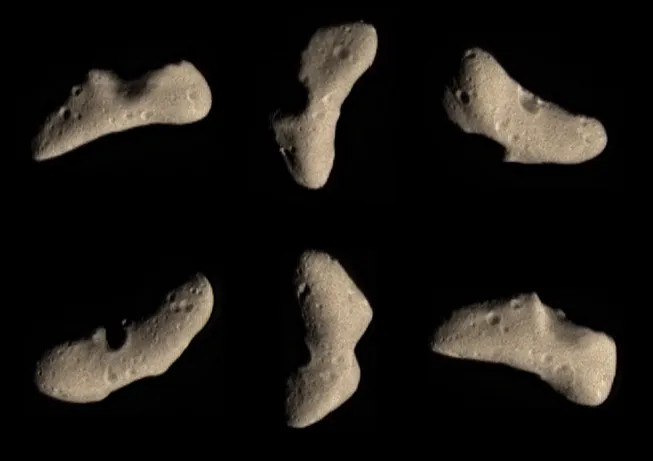
NASA imagery of asteroid Eros, illustrating a small Solar System body rather than a current impact warning.
Is a close approach the same as an impact probability?
Distance and probability describe different quantities. A close-approach record concerns an encounter's geometry and timing, while an impact assessment considers whether a collision is possible under the relevant observations and models. A headline should not replace one concept with the other simply because both concern the same object.
For a numerical lesson, distinguish a count from a percentage and a percentage from a certainty. If an invented exercise states a probability, write what outcome it concerns and which conditions apply. A percentage without that context can be repeated accurately as a number while being interpreted incorrectly as a claim.
Use the current official record for a real risk question. This article intentionally does not freeze a changing assessment into a permanent headline. A general explanation is useful for understanding the record, but it cannot substitute for the object-specific information maintained by the responsible monitoring service.
How do asteroid missions help science?
Spacecraft investigations can reveal information that complements observations made from elsewhere. NASA's asteroid resources discuss missions studying small bodies and their properties. The purpose is not limited to producing striking images; measurements can help answer questions about composition, structure and the history of Solar System material.
Choose one mission and identify its research question before reading a summary of its achievements. Then ask which observations address that question. A surface image, a measurement and a collected sample are different forms of evidence, and each has its own requirements for interpretation.
Build an evidence chain: question, method, observation and conclusion. Add a final entry for limitations. This structure helps you explain why a result is meaningful without presenting every conclusion as if it came directly and completely from one photograph. It also makes the project easier for a classmate to check.
How should I interpret an asteroid image?
Read whether the image is a photograph, a processed observation, a model or an illustration. Check the object, instrument and date. A detailed rendering can communicate an idea effectively without being a direct view of a current event, and a real mission photograph can be historical rather than newly captured.
Inspect scale information where it is supplied. An image that fills your screen does not show the object's size by itself. The apparent size in a displayed picture depends on how the image was captured and presented. Avoid estimating a body's actual dimensions from its screen size alone.
For a classroom captioning task, describe only what the source supports. Include the credit and explain any significant processing or illustrative status identified by the source. A caption that makes its limits clear can be more interesting than a vague dramatic sentence, because it tells the reader what the evidence genuinely shows.
How can I check a dramatic asteroid headline?
Identify the object's designation and find the primary scientific source. Then check the date, the distance or probability being discussed and the article's interpretation of those quantities. If the headline claims a threat but the linked source describes only a close approach, keep that distinction explicit.
Be cautious about videos that combine unrelated images with a current-sounding title. Historical mission material can illustrate a concept but does not establish that a particular object has just been observed in that way. Look for a caption or source record linking the visual to the stated body and observation.
Try rewriting the headline as a complete factual sentence. Include who reported what, about which object and when. If an essential detail is missing, say that it remains unverified. Filling an evidence gap with a frightening assumption does not make a report more accurate or more useful to a student.
What makes a useful asteroid classroom project?
Choose a manageable question such as the difference between an object's physical properties and its orbit, or the importance of units in a close-approach table. Define the question before collecting images. A project with a clear purpose is easier to explain than a slideshow containing many unrelated space photographs.
Use a small table of clearly labelled observations or invented practice values. If the values are invented, label the table as a simulation. Keep a record of the source and date for actual observations. Do not mix invented numbers into a real object's record without clearly distinguishing the two.
End with a statement of what the project demonstrates and what it does not establish. Explaining a unit conversion does not make the project a new risk assessment. Learning to limit a conclusion to the evidence is an important result in its own right, not a weakness that needs to be hidden.
Keep the source version beside your project notes. If an estimate changes later, you can explain which record your original calculation used and update the conclusion transparently.
Frequently asked questions
Does every near-Earth asteroid threaten Earth?
The classification does not itself establish an imminent impact. Read the current record for the particular body and distinguish its orbit, a close approach and an impact assessment. A general label cannot replace the object-specific observations, calculations and uncertainty information needed to understand a real encounter.
Can I use an old screenshot as today's assessment?
An old screenshot records what a source displayed at that time. Preserve its date and do not relabel it as current. If you need a present assessment, reopen the official service and compare the relevant object record. Explain any difference in terms of the evidence and update sequence rather than speculation.
Where can I learn the background skills?
Begin with units, percentages, graphs and source reading. The class resources and programming courses provide available material for related learning. For agency and mission context, read the Voyager guide while remembering that its dates and distances concern that specific spacecraft.
Sources
- NASA: asteroid facts
- NASA: asteroids, comets and meteors
- NASA JPL: Center for Near Earth Object Studies
- NASA: Planetary Defense Coordination Office
Image credits: cover: NASA, source, Public domain. Resized and converted to WebP. inline: NASA/JPL/JHUAPL, source, Public domain. Resized and converted to WebP.
Found an error or an outdated detail? Report a correction with the article URL and original source.