
Atletico 0-2 Bayern: Karl, Laimer and the Eight-Point Record
Read Bayern’s 2-0 away win over Atlético, Karl and Laimer’s goals, the eight-point record and the football decisions behind a second-half lead.

Bayern Munich won 2-0 away to Atlético de Madrid on 3 November 2026 in the Champions League league phase. The teams were level at half-time before Lennart Karl scored in the 54th minute and Konrad Laimer added the second in the 74th. Bayern kept a clean sheet and took three points from the trip to Madrid.
For readers searching the standings, the result moved Bayern to eight points after four league-phase matches. Atlético remained on four. Those totals are more reliable than an undated table position copied while other fixtures are still being played. This guide explains the match, the arithmetic and the football questions behind a patient second-half victory.
What happened in Atlético versus Bayern?
The completed score was Atlético 0, Bayern 2 at the Metropolitano in Madrid. Bayern's official match report and Atlético's match record agree on the goals and result. The fixture was part of Matchday 4 of the 2026/27 Champions League, rather than a domestic league match or a knockout second leg.
| Detail | Confirmed record |
|---|---|
| Date | 3 November 2026 |
| Venue | Metropolitano, Madrid |
| Stage | Champions League league phase |
| Half-time | 0-0 |
| First goal | Lennart Karl, 54 minutes |
| Second goal | Konrad Laimer, 74 minutes |
| Final score | Atlético 0-2 Bayern |
The absence of a first-half goal is important. Unlike matches decided by an immediate scoring burst, this contest required the winner to turn a level game into an advantage after the break. The two scoring moments changed the competitive picture without requiring a high final total.
Why a goalless first half is not an empty half
A 0-0 interval score records the absence of goals, not the absence of useful football. Teams can gather information about pressing triggers, passing routes and defensive spaces before the first breakthrough. They can also create chances that are saved or missed. Those events do not disappear simply because the score remains level.
For a viewer, the useful question is what each side was learning. Were central passes available? Did attacks repeatedly end with crosses? Were players receiving the ball under pressure or with time to turn? These observations help explain whether the second-half changes emerged from an existing pattern or a new approach.
Do not infer the answers from the final result alone. A later 2-0 win does not prove that the eventual winner controlled every first-half passage. Read the report and use the footage to distinguish sustained territorial pressure from a smaller number of decisive moments.
Karl's opener changed the risk balance
The first goal arrived nine minutes into the second half. Bayern now had an advantage to protect, while Atlético needed to produce an equalizer. That changed the value of decisions on both sides, even if a team initially retained the same players and nominal shape.
The trailing side faces a trade-off. Sending more support forward may improve the attack but leave less protection behind the ball. Remaining cautious may reduce that exposure but make it harder to create enough opportunities. Good decision-making depends on timing, the opponent's threat and the quality of the available passing options.
Bayern's task was not simply to retreat. A leading side can use possession and an attacking outlet to reduce the pressure on its defense. Whether those methods worked in this particular match must be judged from the actual sequences, but the general problem explains why a goal changes more than the scoreboard.
Why the second goal mattered
Laimer's goal in the 74th minute doubled the lead with comparatively little normal time remaining. Atlético now needed two goals to draw level rather than one. The difference is substantial because scoring once would no longer restore parity.
For Bayern, the extra goal offered a margin for error without removing defensive responsibilities. A two-goal lead can still be lost, particularly if the leading team allows repeated dangerous situations. The practical aim remains to manage the remaining play intelligently rather than treat the match as finished before the final whistle.
Notice the twenty-minute interval between the goals. The game did not move from 0-0 to 0-2 in one immediate burst. Bayern had to operate with a one-goal lead for that period. Studying those minutes can be more informative about game management than watching only the two finishes.
How did Bayern reach eight points?
Before the trip to Madrid, Bayern's league-phase results comprised one win and two draws. A win is worth three points and each draw one, giving five points. The away victory added three more, producing eight after four matches.
Atlético's opening three included one win, one draw and one defeat, giving four points. The home defeat added none. This explains the difference between the clubs' totals without needing to guess a table position while other games are still changing the standings.
| Team | Wins | Draws | Defeats | Points after four |
|---|---|---|---|---|
| Bayern | 2 | 2 | 0 | 8 |
| Atlético | 1 | 1 | 2 | 4 |
The table describes results, not a prediction of the remaining campaign. Both sides still had fixtures to play. A good early record can improve a club's position without guaranteeing a top-eight finish, and a difficult start does not automatically establish elimination.
Points and goal difference measure different things
Bayern received three points whether the victory had been 1-0, 2-0 or 5-0. The winning margin affects the goals record, but ordinary league-phase points do not increase with every additional goal. Keeping those measures separate helps readers avoid treating a dominant score as more than one win.
In this fixture, Bayern improved their overall goal difference by two and Atlético's worsened by two. The direct gap between their goal differences therefore changed by four. This does not mean that four goals were scored. The same two goals affected the clubs' records in opposite directions.
If two teams later share a points total, the applicable competition tie-breakers become relevant. Consult the tournament regulations and current table rather than assuming that every league uses the same sequence. A general football habit should not replace the rules of the competition being discussed.
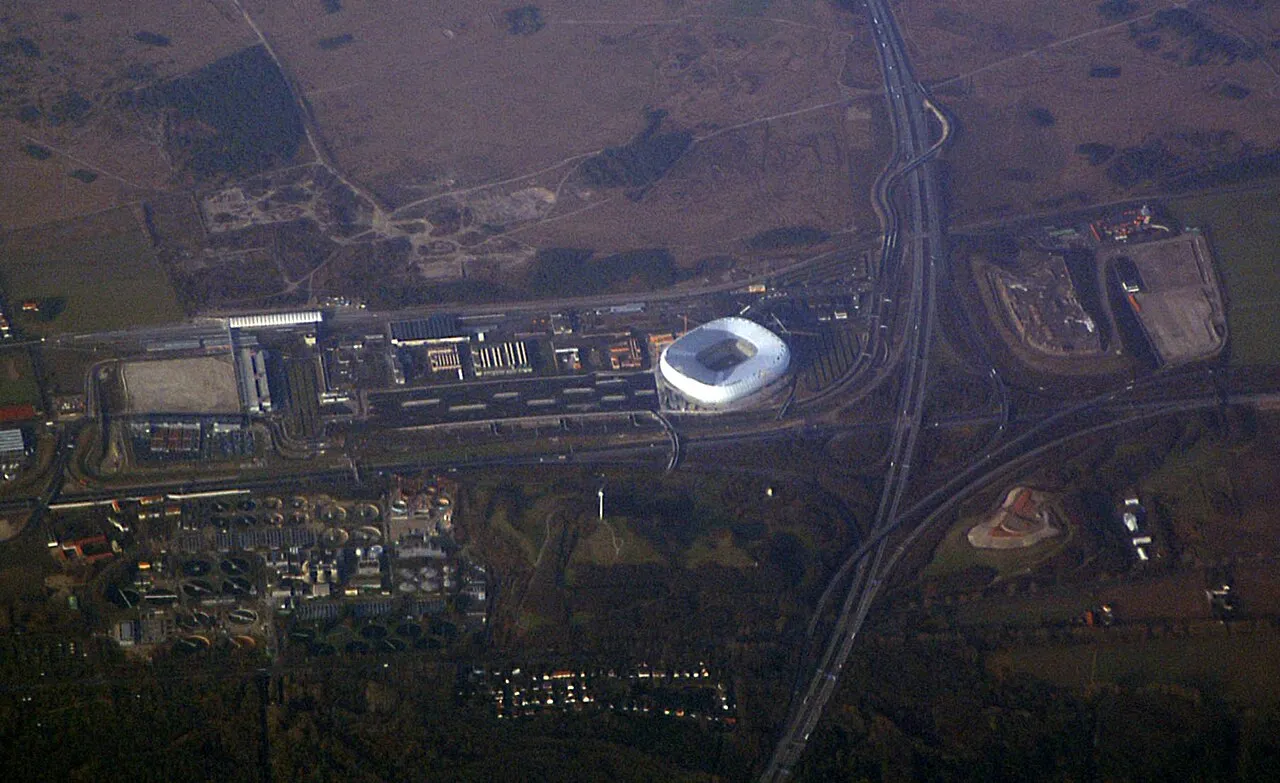
An aerial view of the Allianz Arena in Munich; Bayern club context, not the venue of this away fixture.
A clean sheet deserves a closer look
Bayern's clean sheet means Atlético did not score. To understand the defending, examine the types of situations Atlético created and how those situations were resolved. A well-timed challenge, an intercepted pass, a goalkeeper's save and an opponent's missed shot contribute differently to the final zero.
This distinction avoids two opposite errors. The first is assuming a clean sheet proves that no danger existed. The second is assuming that any chance conceded makes the defensive performance poor. Good analysis considers the quality, frequency and context of the opportunities rather than treating all threats as identical.
For a learner, watch the players away from the ball. Defensive organization often depends on covering a passing lane or following a runner before the decisive action happens. Those contributions may be less visible in a short highlight package than a save or a tackle, but they are part of how danger is reduced.
How to recognize a compact defensive shape
A compact team tries to limit useful space between its units rather than merely placing many players near its own goal. The distances between defenders and midfielders matter, as does how quickly the whole group moves when the ball changes side.
Watch whether a player receiving between the lines can turn comfortably. If pressure arrives only after the turn, the opponent may already have gained an advantage. If the pass is prevented or the receiver is forced backward, the defensive shape may be doing useful work without producing an obvious individual highlight.
These are observation prompts, not unsupported claims about every Atlético or Bayern sequence. Apply them to the footage and note where the evidence is clear. If a camera view does not show the far-side players, avoid claiming certainty about the entire team's shape.
What does a substitution actually tell you?
The event record includes several substitutions during the second half. A change of player is a confirmed event, but its purpose should not be invented. A substitution may respond to fitness, tactical needs, a booking or a planned workload, and the record alone may not identify which explanation applies.
To evaluate its effect, compare the positions and actions before and after the change. Did a player move into a different role? Did the team gain another passing option? Did the opponent alter how it defended? Those visible differences support a more specific analysis than assuming every substitution was either genius or a mistake.
Also separate intention from outcome. A coach may make a reasonable change that does not immediately produce a goal. A replacement may score from an unusual event without proving that every part of the plan worked. Football decisions are assessed more fairly when the process and the result are both considered.
A useful replay exercise
Watch five minutes before Karl's goal and five minutes afterward. Record where Bayern receive the ball facing forward, where Atlético apply pressure and how the ball moves into the final third. Use a small number of consistent categories so that you can compare the two periods honestly.
Then repeat the exercise around Laimer's goal. The match state is different, so the same pass or run may carry a different level of risk. Ask whether the trailing team leaves more space and whether the leading side chooses different moments to advance.
Finish with one observation supported by the footage and one question you cannot yet answer. This method encourages curiosity without pretending that a short viewing session provides a complete professional tactical report. It is a practical way to learn from a match rather than only consume its highlights.
Avoid confusing this meeting with older Atlético–Bayern games
The clubs have a European history, and older knockout meetings can appear prominently in search results. Those matches do not establish the score, stage or qualification implications of the November 2026 fixture. Check the date before importing a familiar narrative from another season.
Older meetings can still provide historical context if clearly labeled. They may show how personnel, coaches or competition formats have changed. The problem arises when a past result is presented as a direct explanation of the current match without acknowledging those differences.
For the same reason, use dated standings links. A search snippet may retain a position from an earlier round even when the page itself now displays a newer table. The safest written statement identifies the number of matches and points rather than relying on an unlabeled ranking.
Keep the match state attached to the minute
A substitution at 0-0 addresses a different immediate problem from a substitution at 0-2. Record the score beside the time before judging the change. The event list becomes more useful when it shows the decision's context as well as the player's name.
Frequently asked questions
Who scored for Bayern against Atlético?
Lennart Karl scored the opener in the 54th minute and Konrad Laimer added the second in the 74th. The game was goalless at half-time. Those events produced a 2-0 away victory rather than a first-half scoring burst.
How many points did Bayern have afterward?
Bayern had eight points from four league-phase matches: two wins and two draws. Atlético had four from one win, one draw and two defeats. A precise ranking requires the complete, dated competition table and its tie-breakers.
Did Atlético get another leg to overturn the score?
This result belonged to the league phase, not a two-leg knockout tie. The clubs' points and goal records changed, but there was no aggregate deficit attached to a scheduled return leg in the way readers might expect from a knockout round.
Where can I read the wider Bayern context?
Our Bayern club and campus guide explains the institution beyond one fixture. The Bayern–Dortmund draw offers a contrasting match state. Comparing a draw with this away clean sheet helps show why one statistical summary cannot explain every game.
Sources
Image credits: cover: JesVCB, source, CC BY-SA 4.0. Resized and converted to WebP. inline: User:Webster, source, CC BY-SA 3.0. Resized and converted to WebP.
Found an error or an outdated detail? Report a correction with the article URL and original source.