
Beardman Takes Six as Australia Beat England by Seven Wickets in Perth
Australia beat England by seven wickets in Perth: Beardman takes 6/24, Marsh makes 50, and the final scorecard explains the first ODI result.
Australia beat England by seven wickets in the first men's ODI at Perth Stadium on 13 November 2026. England were dismissed for 131 in 33.4 overs, and Australia reached 132 for three in 23.3 overs. Debutant Mahli Beardman's six wickets for 24 runs were the central bowling contribution, while Mitchell Marsh made 50.
Those are completed-match figures, not a forecast. This report explains the result and the scorecard arithmetic, including why 23.3 overs does not mean 23.3 in ordinary decimal notation. It does not invent ball-by-ball scenes, dressing-room comments or a claim that the writer watched every delivery.
The fixture was the opening match of the scheduled three-match ODI series. Readers looking for the earlier background can use our Australia–England series preview. That preview and this result serve different purposes: one explains the schedule before play, while the other records what the completed first match established.
The result at a glance
England's innings ended at 131 all out after 33 overs and four legal balls. Australia's reply reached 132 with three wickets lost after 23 overs and three legal balls. The winning target was therefore reached with seven wickets still available, which explains the seven-wicket margin.
Beardman's figures were 6/24 from 7.4 overs. Marsh's 50 contributed to the chase. These are the headline individual figures used in this report; they do not substitute for a full scorecard listing every batter, bowler, dismissal and extra. Consult the linked match records for that wider detail.
For a quick personal summary, keep team score, overs and result together. Writing only “Australia 132” removes the wickets and timing that make the chase understandable. A compact but complete description gives another reader enough context to distinguish a successful chase from an unfinished innings.
Why seven wickets is the correct margin
In this chase, Australia lost three wickets before reaching the required total. A side has ten wickets available in an innings, so ten minus three leaves seven. The result is expressed by the wickets remaining for the successful chasing side, not by subtracting the two final scores.
Subtracting 131 from 132 produces one run, but calling this a one-run Australian victory would describe the wrong kind of margin. A successful chase finishes when the target is reached under the applicable match conditions. The score difference at that moment does not replace the wickets-based description.
This distinction is useful whenever reading a short cricket notification. Ask whether the winning team batted first or chased. Then check the result line rather than constructing a margin from two numbers alone. An apparently simple subtraction can otherwise turn an accurate score into an inaccurate headline.
Beardman's six-wicket debut was the main bowling fact
The reported bowling return of six wickets for 24 runs made Beardman central to England's dismissal for 131. It is a substantial contribution to the completed innings. The six wickets represent six of England's ten dismissals, although a full dismissal breakdown is still needed to describe how each wicket fell.
It would be unnecessary to invent a historical ranking to explain why that return matters. This report does not label it the best debut in a country, decade or format without a verified statistical comparison. A strong verified figure is already meaningful without adding an unsupported superlative.
The same caution applies to future predictions. A successful debut establishes what happened in this match. It does not guarantee the next selection, the next bowling return or the final series outcome. Readers can appreciate the performance while keeping those separate questions open.
Converting 7.4 overs into legal balls
For ordinary cricket over notation, the digit after the dot counts legal balls within the incomplete over. Beardman's 7.4 therefore corresponds to seven completed overs plus four legal balls. The calculation is seven multiplied by six, then four added: 46 legal balls.
Treating 7.4 as a decimal number of overs would produce a different and incorrect denominator for this calculation. In cricket notation, the incomplete-over digit is not a tenth of an over. That is why the notation needs conversion before it is used in a calculator or spreadsheet formula.
For another example, 10.2 overs represents 62 legal balls, not 61.2. Once the notation is converted correctly, comparisons such as runs per over and balls per wicket become easier to calculate consistently. The important first step is understanding what the symbol means before applying arithmetic.
What Beardman's economy calculation shows
Using the recorded 24 runs and 46 legal balls, the economy calculation is 24 multiplied by six, divided by 46. That is approximately 3.13 runs per over. The unit matters: it is an innings rate, not the number of runs conceded in every individual over.
The bowling average for this performance is 24 divided by six, which equals four runs per wicket. The bowling strike rate is 46 divided by six, or approximately 7.67 legal balls per wicket. These are three different measurements produced from the same return, and none should be substituted for another.
A low economy figure describes run control through that innings calculation. A low bowling strike-rate figure describes how frequently wickets arrived on average. The actual sequence can still contain quieter stretches and clusters. An average summarises the record; it does not reconstruct each delivery.
England's total and the limits of a score-only explanation
England's 131 all out establishes the size of the completed innings and the target Australia needed to exceed. It does not, by itself, explain every dismissal or establish the exact behaviour of the pitch. Those explanations require more evidence than a total and an over count.
For that reason, this report does not manufacture a sequence of technical errors or attribute private thoughts to batters. A scorecard can support precise numerical observations while leaving some tactical explanations unresolved. It is better to mark that boundary than fill the gap with a dramatic but unverified narrative.
The useful confirmed contrast is between an innings ending at 131 and a chase reaching 132 with three wickets lost. That comparison explains the result without pretending that both innings followed identical conditions or that a final score alone measures every player's contribution.

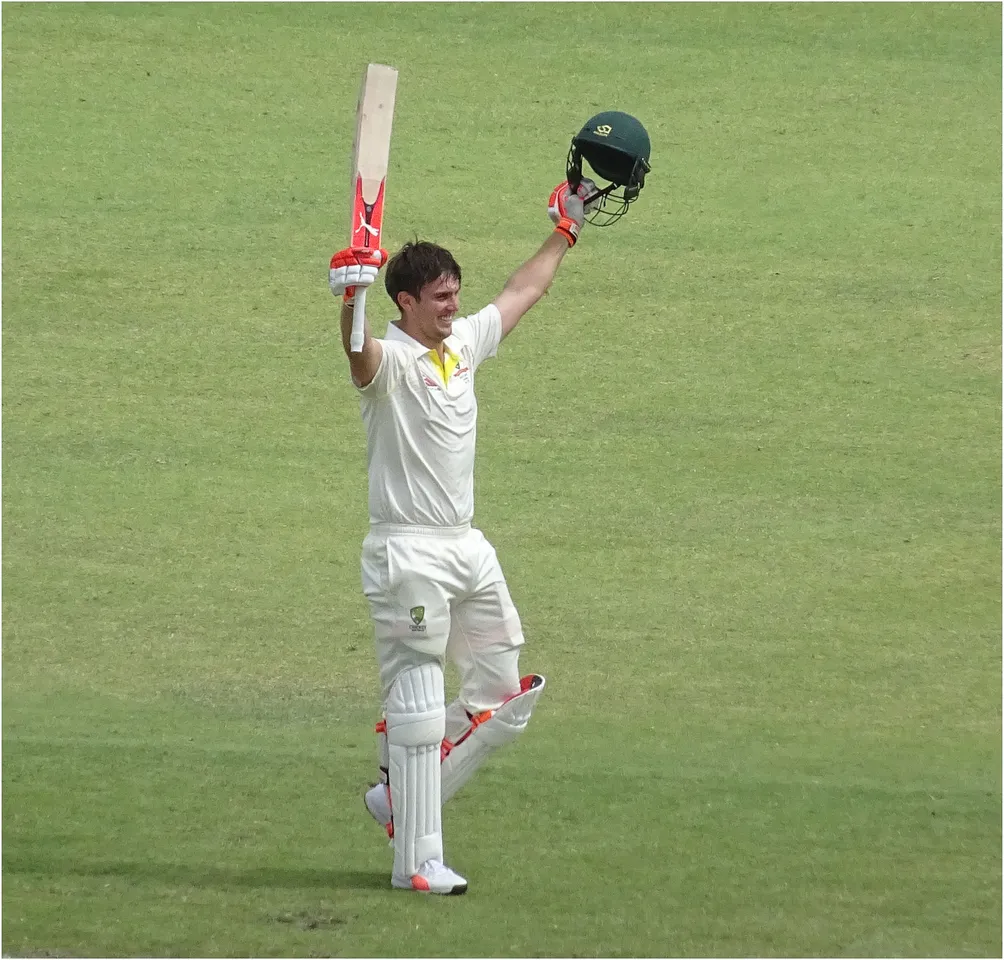
Archive photograph from Perth Stadium open day. It illustrates the venue and does not depict play in the November 2026 ODI.
Reading England's 33.4 overs correctly
England's 33.4 overs converts to 33 multiplied by six, plus four: 202 legal balls. Dividing 131 by 202 and multiplying by six gives an approximate scoring rate of 3.89 runs per over. This is our arithmetic from the recorded total and legal-ball count.
Do not divide 131 by 33.4 as an ordinary decimal and treat that result as the cricket rate. The error is small enough to look plausible, which is why it can survive a casual glance. Checking the unit is more reliable than deciding that a calculator result “looks about right.”
For students building a cricket spreadsheet, keep completed overs and additional balls in separate input fields. Calculate total legal balls first, then derive the rate. That structure makes the conversion explicit and reduces the risk of a spreadsheet silently interpreting cricket notation as a decimal number.
Australia's chase and Marsh's fifty
Australia reached 132 for three, with Marsh contributing 50. The completed score shows that the target was achieved, while the wicket count shows the resources remaining in that category. A fifty is a meaningful batting milestone, but it should not be expanded here into unverified details about individual boundaries or exact scoring shots.
The recorded chase length was 23.3 overs, equivalent to 141 legal balls. Australia's innings scoring rate from the final figures is 132 multiplied by six, divided by 141, approximately 5.62 runs per over. That is an aggregate rate for the completed chase rather than a claim that every passage proceeded at the same speed.
Marsh's milestone and Beardman's bowling return concern different phases of the match. One helped establish the chase's target; the other helped reach it. A balanced summary can identify both without pretending that a team result is explained by one isolated statistic alone.
Why over differences need careful subtraction
Cricket over notation should also be converted before subtracting two innings lengths. Subtracting 23.3 directly from 33.4 in decimal arithmetic does not provide a reliable cricket-ball calculation. Convert both to legal balls, perform the subtraction and convert the result back if an over-and-ball description is needed.
Here the legal-ball difference is 202 minus 141, which equals 61 balls, or ten overs and one ball. That compares how long the two recorded innings lasted. It should not be described as the official winning margin or used to replace the scorecard's seven-wicket result.
Nor does a shorter chase automatically describe the complete quality of every player or every condition. Teams can face different tasks because one already knows the target. Numerical comparisons are useful when their meaning is stated narrowly and become misleading when they answer questions they were never designed to resolve.
Percentages explain contribution, not future probability
Beardman's six wickets account for 60 percent of the ten England wickets in the completed innings. That is a share of observed dismissals. It does not mean a 60 percent probability of a wicket on his next delivery or a guarantee that he will take the same share in the next match.
Similarly, Marsh's 50 can be compared with the team total as a descriptive share, but that calculation is not a full assessment of the innings. Batting partnerships, match situation and other contributions require their own context. A percentage is a summary tool, not a complete explanation of sporting value.
This is a useful general lesson when reading sports graphics. Ask what the denominator represents, whether the data concerns one match or a longer period, and whether an observed share has been incorrectly presented as a prediction. Clear labels protect an otherwise correct number from a misleading interpretation.
What this match says about the series
Australia won the opening ODI, so the completed first result belongs on the Australian side of the series record. It does not decide the results of the remaining scheduled fixtures. A series preview and an opening-match report should therefore avoid presenting future matches as though they have already been played.
For later updates, use the official schedule and the relevant completed scorecard. If dates, venues or availability change, identify the updated source rather than copying an older preview indefinitely. A schedule is a plan for fixtures, while a result is a record of completed play.
There is also no need to merge unrelated cricket controversies into this report to make it appear broader. The reader searching for this match primarily needs the teams, final totals, margin, main performances and a clear account of what those numbers mean. Staying within that scope improves usefulness.
A quick scorecard-reading exercise
Cover the result line and look at England 131 all out and Australia 132/3. First identify which side successfully chased. Next calculate wickets remaining as ten minus three. Finally convert Australia's 23.3 overs to 141 legal balls. These steps reconstruct the basic outcome without inventing an event description.
Now take Beardman's 6/24 from 7.4 overs. Identify wickets, runs and legal balls as separate inputs. Calculate economy, bowling average and bowling strike rate separately, writing the unit beside each answer. If two answers happen to look similar, the units still explain why they measure different things.
More sports and educational explainers are available on this website. For any later score correction, the completed match record should take precedence over an older live screenshot. This article records the verified first-ODI outcome and labels its additional arithmetic as explanation rather than official commentary.
Common questions
Who won Australia versus England on 13 November 2026?
Australia won the first men's ODI at Perth by seven wickets. England made 131 all out, and Australia reached 132 for three. The seven-wicket description refers to Australia's wickets remaining when the successful chase ended.
What were Mahli Beardman's figures?
Beardman's reported debut return was six wickets for 24 runs from 7.4 overs. That over notation equals 46 legal balls. The derived economy is approximately 3.13 runs per over; it is separate from his four runs per wicket for this innings.
Is this the same as the earlier series preview?
No. The linked preview explains the scheduled series background. This report covers the completed first match and its scorecard. Future fixtures still require their own updates rather than being inferred from an opening result.
Sources
- ABC Sport: completed Australia–England first-ODI score record
- Nine: Beardman's six-wicket ODI debut report
- Cricket World: Marsh fifty and Australia's seven-wicket win
- Cricket Australia: official first-ODI fixture preview
- Cricket Australia: official series schedule
Image credits: cover: Dave Morton, source, Public domain. Resized and converted to WebP. inline: Evad37, source, CC0. Resized and converted to WebP.
Found an error or an outdated detail? Report a correction with the article URL and original source.