
Barcelona 3-0 Aston Villa: Goals, Nine Points and the Match Explained
Read Barcelona’s 3-0 win over Aston Villa, Yamal and Raphinha’s goals, the nine-point records and the goal-difference calculation after Matchday 4.
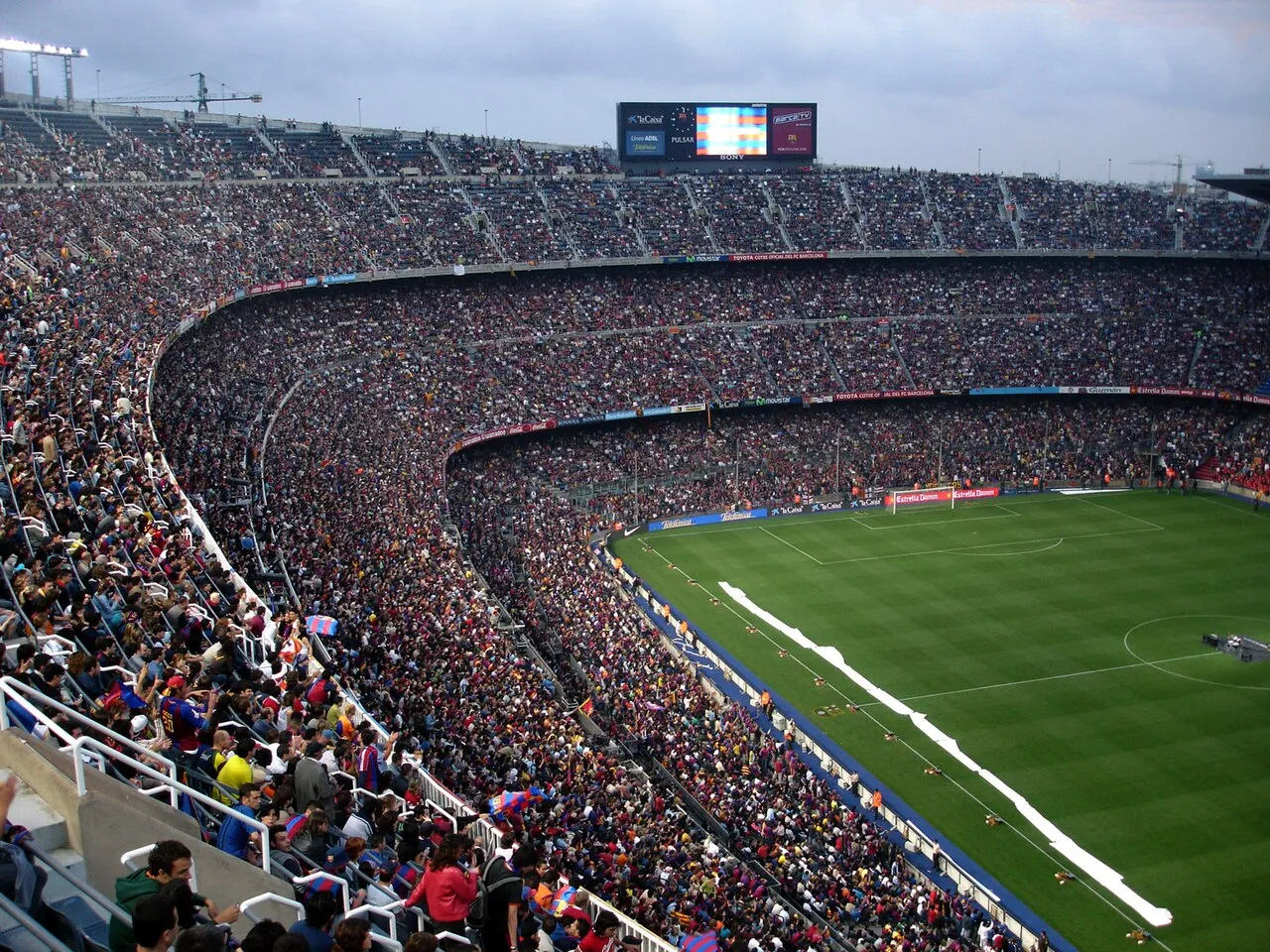
Barcelona beat Aston Villa 3-0 at the Camp Nou on 3 November 2026 in the UEFA Champions League league phase. Lamine Yamal opened the scoring and Raphinha added two second-half goals. The result ended Villa's winning start to the competition and brought both clubs to nine points after four matches.
The most revealing detail is the shape of the scoring: an early Barcelona lead, a competitive period before the interval, then two goals that made the second half much harder for Villa. This guide follows that sequence, explains the points and goal-difference changes, and shows why a convincing result should still be distinguished from a complete tactical explanation.
What was the Barcelona versus Aston Villa result?
The final score was Barcelona 3, Aston Villa 0. The fixture belonged to Matchday 4 of the 2026/27 Champions League league phase. It was a home match for Barcelona, not a two-leg knockout tie. The three goals therefore count toward the league-phase record rather than an aggregate score across two matches.
| Item | Confirmed match context |
|---|---|
| Date | 3 November 2026 |
| Competition | UEFA Champions League |
| Stage | League phase, Matchday 4 |
| Venue | Camp Nou, Barcelona |
| Half-time | Barcelona 1-0 Aston Villa |
| Full-time | Barcelona 3-0 Aston Villa |
For readers in Pakistan, the late European kickoff fell after midnight locally. That explains why searches and discussions increased on the morning of 4 November while the official fixture carries the European date of 3 November. Keep the match's recorded date when comparing it with reports or a season calendar.
How did the goals arrive?
Yamal scored in the seventh minute after a defensive error. Raphinha doubled the advantage in the 52nd minute and scored again in the 64th. Villa's official report records opportunities for the visitors and a later header from substitute Leon Goretzka that touched the outside of the post.
| Minute | Scorer | Score after the goal |
|---|---|---|
| 7 | Lamine Yamal | Barcelona 1-0 Villa |
| 52 | Raphinha | Barcelona 2-0 Villa |
| 64 | Raphinha | Barcelona 3-0 Villa |
This timeline is more useful than listing the scorers without the match state. Villa spent much of the first half one goal behind, a recoverable position in principle. The second and third goals changed the task from finding an equalizer to recovering a much larger deficit with progressively less time remaining.
The score sequence does not establish every cause. It does not, for example, prove that every Villa attack was poor or that Barcelona controlled every minute. For those claims, a reader needs the full report, event record and preferably the match footage. The timeline establishes what changed and when; further evidence explains how consistently each team imposed its ideas.
Why was the first goal important?
An early goal changes the options available to both teams. The leading side can choose moments to advance without facing the same immediate pressure to score. The trailing team has to balance its original plan with the growing need to create a reply. Those pressures exist even when both coaches initially keep the same formation.
For Villa, conceding after seven minutes meant that the majority of the match was played while chasing. That is different from conceding an opener in the final ten minutes, when the response becomes more urgent almost immediately. The early setback left time to recover but also required the visitors to remain patient enough not to create unnecessary opportunities at the other end.
Barcelona's advantage was therefore more than a number on the scoreboard. It influenced the choices that followed. However, a lead does not automatically mean a team has solved the game. The next task is to manage the opponent's response while continuing to offer a threat, rather than assuming that one successful early moment will remain sufficient.
What did Raphinha's two goals change?
The second goal arrived shortly after the restart. That timing matters because half-time gives a trailing team a chance to regroup. A setback early in the new half can quickly increase the difficulty of the revised plan. Villa now needed two goals to draw level, while Barcelona had more room to manage risk.
The third goal created a three-goal margin with roughly a quarter of normal time remaining. From that position, the visitors needed several successful attacks without conceding again. A single response would improve the scoreline but would not restore parity. The mathematics of the comeback had become substantially less favorable.
For Barcelona, Raphinha's brace also distributed the scoring responsibility. Yamal had supplied the opening breakthrough, but the later goals came from another attacker. That is a concrete observation about the scorers. It should not be inflated into an unsupported claim that every attacking combination worked perfectly throughout the match.
What happened to the clubs' points totals?
Barcelona had won two of their opening three league-phase matches and lost one. Villa had won all three. The Barcelona victory added three points to the home side's six, while Villa received no points from the defeat. Both therefore finished this fixture on nine points from four matches.
That shared total does not automatically mean the clubs occupy an identical position in the table. Ranking requires the competition's tie-breaking criteria and the records of other teams. A table checked before the remaining Matchday 4 fixtures finish can also differ from the completed round's table.
Use a dated snapshot when discussing standings. Saying both teams had nine points after this match is precise and supported. Saying they had already secured a particular final league-phase place would go far beyond the result, because several fixtures remained and qualification depends on the full competition record.
Goal difference: the arithmetic behind the table
Barcelona's first four league-phase scores were 5-1 against Feyenoord, 4-1 at Galatasaray, 2-4 at Paris Saint-Germain and 3-0 against Villa. Those results produce fourteen goals scored and six conceded, giving a goal difference of plus eight. This is a calculation from the listed results, not a separate live standings feed.
Villa's corresponding results were 3-2 at Club Brugge, 6-0 against Fenerbahçe, 3-1 against Viking and the 0-3 defeat at Barcelona. That produces twelve scored, six conceded and a goal difference of plus six. Before this match, Villa's record had looked very different because no defeat had yet been added.
The match changed the clubs' goal-difference comparison by six goals: Barcelona gained three and Villa lost three. That does not mean six goals were scored in the fixture. It means the same three-goal margin affected the two clubs' records in opposite directions. This is an important distinction when reading a table after a head-to-head match.

A view of Villa Park signage and stands, providing Aston Villa club context.
A clean sheet is an outcome, not a complete defensive report
Barcelona conceded no goals, so the result includes a clean sheet. That is valuable, but it should not be interpreted as proof that Villa never created a chance. The visitors' own report describes opportunities, including the header that went narrowly outside the post.
To assess defending more deeply, ask how chances were prevented, where possession was lost and what happened after a dangerous moment. A goalkeeper's intervention, an opponent's missed opportunity and a well-organized defensive sequence can all contribute to the same zero in the goals-conceded column.
The fair conclusion is narrower than a sweeping verdict: Barcelona combined three goals with no concession in this fixture. Explaining whether that reflected sustained control, strong individual defending, excellent goalkeeping or inefficient finishing by the opponent requires the relevant evidence for each claim.
How to watch the match as a learning exercise
Choose a five-minute section before the second goal. Track how Villa try to progress the ball and where Barcelona begin applying pressure. Do not assume a particular tactical pattern merely because it is fashionable to describe a winning team as pressing high. Check where the players actually engage.
Then watch the first few minutes after the goal. Does the trailing side commit more players forward? Does the leading side change the speed of possession? Are the same spaces available? Write observations before reading a tactical thread so that the analysis begins with the match rather than with someone else's preferred explanation.
Finally compare your observations with another passage. A team may behave differently at 1-0 and 3-0. That difference is not automatically inconsistency; it can be an adjustment to the match state. Recognizing those changes makes football more interesting than judging every attack by whether it ends in a goal.
Shots, possession and highlights need careful interpretation
Possession indicates control of the ball under the data provider's method; it does not directly count dangerous chances. A team can have extended possession far from goal, while another creates a small number of higher-quality opportunities. Neither pattern should be inferred solely from the final score.
Similarly, shots and shots on target are different categories. A blocked attempt, a wide shot and a saved shot may appear differently across the statistics. If two reports disagree, first check the definitions and update times. Do not silently combine figures from different providers into a supposedly exact match dataset.
Highlights also compress the story. They are useful for seeing goals and selected incidents, but they omit much of the positioning and decision-making between those moments. Use them to confirm visible events rather than to claim that you have observed every tactical adjustment across ninety minutes.
What should Villa take from the defeat?
The result ended an unbeaten winning start, but it did not erase the points already earned. Three wins from the first three games still contributed nine points. The practical task was to respond to the defeat while preserving the strengths that had made the earlier results possible.
From an analytical perspective, separate the early error, the opportunities to respond and the later goals conceded. Treating the entire match as one undifferentiated failure makes it harder to identify a useful next step. Different phases may require different improvements.
This is also a useful learning habit beyond sport. A disappointing result should lead to specific questions about decisions and execution, not a conclusion that all earlier work was meaningless. The evidence can support criticism while still recognizing the wider record.
A score-and-points challenge
Suppose Villa had scored once after Barcelona's third goal. Would either club's points from this match have changed? No: a 3-1 Barcelona victory would still award three points to the winner and none to the loser. The goals-for and goals-against totals would change, however, and Villa would no longer have been held scoreless. This exercise separates the result category, the winning margin and the clean-sheet description. They are connected measures, but changing one does not necessarily change all the others.
Frequently asked questions
Did Raphinha score twice against Aston Villa?
Yes. His goals came in the 52nd and 64th minutes, after Yamal's early opener. That makes the final scoring sequence three Barcelona goals without a Villa reply. Use the dated fixture when searching for the highlights, since the clubs' older meetings belong to different seasons and contexts.
Were Barcelona and Aston Villa level on points afterward?
Both had nine points after four league-phase matches. Their full ranking required the applicable tie-breakers and the rest of the competition table. A shared points total is not, by itself, a statement that both teams held the same league position.
Was this a knockout result?
No. It was a league-phase fixture. There was no second-leg aggregate score attached to this particular result. Keeping the stage clear prevents confusion about away goals, extra time or progression rules that do not apply to an ordinary league-phase match.
Where can I understand Barcelona's broader club context?
Read our Barcelona club and academy guide. For another Villa result with a different match pattern, see the Villa–Fulham draw analysis. The comparison helps show why each fixture needs its own evidence.
Sources
Image credits: cover: Mutari 09:33, 21 September 2007 (UTC), source, Public domain. Resized and converted to WebP. inline: Elliott Brown from Birmingham, United Kingdom, source, CC BY 2.0. Resized and converted to WebP.
Found an error or an outdated detail? Report a correction with the article URL and original source.