
FC Barcelona Explained: Club Origins, La Masia and the Right Team
Understand FC Barcelona beyond one score: its founding, La Masia, separate teams and a practical way to identify the right fixture and source.

FC Barcelona is a club, a sporting institution and a name shared across several teams. That is why a search for “Barça” can produce a men's match, a women's fixture, an academy story or a historical photograph on the same screen. Knowing which part of the club a page describes makes following it much easier.
This beginner's guide explains the club's origins, La Masia and a practical way to identify the right team and fixture. It answers a different question from a single-match preview: how can a new follower understand the institution behind the score?
What does FC Barcelona identify?
The club's own founding history uses the name Futbol Club Barcelona and connects the organisation to Barcelona and Catalonia. “FC Barcelona” identifies the club; a particular event still needs its sport, team and competition attached.
The club's official website separates men's first-team football, women's football, Barça Atlètic and other sporting sections. A headline containing only “Barcelona won” may therefore omit the very information a new reader needs.
Start by checking the section heading and opponent. Then look for a date and competition. Those labels turn a broad name into a specific event rather than leaving you to guess which team played.
This guide does not treat the city of Barcelona as interchangeable with its football club. A city guide, a municipal announcement and a team result can use the same place name while answering entirely different questions.
The founding date and Joan Gamper
The official history records a meeting on 29 November 1899 at the Solé Gymnasium, where Joan Gamper and eleven other men formed the association. An earlier notice in Los Deportes had sought people interested in forming a football team.
The date belongs to the institution's foundation. It is not the opening date of every stadium, residence or modern training facility associated with the club.
That distinction helps when reading anniversary posts. A photograph of a later building does not move the founding event into the building's construction year. A club can retain its identity while its facilities and competitions change over time.
For a history notebook, use an event label beside each date. “Club founded” and “residence opened” communicate much more than two bare years in a timeline. They also make it easier to check whether a source is discussing the same milestone as another page.
Why the club is larger than a match result
A club's public information includes fixtures, coaching and player records, facilities, membership and historical material. These pages serve different purposes. A result page records an event; an identity page explains an aspect of the organisation.
This matters because not every useful fact expires at the same speed. A founding date is relatively stable. A starting XI belongs to a particular match. A ticket instruction or venue announcement may need a fresh check before someone acts on it.
An original research exercise is to sort five club-page statements into categories: historical fact, dated event, current service information, attributed ambition and personal interpretation. The classification often tells you how much updating each statement needs.
Do not assume that an official historical page is also a current travel notice. The source may be authoritative for the past while never intending to answer today's entry, access or scheduling question.
La Masia: a name with historical and modern meanings
The club's La Masia page distinguishes the historic building from the newer La Masia–Centre de Formació Oriol Tort at the Ciutat Esportiva Joan Gamper complex. It records the newer residence opening on 20 October 2011.
That is a useful distinction for anyone comparing photographs. The familiar older building and the modern residence are not necessarily two camera angles of the same structure. Captions and dates help identify which one a picture shows.
The club presents the residence as supporting the personal, social and intellectual development of young sportspeople alongside their sporting lives. That is a description of its educational purpose, not a guarantee that every resident will become a senior professional.
For a student reader, the broader idea is important: sporting development takes place within a wider daily life. Education, routines, relationships and personal growth need not disappear simply because a young person is serious about training.
An academy story is not an admission guarantee
Reading about a famous development system can be inspiring, but a historical profile or promotional video does not establish that an individual has been accepted into it. A camp, a school programme, a trial and residence within an elite development structure may involve different arrangements.
If exploring an opportunity, identify the exact programme and the organisation communicating it. Check what it actually promises rather than treating a familiar badge on a social-media graphic as proof of selection.
This page does not offer a trial, recruitment route or paid package. It explains why a reader should keep the category of an opportunity clear. Interest in a club is not the same as a confirmed place in one of its programmes.
The lesson also applies locally. A school tournament, a private coaching course and selection for a representative team can all be worthwhile, but they are not interchangeable achievements.
Men's first team, women's team and Barça Atlètic
The official site's separate football sections are a simple starting point for finding the correct team. Use them before transferring a player name, opponent or competition from one article to another.
A result from the women's team is not part of the men's first-team league row. An academy or Barça Atlètic story should not automatically become a senior first-team selection announcement. The club connection is real, but the event categories remain different.
For a personal fixture notebook, make “team” a required field. The word “Barcelona” alone is too broad for a reliable record. Add a clear label such as men's first team or women's team, then record the competition and date.
This prevents another common error: taking a player who appears in one section's squad page and assuming that they are listed for a different section's next match. The page heading provides essential context.
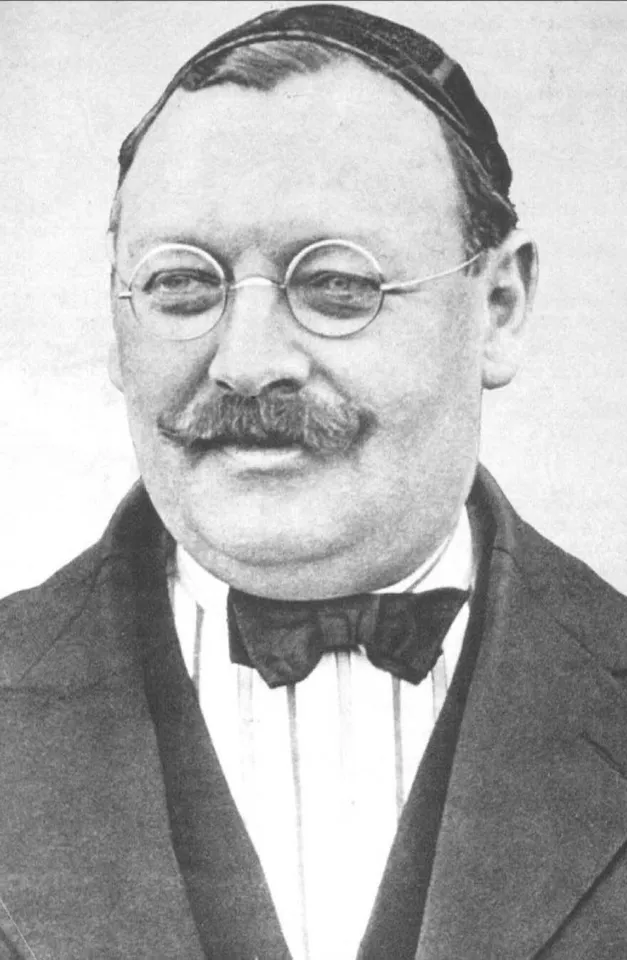
Historical portrait of Joan Gamper associated with 1910, included to illustrate the club's origins. It is not a photograph of the 1899 founding meeting.
Read the competition before interpreting the result
A club can appear in several competitions during a season. A league table, a knockout tie and a friendly do not necessarily use a result in the same way.
For example, an original fictional exercise might show a 1–1 score in two different contexts. In a league match, that result may add a draw to a table. In a knockout context, the next step depends on that competition's format and rules. The same displayed score is not enough to identify the consequence.
This guide does not invent the procedure for a particular future fixture. Check the competition's own information before assuming that extra time, penalties or another leg must follow.
Our Barcelona–Alavés match guide discusses a particular dated result. This page explains the larger identification habits that help a reader place such a result correctly.
Why a current fixture needs a current venue check
A historic stadium photograph can be accurate and still fail to tell you where a future match will be played. Construction, competition arrangements and other scheduling circumstances can change the details a spectator needs.
Use the current fixture information and official ticket or venue notice for an actual visit. Do not infer a kickoff location from the most familiar building in a club-history article.
The same care applies to time. Keep the date and time zone beside a scheduled kickoff when converting it for Pakistan. A number copied without its zone can produce the wrong calendar entry, especially when the match date differs after conversion.
This is a method for checking information, not a travel booking recommendation. The guide intentionally avoids a permanent current capacity, entry procedure or next-match time that could become stale.
How to read an official squad page
A squad page identifies a group at a particular point in time. A match team sheet identifies who is selected for a specific fixture. A historical player page records an earlier association. Those three resources should not be read as one continuously identical list.
If checking whether someone will play, first establish whether the source is current and which team it concerns. Then distinguish membership of a squad from confirmed selection for that match.
A training photograph is also limited evidence. It can show someone in a training setting without establishing that they will start, how long they will play or what tactical role they will receive.
For a source notebook, record the kind of claim supported. “Listed on squad page” is more precise than “will definitely start.” Accuracy often improves when the wording stays close to what the evidence actually establishes.
Look for learning habits, not a promise of instant success
An academy's reputation can encourage young players, but it should not become a claim that copying one drill guarantees a professional career. Development depends on many individual and institutional circumstances.
For a school learner, a more practical question is what can be applied now. Can you maintain a routine, reflect on a mistake, ask for feedback and balance practice with study? Those habits do not require pretending to follow the exact private schedule of a famous club.
Write a small weekly goal that you can observe. “Complete three planned practice sessions and note one improvement question” is clearer than “become world-class this week.” The first creates evidence for reflection; the second supplies no workable next step.
These are original study suggestions, not quoted instructions from La Masia or an endorsement by FC Barcelona. Keeping that attribution clear makes the advice easier to assess on its own merits.
A source-based club research activity
Choose one historical fact, one facility fact and one fixture. For each, save the source URL, the date checked and the exact question it answers. Do not copy whole paragraphs simply because a page is official.
Next, test whether the three items could accidentally be confused. Does the facility photograph belong to the founding year? Does the fixture involve the team you intended? Does the article date describe the match date or merely when someone posted about it?
This exercise teaches a reusable research skill: give each claim the context it needs. It works for an institute's history, a national sports team or a public project as well as a football club.
Our viral-video verification guide explores a related problem, separating what a picture visibly shows from the date, location or claim attached to it online.
Build a small fixture organiser
Programming students can create records with club, team, opponent, competition, date, time zone and source. Display the team category prominently instead of hiding it inside a long note.
Add a validation rule that rejects a fixture with a missing date or team. Then create filters for different sections. A men's fixture and a women's fixture can sit in the same organiser while remaining distinct records.
Our programming courses provide a place to practise those ideas with objects, lists and filters. Use invented fixtures for initial testing, and label any real saved record with its source rather than presenting a manual exercise as a live official feed.
The result is a modest but useful tool. It solves a clear information problem without requiring an account with the club or access to private systems.
Frequently asked questions
Is Barcelona the club or the city?
The word can refer to either in different contexts. FC Barcelona identifies the club, while a football event still needs its team, competition and date.
Is La Masia only the old building seen in photographs?
The club's identity page distinguishes the historic building from the newer residence opened in 2011. Check which facility and date a caption identifies.
Does an academy article confirm admission or selection?
No. A public profile explains an institution. Individual admission, a particular programme and match selection require separate authoritative confirmation.
Does this page provide live scores or current tickets?
No. It is a club-understanding guide. Use the official current schedule and service notices for time-sensitive details.
Sources
- Official founding history
- La Masia: official identity and facility explanation
- Official men's first-team schedule
- Official women's football section
Image credits: cover: Electro07, source, CC BY-SA 4.0. Resized and converted to WebP. inline: Unknown authorUnknown author, source, Public domain. Resized and converted to WebP.
Found an error or an outdated detail? Report a correction with the article URL and original source.