
Bournemouth vs Leeds: 2–0 Result, Handball and Added Time Explained
Understand Evanilson and Adli's goals, Leeds' disallowed finish and why stoppage time differs from extra time through a clear, sourced match-learning guide.
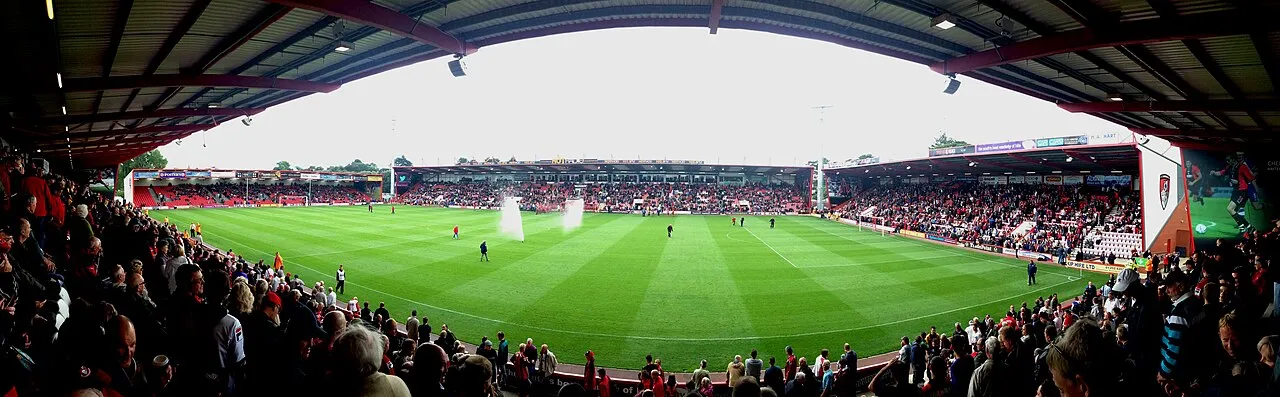
Bournemouth beat Leeds United 2–0 at the Vitality Stadium on 31 October 2026. Evanilson opened the scoring in the 31st minute, and Amine Adli added the second in stoppage time. Leeds had an earlier finish disallowed for handball, so the final score needs to be read alongside the decisions and the timing.
For a new football follower, this match offers a useful set of questions. Why did the ball entering the net not give Leeds a goal? Why could Bournemouth score after 90 minutes? And how can a 2–0 result remain a one-goal contest until very late? This guide explains those points through the official report and the Laws of the Game.
The result and the three important moments
The Leeds club report records a Premier League away defeat, with Bournemouth leading 1–0 at half-time and finishing 2–0 winners. It identifies Evanilson and Adli as the scorers, listing their goals at 31 and 94 minutes respectively.
Earlier, Dominic Calvert-Lewin had put the ball in the net following a Leeds move involving Harry Wilson and Jayden Bogle. The report says VAR intervened and the effort was ruled out for handball. That sequence did not become a valid Leeds goal.
The opening Bournemouth goal followed Justin Kluivert collecting a loose ball and setting up Evanilson. Adli's later finish came after a Bournemouth attack in added time. These are the reported match events; the explanations below discuss the rules and how to interpret the sequence.
| Stage | What counted in the match record |
|---|---|
| Early Leeds finish | Disallowed for handball; no Leeds goal added |
| 31st minute | Evanilson put Bournemouth ahead |
| Half-time | Bournemouth 1–0 Leeds |
| Stoppage time | Adli scored Bournemouth's second |
| Full-time | Bournemouth 2–0 Leeds |
The net is not the only condition for a goal
Football supporters often react as soon as the ball crosses the line. The official match outcome, however, also depends on whether an offence prevents the goal from counting. A celebration or an initial graphic is not always the final decision.
In this fixture, the reported reason for the cancelled Leeds finish was handball. It should not be retold as an offside decision simply because offside is another common reason for a disallowed goal.
This guide does not independently reconstruct the referee's camera angles or claim access to the officials' conversation. The responsible statement is that the official club report records the goal being disallowed for handball. The law explanation helps readers understand the category without pretending to provide a fresh adjudication from unseen footage.
When a short clip circulates, keep the decision and the clip separate. A crop showing only the final touch into the net may omit the part of the move that led to the intervention.
Does accidental handball always mean play stops?
No. Law 12 explains that not every contact between the ball and a player's hand or arm is an offence. The context matters, including deliberate handling and situations in which the arm makes the body unnaturally bigger.
There is also a specific restriction involving the scorer: a player cannot score directly with the hand or arm, or immediately after the ball touches their own hand or arm, even if that contact is accidental.
That is why “he did not mean it” is not a complete answer to every discussion about a scorer's handball. Different parts of the law address different situations. The first task is to identify which situation is being discussed.
Keep this explanation narrow. It is not a rule that every accidental touch anywhere in a long attacking move automatically cancels any later goal. Nor does it establish every detail of this particular incident without reviewing the relevant evidence. Use the current law and the recorded decision together.
VAR, the decision and the final record
A helpful way to follow a reviewed incident is to track three stages: what appeared to happen, what was checked and what the final match record says. This avoids preserving an early impression after the decision has changed.
For a viewing notebook, write “finish under review” if that is what the broadcast shows. When the decision is confirmed, update the record rather than leaving the provisional score in place. If you later share a clip, include the outcome of the review.
Do not treat a review as proof of dishonesty by a player or official. A rules decision and an allegation about someone's intentions are different claims. The latter needs evidence that a score graphic does not provide.
The learning opportunity is to become more precise: which offence was reported, whose action was involved and what changed in the score? Those questions are more useful than arguing from the volume of the celebration.
Why Adli's goal after 90 minutes still counted
Law 7 provides for two halves of 45 minutes and for allowance to be made for time lost. Reasons include substitutions, injury assessment, disciplinary incidents, VAR delays and celebrations. The end of the displayed 90 minutes is therefore not always the final whistle.
The fourth official's board indicates the minimum additional time decided by the referee. Further time can be added where necessary; the figure is not a promise that the whistle must sound at one exact second regardless of later stoppages.
In this match, the Leeds report lists Adli's goal at 94 minutes and describes it as a stoppage-time goal. That means it occurred in the additional period attached to the second half, not automatically in a separate extra-time contest.
For beginners, the vocabulary matters. Added time compensates for time lost within a half. Extra time is a distinct competition procedure used where applicable. A late clock reading alone does not establish that extra time was played.
Read a football clock as a label, not a new score
You may see a late event displayed as 90+4 or described by a report using the 94th minute. Preserve the source's convention when reproducing the entry, rather than guessing an exact second from a rounded minute label.
The plus sign means the event belongs to the period beyond the nominal end of the half. It does not mean four additional goals, a four-minute half or that a new match began at 90.
In a small data project, store the base minute and added-time component separately if you want to display this notation consistently. A plain text label can also work, provided it is not accidentally treated as an arithmetic expression in the wrong part of a program.
This sounds simple, but clear labels prevent errors. An event time, the score at that time and the final score are three separate fields with three separate meanings.

Amine Adli after Brentford versus Bournemouth in December 2025. This historical player photograph does not depict his stoppage-time goal against Leeds.
A 2–0 finish was not a two-goal game throughout
Bournemouth's second goal arrived late, so the final margin does not describe the scoreboard for most of the contest. Between the opening goal and the added-time finish, the gap was one goal.
That distinction changes how a reader interprets a match summary. A team chasing an equaliser faces a different immediate task from a team already two goals behind. The final line cannot replace the sequence that produced it.
At the same time, do not conclude that a late second goal is somehow worth less in the official score. It counts in the result and contributes to the goals-for and goals-against totals just like a valid earlier goal.
A useful summary therefore includes both the final outcome and when the margin changed. It can be concise without flattening the match into a situation that never existed for most of the afternoon.
The arithmetic of the result
For this match's contribution to the league record, Bournemouth add two goals for and none against, giving a goal-difference change of +2. Leeds add none for and two against, giving a change of −2. That is a calculation for this fixture, not a complete season table.
The win supplies Bournemouth with three match points and Leeds with none under the league's ordinary win-draw-loss allocation. A season total still requires all the other results and any applicable adjustments.
This is why a headline saying a team “won by two” should not be read as “earned two points.” The margin and the league points describe different quantities.
For a comparison focused on standings and games played, read our Manchester City–Brighton table guide. Here, the emphasis is the sequence of goals and the rules behind the clock and the disallowed finish.
What substitutions can tell a viewer
The match report describes Leeds making several second-half changes while behind. A substitution list establishes who entered and who left, but it does not by itself prove every tactical intention or the quality of the change.
To examine a change, identify the problem you think the team was trying to solve. Then look for observable effects: a different passing option, a player arriving in another area or a change in how possession is progressed.
Keep a distinction between observation and explanation. “The player received the ball farther forward” describes something visible in a sequence. “The manager wanted a specific outcome” is an interpretation unless supported by an attributed statement.
This approach allows a beginner to analyse a game thoughtfully without claiming access to the dressing room. It also avoids judging a substitute solely by whether the team eventually scored after the change.
A practical viewing exercise
Make a three-row timeline: the cancelled finish, the opening goal and the added-time goal. For each row, note the scoreboard before the event, what the report says happened and the scoreboard after the final decision.
The cancelled finish should leave the valid score unchanged. The first accepted Bournemouth goal changes the score to 1–0. The later accepted goal changes it to 2–0. This creates a simple check on whether your summary matches the actual recorded sequence.
Then add a separate column for the reason an event matters. The handball decision illustrates a rule; the opening goal changes the lead; the late goal changes the final margin. A good timeline shows both what happened and why a learner should notice it.
If using highlights, do not invent events between the clips. An edited video can be useful for selected incidents while still being incomplete as a record of every passage of play.
Turn the timeline into a coding task
Create event objects with a minute label, team, event type and a field indicating whether a goal was awarded. Count only awarded goals when calculating the score. A record marked “disallowed” should remain visible in the timeline without increasing the total.
Next, test a fictional correction. Change an event from pending to disallowed and confirm that the displayed final score remains accurate. This teaches the difference between an event occurring and an event satisfying the conditions for inclusion in a total.
Our programming courses can help with objects, lists and conditions. Use invented event data for practice, and label the result as a classroom project rather than an official live-score system.
The same pattern appears outside sport: a pending application is not an approved application, and a cancelled transaction should not remain inside a completed-payment total. Learning the distinction through a match can make the programming idea easier to remember.
Frequently asked questions
Was the final score 2–1 because Leeds put the ball in the net?
No. The disallowed finish did not count. The official result was Bournemouth 2–0 Leeds.
Was the late goal scored in extra time?
The report describes it as stoppage time. Do not infer a separate extra-time period merely because the event occurred after 90 minutes on the match clock.
Does every accidental handball cancel a goal?
The law distinguishes situations, including a specific restriction on the scorer. Avoid turning that restriction into a blanket statement about every touch by every player during an attack.
Can this one result establish the current league position?
No. A current position depends on the full table and other completed fixtures. This guide explains the result's contribution without inventing a live standings service.
Sources
- Official Bournemouth match report
- Official Leeds match report and event record
- Law 12: handball provisions
- Law 7: match duration and additional time
Image credits: cover: Matthew Jackson, source, CC BY-SA 3.0. Resized and converted to WebP. inline: Timmy96, source, CC0. Resized and converted to WebP.
Found an error or an outdated detail? Report a correction with the article URL and original source.