
Man City vs Brighton: 0–1 Result, Standings and Stats Explained
Read the dated standings after Brighton's 1–0 win at City, then understand games played, goal difference, shots and expected goals through worked examples.
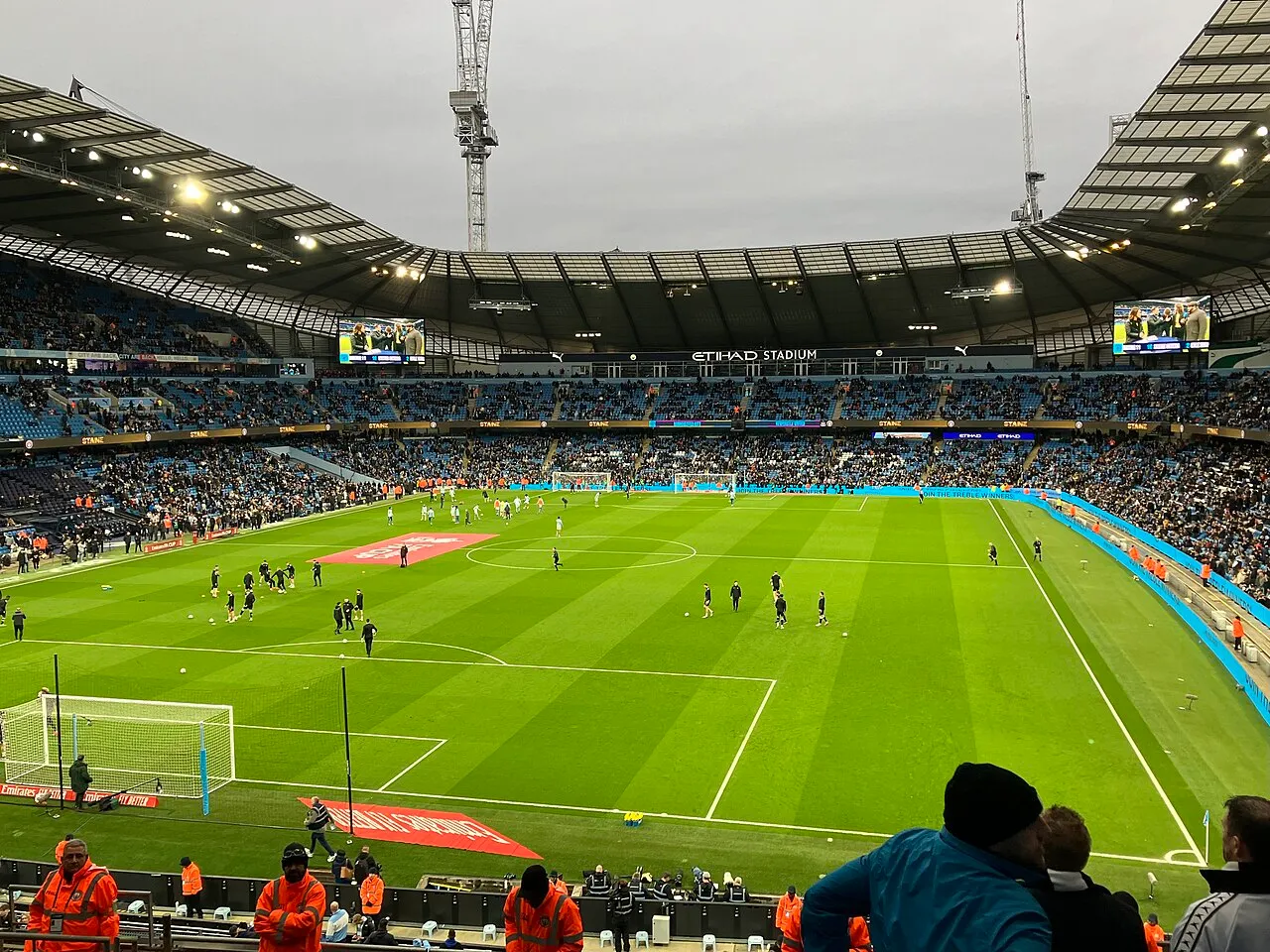
Brighton beat Manchester City 1–0 at the Etihad Stadium on 31 October 2026, with Yasin Ayari scoring the only goal in the 11th minute. For readers searching for the standings, the important detail is that this result brought Brighton closer to the leaders without, at the snapshot used here, putting them first.
This guide explains the verified result, a dated top-three table and the difference between attacking activity and a goal. It also shows how to read games in hand and match statistics without treating a single afternoon as a forecast for the entire Premier League season.
Manchester City versus Brighton: the confirmed result
The official City report identifies a 0–1 home defeat and Ayari's early goal. Its account describes a missed clearance by Matheus Nunes, a ball reaching Maxim De Cuyper and Ayari finishing from close range. Brighton then protected the advantage to full time.
The fixture belongs to the 2026/27 Premier League season. It should not be confused with the clubs' midweek cup meeting or an earlier league fixture that appears when searching only the team names.
| Match detail | Verified entry |
|---|---|
| Home side | Manchester City |
| Away side | Brighton and Hove Albion |
| Date | 31 October 2026 |
| Competition | Premier League |
| Venue | Etihad Stadium |
| Full-time score | Manchester City 0–1 Brighton |
| Goalscorer | Yasin Ayari, 11 minutes |
The table is a match-identification aid. It is not a live scoreboard and does not establish a result for the next time the teams meet. Keeping the date attached is especially useful when a search engine places older scorecards beside new reports.
The standings snapshot after the match
The table embedded in City's report, marked as updated on 1 November 2026, showed the following top three. Treat it as that page's dated snapshot rather than a promise that no later fixture has changed the order.
| Position | Team | Played | Won | Drawn | Lost | Goals for | Goals against | Difference | Points |
|---|---|---|---|---|---|---|---|---|---|
| 1 | Manchester City | 9 | 7 | 0 | 2 | 20 | 10 | +10 | 21 |
| 2 | Arsenal | 8 | 7 | 0 | 1 | 13 | 5 | +8 | 21 |
| 3 | Brighton | 9 | 6 | 1 | 2 | 24 | 7 | +17 | 19 |
The arithmetic provides a useful check. City's seven wins give 21 points. Brighton's six wins and one draw give 19. Both the number of matches and the win-draw-loss totals reconcile with the displayed rows.
The first question is therefore not simply “who has the biggest goal difference?” Brighton's +17 is larger than either of the two rows above, but Brighton have fewer points in this snapshot. Points are compared before goal difference in this situation.
Why games played matter
Arsenal had played eight matches in that table, while City and Brighton had played nine. A points comparison that hides the played column loses an important part of the context.
Having a game in hand is an opportunity, not points already earned. A team still needs to play the fixture, and its eventual result determines what is added. Do not award three imaginary points simply because an additional game is available.
The same care works in reverse. A side with more points after playing more fixtures is not automatically certain to finish above a rival. The current table records completed results; it does not settle all the remaining matches.
For a school exercise, copy the snapshot into a spreadsheet and add a separate column labelled “hypothetical next result.” Keep that column visibly separate from the official points. This prevents an imagined future scenario from quietly becoming part of the reported table.
What Brighton's win changed
Three points brought Brighton to 19, two behind the two teams on 21 in this snapshot. That is the immediate points gap. It is a narrower and more defensible statement than declaring that one result has decided the title race.
You can test three fictional next-match possibilities without predicting which will happen. If Brighton alone add three points while the other two totals stay unchanged, Brighton would reach 22. If all three teams win another match, the two-point gap remains. If one side draws, the comparison changes differently.
These scenarios are arithmetic demonstrations, not scheduled results or betting advice. They show why the phrase “within two points” describes a position rather than a guaranteed next step.
Keep the assumptions visible. Football discussions become confusing when one person imagines a rival losing while another assumes every rival wins. A scenario is only useful when the reader can see what has been held constant.
A shot is an attempt, not a goal
The match-data provider's report records City taking 21 shots, six on target, compared with Brighton's seven attempts and three on target. Brighton still won 1–0. Those figures show the difference between counting attacking attempts and counting the goals that decide a match.
Dividing six by 21 gives approximately 28.6% for City's share of attempts recorded on target. Brighton's three from seven give approximately 42.9%. These are original calculations from the reported totals, not a complete ranking of either team's attacking quality.
The denominator matters. Saying “six versus three” compares the number of on-target efforts; saying “six of 21 versus three of seven” also describes the relationship to total attempts. Neither calculation includes every feature of the opportunities.
Do not infer that every off-target effort was equally wasteful or that every on-target effort was equally dangerous. Distance, angle, pressure and the position of defenders affect what a chance looks like. A count is useful precisely when its limits are understood.

Yasin Ayari in a Sweden national-team photograph. This identifies the player and does not depict his October 2026 goal for Brighton.
What expected goals can and cannot tell you
The same provider assigns City 1.92 expected goals and Brighton 1.0. Expected goals is a model-based description of chance quality, not an alternative final score or a debt that the next match must repay.
If you round those values to 2–1 and call that the result, you have changed the question. The official score remains 0–1. The model provides another way to discuss the chances created; it does not remove the goalkeeper, the actual finishes or the final whistle.
A helpful classroom comparison is to consider a set of opportunities whose model values add to more than one. That total does not mean one specific attempt must go in. It describes an expectation across the chances under the model, with real matches able to finish differently.
This article does not reconstruct the provider's model or claim that another data service must publish identical values. If comparing xG across websites, retain the provider name, fixture and version or date where available.
Why a narrow score can involve several different stories
A 1–0 result tells us the winning margin, but not every phase of play. An early lead can change the decisions faced by both teams: the trailing side needs a goal, while the leading side must decide how to protect its advantage and use any opportunities to attack.
That is a general match-reading principle, not proof of every tactical instruction given in this fixture. To assess a specific sequence, watch the relevant passage and describe what is visible before guessing at the plan behind it.
For example, record where a team regains possession, which passing options appear and how the next action changes the space. This is more useful than applying a vague label such as “wanted it more” to every successful defensive effort.
Likewise, the losing side's larger attempt total does not make the winner's goal invalid or the match unfair. It invites a more precise question: how did the quality, execution and timing of opportunities differ?
Keep the cup meeting out of the league calculation
The match-data report notes a separate midweek EFL Cup meeting that ended 2–2 before City's shootout success. That is context for the clubs meeting again, but it does not award Premier League points.
A penalty shootout belongs to the competition procedure for deciding that tie. Its kicks should not be added to the clubs' league goals-for columns. Nor should the cup's drawn score be used to overwrite the league result from 31 October.
When building a fixture notebook, store competition as a required field rather than an optional comment. Two rows with the same teams can still describe different events with different consequences.
You can practise the same distinction when reading our Chelsea versus Manchester United guide. Each article identifies its own fixture and explains a different match-reading problem rather than combining unrelated results.
A practical table-reading exercise
Take the three published rows and verify four relationships. First, wins plus draws plus defeats should equal matches played. Second, goals for minus goals against should equal goal difference. Third, three points per win plus one per draw should match the points shown, assuming no applicable deduction. Fourth, every figure should belong to the same dated snapshot.
For Brighton, 6 + 1 + 2 equals nine matches. Twenty-four minus seven equals +17. Six wins multiplied by three, plus one draw, equals 19 points. These checks do not predict the season; they confirm that the row's basic arithmetic is internally consistent.
Now deliberately introduce an error in a practice copy, such as changing played from nine to eight. Can you write a condition that flags the mismatch? It is a useful beginner programming task because the rule can be explained in one sentence.
Our programming courses can help with lists, objects and validation. Use a saved practice table instead of scraping a live site or presenting your exercise as an official standings service.
How to follow the fixture responsibly from Pakistan
For future meetings, check the published date and time afresh. Do not copy an old kickoff into a new calendar entry, especially when a search result still shows the earlier season.
Separate official match information from broadcast availability. A page containing a score or a text commentary does not necessarily include video rights in Pakistan. Check the relevant provider's current event listing rather than assuming every “live” button means a free legal stream.
When sharing a screenshot of this table, retain its date and the played column. A small amount of context prevents a large misunderstanding, particularly if another match has finished by the time a friend reads the message.
Frequently asked questions
Who scored City's goal?
City did not score in this league fixture. Ayari scored Brighton's only goal. A search snippet about another meeting can create confusion if the date is omitted.
Did Brighton go top after winning?
Not in the dated snapshot shown here. Brighton had 19 points, compared with 21 for both City and Arsenal. Later standings require a fresh check.
Was Brighton's larger goal difference enough to move above City?
No. Brighton had fewer points in the snapshot. Goal difference should not be compared as though the points totals were equal when they were not.
Does the xG figure mean City should receive points?
No. Match points follow the actual result. Expected-goals figures support analysis of opportunities; they do not replace the score or create an entitlement to a win.
Do the photographs show this particular match?
The captions identify the images as historical player or stadium context. They are not presented as photographs of Ayari's October 2026 goal or evidence of the current table.
Sources
- Official Manchester City match report and dated table
- Official matchday result and post-match context
- Official Premier League fixture identification
- Match-data report and statistics
Image credits: cover: Anthony Foster, source, CC BY-SA 2.0. Resized and converted to WebP. inline: Mikael Hervestad, source, CC BY-SA 4.0. Resized and converted to WebP.
Found an error or an outdated detail? Report a correction with the article URL and original source.