
Brian Fariñas: Barcelona Debut, Midfield Profile and Right-Back Role
Understand Fariñas' Alavés debut, the difference between a profile role and a match assignment, and how to read his reserves figures without mixing teams.
Brian Fariñas made his FC Barcelona first-team debut on 31 October 2026, starting against Alavés in a 6–1 league win. The detail that makes the appearance especially interesting is his position: the player listed as a midfielder started at right-back and completed the match.
For a new football follower, that is a useful introduction to versatility. A player's profile describes a general role, while a team sheet records a particular assignment. This guide explains Fariñas' verified development milestones and shows how to discuss a young player's first appearance without inventing a permanent position or predicting an entire career.
Who is Brian Fariñas?
Barcelona's official profile identifies Fariñas as a midfielder born on 9 February 2006 in Benicarló, Spain. It records his arrival from Villarreal in 2018 and his progression through the club's youth development system.
The profile also records a Barça Atlètic debut on 16 March 2024, followed by a larger reserves role. For 2025/26, it lists 35 appearances, five goals and six assists. These are a specified season's figures, not a continuously updating first-team total.
That distinction matters when searching for the player's name. A youth record, a reserves season and a senior debut can all appear on the same results page. They are connected parts of a career, but their numbers should not be combined under a misleading heading.
Keep the accent in Fariñas when practical, while recognising that many searches omit it. The spelling variation alone does not establish a second player. The club, date of birth and career context help identify the person accurately.
What happened on the first-team debut?
The club's report dates the debut to the league fixture against Alavés at Spotify Camp Nou. It says Hansi Flick selected Fariñas at right-back and that he played the full 90 minutes. Barcelona won 6–1.
The report also notes earlier experience in that position during a preseason meeting with Birmingham City. That earlier appearance should not silently replace the later milestone: a preseason outing and the first-team league debut described in the October report are different events.
The most useful summary keeps the claim narrow. Fariñas started the specified match in a different role from his profile's midfield label. That establishes an example of versatility; it does not establish that every future appearance will be at right-back.
For the broader match result, our Barcelona–Alavés guide provides a separate dated account. The present article focuses on interpreting the player's milestone and role.
A profile position and a match assignment answer different questions
A profile asks what kind of player the club generally presents. A match assignment asks where the player is used within a particular lineup. The two answers can differ without either being an error.
Consider an original school-team example. A student usually plays centrally but is selected on the right for one match. The season profile might still describe a midfielder, while that day's team sheet records a wider or deeper assignment.
The example does not reproduce Barcelona's private tactical plan. It simply explains why a positional label should be read at the right level of detail.
This also prevents a common reporting shortcut: describing someone as having “changed position permanently” after seeing one lineup. A permanent change needs stronger evidence than one match, especially for a player whose development includes several roles.
What does versatility actually mean?
Versatility describes the ability to contribute in more than one role or situation. It is not the same as claiming that every role demands exactly the same skills.
A central midfielder and a right-back may both need sound passing and awareness, but they can receive the ball with different space, pressure and responsibilities around them. The useful viewing question is how the assignment changes the decisions available.
For an original observation exercise, choose a short passage and note three things: where the player receives, which options are visible and what happens after the next action. Describe those facts before reaching a broad conclusion about suitability.
This guide does not claim a firsthand technical scouting assessment of Fariñas' entire performance. It uses the reported assignment to introduce a way of watching more carefully. A full evaluation would need a clearer method and more evidence than a debut headline.
Why a successful team result is not an individual rating
A 6–1 win records a team outcome. It does not automatically provide a score out of ten for every player, nor does it reveal how frequently a particular defender was tested.
When discussing an individual, identify the action or sequence that supports the claim. A completed match establishes playing time in that fixture. It does not by itself establish flawless passing, perfect positioning or the absence of mistakes.
The same principle works after a defeat. A losing result does not prove that every player's contribution was poor. Team outcomes are important context, but individual analysis needs evidence matched to the question.
For a classroom discussion, separate two sentences: “The team won” and “I think this action helped because…” The second sentence requires its own explanation rather than borrowing certainty from the first.
Registration, squad membership and debut are separate milestones
The official profile records Fariñas joining the senior squad at the start of 2026/27. The October report records the subsequent debut. Those dates serve different purposes in a career timeline.
A player can belong to a squad before making an appearance. A place on a bench is also not the same as entering the field. A start and a substitute appearance are both appearances, but they describe different forms of participation.
Use separate fields in a notebook: squad status, match selection, start or substitute, and minutes where the source provides them. Do not turn a registration announcement into a claim that a competitive match has already been played.
This is a useful general information habit. Admission to a programme, attendance at a session and completion of a course are related milestones, but none should automatically be substituted for another.

A historic building in Benicarló provides geographical context for the player's birthplace. It is not identified as his residence or a place associated with his personal life.
Read the reserves figures with their scope attached
The profile's 35 appearances, five goals and six assists belong to the 2025/26 Barça Atlètic season. The team name and season should stay beside the numbers whenever they are reused.
Five goals divided by 35 appearances is approximately 0.14 goals per appearance. That is a simple original calculation, but it is not goals per 90 minutes. Appearances can contain different amounts of playing time, and the profile summary alone does not supply a minutes denominator.
Similarly, adding five goals and six assists produces 11 recorded goal contributions under those categories. It does not mean the player personally scored 11 goals or that each contribution measures an identical action.
Do not use these figures to invent a complete senior record. The correct scope is more valuable than a larger-looking number created by mixing youth, reserves and first-team competitions.
Why per-appearance and per-90 rates differ
Here is a fictional example, separate from Fariñas' record. Player A scores once in two appearances, playing a combined 90 minutes. Player B scores once in two appearances, playing a combined 180 minutes.
Both have 0.5 goals per appearance. Their goals per 90 minutes differ: Player A has one, while Player B has 0.5. The difference comes from playing time, not from a disagreement about how many goals were scored.
The example explains why a statistic needs its definition. A table with a heading saying only “rate” does not give enough information for a reliable comparison.
For a young player with limited appearances, also consider how small the sample is. One additional action can change a rate sharply. That is a reason to communicate uncertainty, not a reason to dismiss the milestone or exaggerate its predictive power.
How to follow a young player without turning development into a forecast
Start with dated evidence: a match report, a squad notice or an official profile. Then describe what the evidence establishes now, rather than extending it into a guaranteed future role.
Questions such as “Will he always start?” or “Will he become the next famous midfielder?” concern outcomes that a debut report cannot settle. Comparing names may be entertaining, but it should not replace analysis of the actual player.
A more useful development notebook tracks opportunities, roles and clearly sourced contributions over time. It leaves room for a changing assignment and for the normal uncertainty of a sporting career.
Avoid rumours about private conversations, contracts or selection promises unless a reliable source directly supports them. A photograph in training cannot reveal every decision a coach will make before the next fixture.
A practical viewing worksheet
Create four columns: source, reported fact, observation question and conclusion limit. For the debut, a reported fact is the right-back assignment. A useful observation question is how receiving positions differ from a central role.
The conclusion limit might say that one match does not establish a permanent position. Writing that limit beside the question makes the analysis more precise without making it less interesting.
If watching highlights, note that the selection of clips is incomplete. A package built around goals may not show routine defensive or possession work. Do not calculate a success percentage from selected clips as though every action were included.
Our FC Barcelona identity guide explains another part of the context: why the senior team, Barça Atlètic and youth sections need clear labels in a source notebook.
Turn the timeline into a small programming project
Make a list of career-event records with a date, team, event type and source URL. Store the reserves-season statistics in a separate season record rather than attaching them to the senior debut.
Add a filter for event type so a user can view squad announcements separately from match appearances. Then test whether sorting the list changes any labels or accidentally duplicates an event.
For the statistics display, write the denominator explicitly. If minutes are missing, do not display a per-90 calculation. A clear “minutes not provided in this dataset” message is better than silently substituting appearances.
Our programming courses provide a place to practise lists, objects and conditions. Start with invented records while testing, then label any real saved data with its source and date checked.
What the photographs do and do not establish
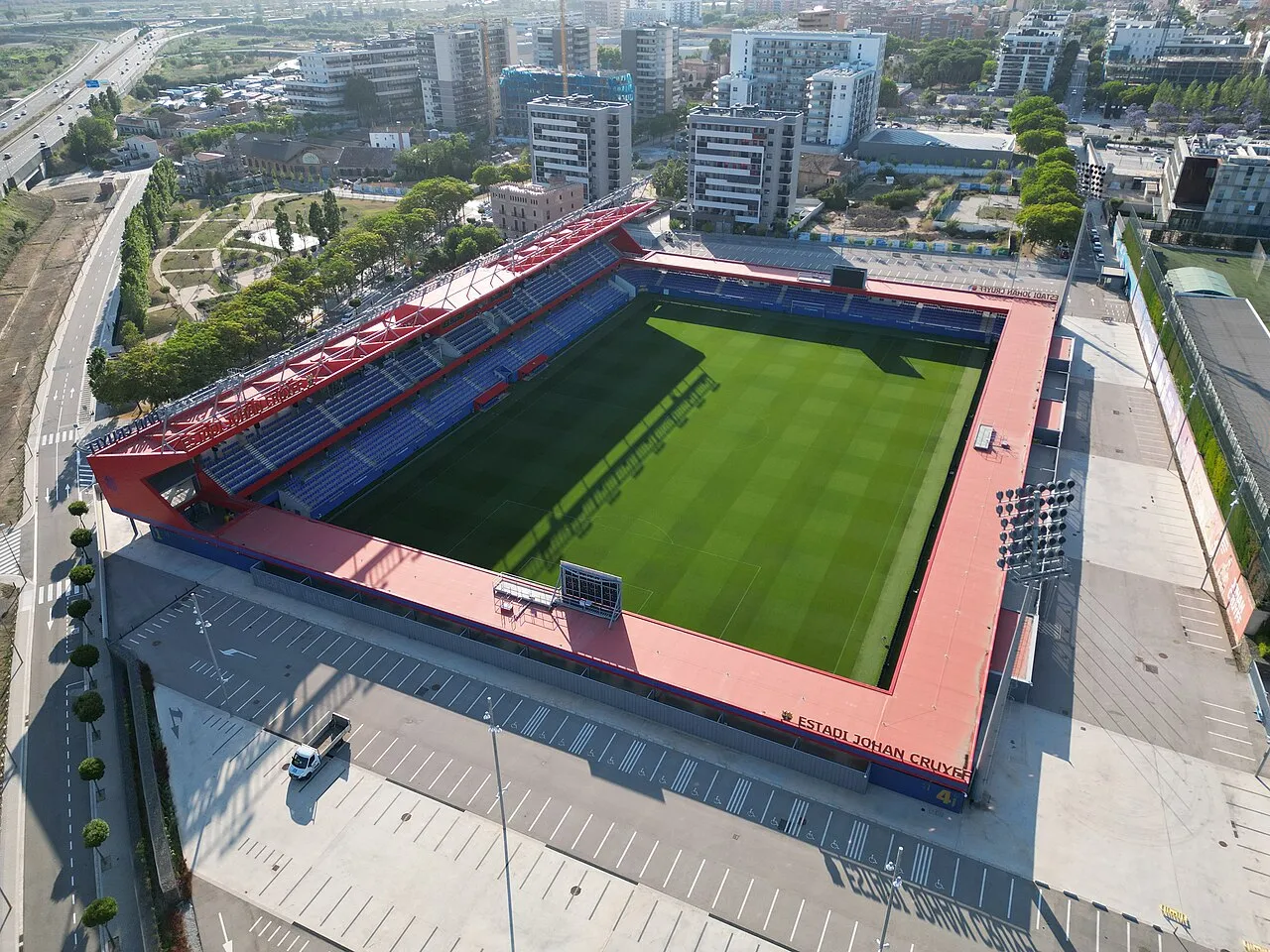
A relevant venue image can show the setting of reserves football, while a town view can illustrate geographical background. Neither becomes a portrait of a player simply because it appears beside a biography.
The images accompanying this guide are labelled accordingly. They do not depict the Alavés debut, establish a current lineup or show a personal address. Readers should not have to infer the purpose of an illustration from the filename alone.
The same rule is useful when sharing a sporting milestone online. Keep the caption truthful about the event, date and subject. A striking photograph can attract attention without being presented as evidence of something it does not show.
Frequently asked questions
Is Fariñas a midfielder or a right-back?
His official profile lists him as a midfielder. The dated debut report records a right-back assignment against Alavés. A general role and a particular match position can both be reported accurately.
Do the reserves numbers count as senior first-team statistics?
No. The specified season and team remain part of their meaning. Do not relabel them as a senior career total.
Does a debut guarantee selection in the next match?
No. It establishes participation in the reported fixture. Later team selection needs its own current source.
Is this a prediction of his future career?
No. It is a sourced account of selected milestones and an original guide to reading roles, appearances and statistics carefully.
Sources
Image credits: cover: Wilnel José Verdú Guerrero, source, CC BY-SA 4.0. Resized and converted to WebP. inline: Columbusalbus, source, CC BY-SA 3.0. Resized and converted to WebP.
Found an error or an outdated detail? Report a correction with the article URL and original source.