
Carlos Alcaraz: The 2026 Career Grand Slam Explained
Understand Alcaraz's Australian Open milestone, the seven-title snapshot behind his career Grand Slam and how career and calendar-year achievements differ.
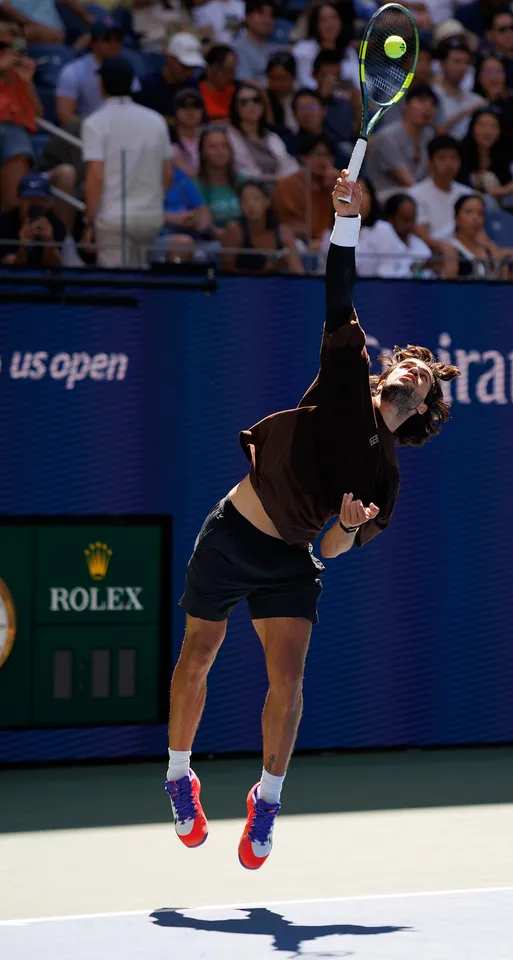
Carlos Alcaraz completed the men's singles career Grand Slam by winning the 2026 Australian Open, defeating Novak Djokovic 2–6, 6–2, 6–3, 7–5 on 1 February. That means he had won each of the four major singles events at least once, not that he won all four during the same calendar year.
The distinction matters when reading his record. A total of seven major titles and a set of four different major tournaments describe related but different achievements. This guide explains both, using the completed Australian Open result and the ITF's pre-final career notes as separate sources.
What happened in the Australian Open final?
The tournament's official report and honour roll identify Alcaraz as the 2026 men's singles champion and Djokovic as runner-up. Alcaraz lost the opening set, then won the next three. It was his first Australian Open title and seventh major singles title at that point in his career.
The official report describes him as the youngest man to complete the career Grand Slam. That is an achievement tied to the completed final and its date. It should not be rewritten as a current ranking or a guarantee about every event later in the season.
The result also illustrates why a match must be read as a sequence. Losing the first set did not decide the final. The completed score establishes the comeback without requiring an invented account of what either player privately thought between sets.
What does a career Grand Slam mean?
In this context, it means winning the Australian Open, Roland-Garros, Wimbledon and the US Open in singles at some point across a career. The four titles can be collected in different years. The term identifies coverage of all four events, rather than merely a large total of trophies from one tournament.
Imagine a fictional player winning the same major four times. That player has four major titles but has not won all four different majors. Another fictional player could win one title at each event and complete the career set with the same total of four.
The example shows why you should ask two questions: how many titles, and at which tournaments? Neither question replaces the other. A career summary becomes clearer when it supplies the event distribution alongside the total.
Which titles formed Alcaraz's set through Melbourne 2026?
The ITF's final notes document his six earlier major titles. Adding the completed Australian Open result gives the following snapshot, limited deliberately to the moment he completed the set:
| Major | Titles in the snapshot | Winning years |
|---|---|---|
| Australian Open | 1 | 2026 |
| Roland-Garros | 2 | 2024, 2025 |
| Wimbledon | 2 | 2023, 2024 |
| US Open | 2 | 2022, 2025 |
| Total | 7 | Through the 2026 Australian Open final |
This table does not claim to be an automatically updated record of every later tournament. Its purpose is to explain the composition of the milestone. When discussing a later career total, consult a current record and preserve its check date.
The distinction between one event's first title and a seventh major overall is important. “First Australian Open title” does not mean “first Grand Slam title.” Readers can resolve that apparent contradiction by keeping the tournament name attached to the count.
How is this different from a calendar-year Grand Slam?
The calendar-year phrase concerns all four majors in the same year. A career Grand Slam can span several seasons. Alcaraz's completed set in February 2026 drew on titles from earlier years, so the milestone alone does not establish a four-major sweep during 2026.
Use a fictional timeline to test your understanding. A player winning one major in 2022, another in 2023, a third in 2024 and the final missing event in 2026 has completed the career set. The distribution across years prevents it from being a same-year sweep.
When a headline shortens either phrase to “Grand Slam,” open the article and inspect what it means. The same words can be used casually for a major tournament, a career achievement or a same-year achievement, and the distinction should not disappear from your summary.
Why must pre-final notes and completed results stay separate?
The ITF document linked below was prepared before the final. It lists what Alcaraz was attempting and describes the possible achievement conditionally. The tournament's completed report then establishes that he won. These sources belong to different points in the event timeline.
A pre-match document saying a player “is bidding” for a title should not be cited alone as proof that the title was won. Equally, a completed result should not be used to imply that the outcome was certain before play began.
This is a useful media-literacy exercise. Create two columns: known before the match and established after the match. Put the six earlier titles in the first column and the Australian Open final result in the second. The exercise makes the change in evidence visible.
The same habit is useful outside sport. An examination announcement and a published result, or a project plan and a completion record, should not be treated as interchangeable evidence.
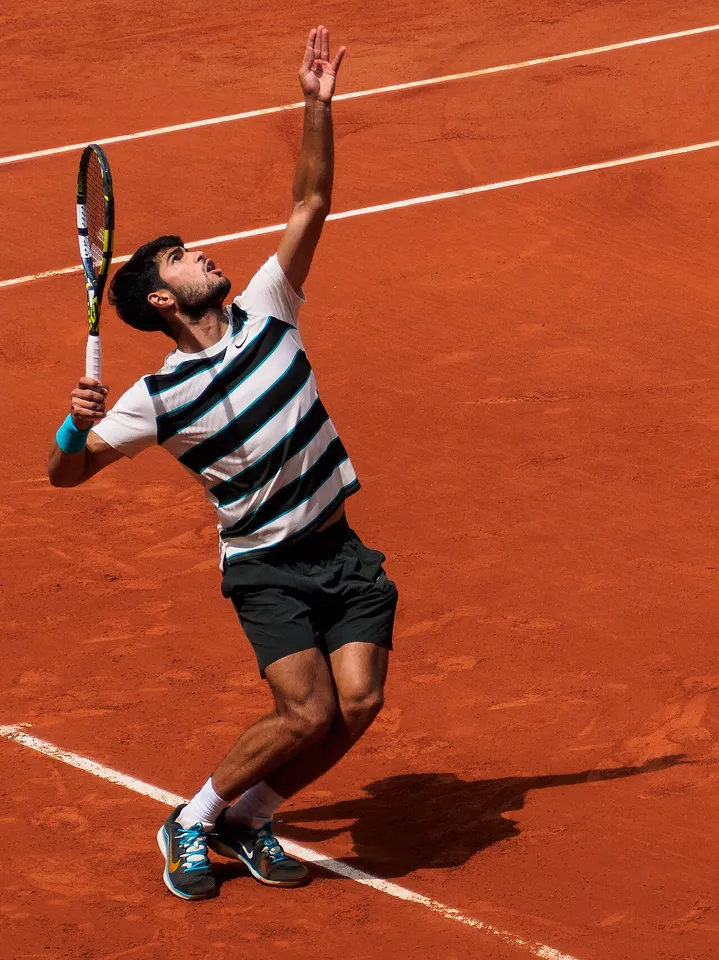
Alcaraz serving during his 2025 first-round match against Giulio Zeppieri, as identified by the source. It is not a championship-final image.
How can students check the title arithmetic?
Add the event totals in the snapshot: one plus two plus two plus two equals seven. Then count the distinct event names: four. You have calculated two different summaries from the same table, which is why a trophy total and a career set can be discussed together without meaning the same thing.
For an original programming exercise, store the four counts in a small table or dictionary and compute their sum. Next, check whether every count is at least one. The sum answers the total-title question; the second check answers whether every event is represented.
Do not treat missing data as a zero automatically. If an event's record has not been checked, mark it unknown until you verify it. Otherwise a program can turn a gap in your research into a false claim that the player never won that event.
Our Python lessons offer a place to practise variables and collections. Start with explicitly fictional data if you are still learning the syntax, then use verified records only when you can preserve their source and scope.
What can the final score tell you?
The 2–6, 6–2, 6–3, 7–5 sequence shows one set lost followed by three won from Alcaraz's perspective. It establishes the set progression and completed outcome. It does not list every break point, rally length or tactical decision.
Do not infer that two sets with the same score must have contained identical tennis. A 6–2 set can include close games or quick games, and the score alone does not tell you which. You need point-level information or footage for those questions.
When writing about a match you did not watch, make the evidence clear. You can accurately summarize the official score without pretending to have observed a player's movement, shot selection or emotional reaction on every point.
For a deeper score-reading exercise, our Zverev finals guide explains sets, tie-break notation and why total games alone do not determine a match winner.
How can you watch Alcaraz with a useful question in mind?
Choose one observable decision for a short section of authorized footage. For example, where does he recover after hitting a shot, or what happens when a short ball gives him an opportunity to move forward? Record the situation before judging the decision.
Avoid deciding in advance that every point must demonstrate a famous strength. If the clip does not show enough to answer your question, note the limitation. A useful viewing record can contain uncertainty instead of forcing a conclusion from a narrow camera angle.
Try separating three fields: the visible action, its immediate result and your interpretation. “Moved towards the net” is an action; “opponent passed him” is an outcome; “the approach may have left space” is an interpretation to examine. Keeping them separate improves the quality of your analysis.
These are suggested observation exercises. This article is not claiming a fresh analysis of every Australian Open final point or attributing a private tactical plan to his coaching team.
What should a comparison with another champion include?
Define the comparison first. Are you comparing major-title totals, performances in a particular season, results at one event or a specific head-to-head record? Each requires a different dataset and may support a different conclusion.
Keep dates and competition scope consistent. A career total checked in February should not be compared with another player's total checked months later without acknowledging the different cutoffs. A live ranking is also a separate measure from a career title count.
Do not add an Olympic result to a Grand Slam singles total merely because both are major achievements in ordinary language. Preserve the official competition categories. Clear categories help readers appreciate accomplishments without inflating or mixing the numbers.
If you lack suitable data for the comparison, narrow the claim. “This table shows these four event totals at this date” is defensible. “This proves the greatest player in every condition” asks much more of the evidence.
How does this connect to the November Paris Masters?
The Australian Open milestone supplies career context, not a forecast of the next tournament. A past title does not establish a future draw result, opponent or championship. Use the current bracket and order of play when following the November event.
Our Paris Masters schedule guide separates qualifying, main-draw dates and a labelled time-conversion example for Pakistan. It also explains why a projected matchup is different from a confirmed fixture.
This profile does not promise a particular broadcaster, ticket availability or current ranking position. Those questions require current event and service information beyond the career milestone discussed here.
What should you remember about Alcaraz's career set?
The achievement combines breadth and accumulation: at the end of the 2026 Australian Open final, the verified snapshot contained seven major singles titles across all four events. Melbourne supplied the missing tournament, rather than the first title of his entire major career.
Keep that date and definition attached to the claim. It gives the milestone its meaning and prevents a retrospective from becoming an inaccurate statement about a same-year sweep, a future result or a constantly updating career total.
Sources
Source 1: Australian Open milestone report
Source 2: official men's singles honour roll
Source 3: ITF pre-final match notes
Checked 1 November 2026. The title table is explicitly a snapshot through the Australian Open final, not a live career counter. Programming and viewing exercises are original teaching suggestions.
Image credits: cover: Nrbelex, source, CC BY-SA 4.0. Resized and converted to WebP. inline: Kuberzog, source, CC BY-SA 4.0. Resized and converted to WebP.
Found an error or an outdated detail? Report a correction with the article URL and original source.