
Chelsea 2-0 Manchester United: Goals, Offside and Cards Explained
Check the confirmed October result and learn to distinguish awarded goals, disallowed finishes, penalties and disciplinary events without inventing a VAR verdict.
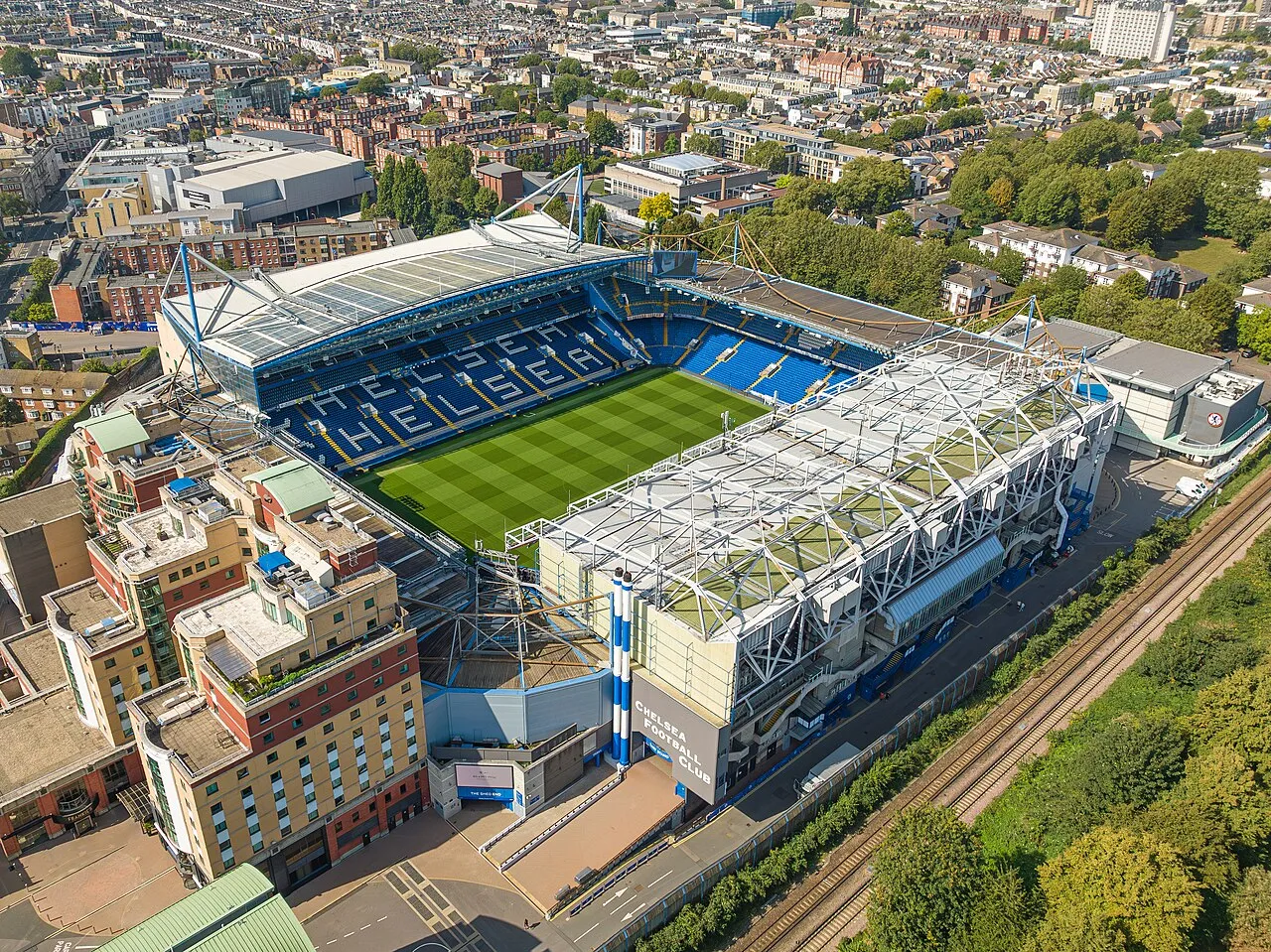
Chelsea beat Manchester United 2-0 at Stamford Bridge on 31 October 2026, with Morgan Rogers and Cole Palmer scoring after half-time. Several other finishes were ruled out, which makes this match a useful example of a basic viewing distinction: the ball entering the net is an event, but the confirmed decision determines whether it changes the score.
This guide gives the verified result and explains how to keep goals, disallowed finishes and disciplinary events separate. The football-law references are IFAB's published rules, while the practice examples are original fictional situations rather than additional claims about this match.
What was the Chelsea vs Manchester United result?
Chelsea won the Premier League match 2-0. The official Chelsea report records Rogers scoring in the 50th minute and Palmer converting a penalty in the 64th. Manchester United's Lisandro Martinez was sent off in the 63rd minute after a second caution. The venue was Stamford Bridge in London.
The record was checked on 1 November 2026. It identifies this particular fixture in the 2026/27 season. A clip from another meeting, even with the same players or venue, should not be treated as evidence of a goal or decision in this match.
| Record | Meaning in the confirmed result |
|---|---|
| Chelsea 2-0 Manchester United | Two confirmed Chelsea goals and no confirmed United goal |
| Rogers, 50 minutes | The recorded opening scorer and goal minute |
| Martinez, 63 minutes | A disciplinary event, not an extra goal |
| Palmer, penalty, 64 minutes | The recorded second scoring event |
| Full-time | The match was completed, rather than still awaiting a deciding period |
The table is a compact match record. It is not a claim that nothing happened before the opening goal. Chances, saves and disallowed finishes can explain the contest without being counted as valid goals.
Why did the disallowed finishes not change the score?
Chelsea's report describes first-half finishes from Estevao and Matheus Cunha being ruled out for offside. It also records a later Estevao finish being disallowed. Those events belong in an account of the drama, but none becomes an additional goal in the confirmed 2-0 result.
A highlight clip can show a celebration before showing the decision. If the edit ends at the celebration, the viewer may receive an incomplete sequence. Check the final event record rather than constructing a score by counting every clip in which the ball crosses the line.
Keep a distinction between the observed action and its official status. "The player finished the move" describes an action. "The goal was awarded" describes the decision attached to it. A careful summary can mention both without leaving the impression that a disallowed finish remained on the scoreboard.
For a fictional example, Team A celebrates three finishes but one is disallowed. Its confirmed goals total is two, not three. The celebration can still be part of a video narrative, but the match result must use the confirmed events.
Offside position is not automatically an offence
IFAB's Law 11 distinguishes being in an offside position from committing an offside offence. Position is assessed under the law's conditions, while an offence depends on the player's relevant involvement in active play. A still image showing a player nearer the goal than another player is not a complete explanation by itself.
The law also distinguishes the ball and the second-last opponent when defining position. The familiar shorthand "last defender" can be misleading because it substitutes a rough phrase for the actual reference points. Hands and arms are not treated like the relevant parts of the head, body and feet for this assessment.
For a beginner, the useful first question is which moment and action the decision concerns. Do not simply freeze the video when the scorer celebrates and assume that frame establishes the earlier position. Nor should you infer a precise official line from an oblique television image without the necessary information.
This guide does not independently redraw the decisions from the Chelsea match. It records what the official match report says and explains the broader distinction. Evaluating a specific close decision would require the relevant footage, timing and official decision context, not a confident claim built from a cropped screenshot.
A second yellow card and a penalty answer different questions
IFAB's Law 12 includes receiving a second caution in the same match among sending-off offences. A disciplinary sanction concerns the participant's conduct. A restart, including a penalty when appropriate under the law, concerns how play resumes. The two decisions are related but should be recorded separately.
In the Chelsea account, the incident involving Martinez and Wesley Fofana was reviewed, a penalty was awarded and Martinez received his second yellow card followed by red. That is the reported sequence. It does not justify a rule saying every penalty must come with a red card.
Use a fictional notebook with three fields: incident, disciplinary action and restart. If the incident leads to a caution and a free kick, write both. If a different incident leads to another decision, preserve that difference rather than assuming every foul has the same sanction.
Also distinguish a second-yellow dismissal from a straight red in your records. Both can result in a player being sent off, but they are not the same disciplinary path. A summary that simply says "red card" may be adequate for a headline, while a detailed event log should retain the distinction.
What does playing against ten mean for analysis?
It describes a numerical situation after a dismissal, not a guarantee that every subsequent attack must succeed. A useful analysis would examine the period before and after the change, while recognising that the score and other events also change the situation.
Do not compare full-match totals as though every minute was played under identical conditions. If you are studying the effect of a dismissal, identify its timing and the score at that stage. A whole-game possession figure cannot isolate that effect on its own.
For a fictional exercise, imagine a side receives a red card in the tenth minute in one match and the eighty-fifth minute in another. Both results contain a sending-off, but the length of time spent short-handed is very different. Treating the two situations as identical would discard important context.
This does not mean you need elaborate statistics to discuss football. It means the claim should match the evidence. "The dismissal changed the numerical situation" is supported by the event. "Every later chance happened only because of it" would be a much stronger causal claim needing more analysis.

Cole Palmer in a 2025 Club World Cup photograph. The image is separate from the October 2026 Premier League fixture and penalty discussed here.
How to follow Rogers' opening goal without inventing tactics
Chelsea's report describes Romeo Lavia recovering possession and passing to Rogers before the scorer advanced and finished over the goalkeeper. That supplies a short, attributed description of the scoring move. It does not reveal every private instruction given before the game.
For your own viewing, trace the move from the recovery rather than beginning only at the final shot. Note where the receiver starts, which route he takes and what the nearest opponents visibly do. If a camera angle hides a player, mark that part as unobserved instead of guessing.
Then separate description from interpretation. "The player carried forward" can be an observable action. "The coach deliberately created this exact opening" requires additional evidence. A good explanation can offer a possible interpretation while making its status clear.
Try drawing the route on a blank pitch outline after watching a permitted replay. Use arrows only for movements you can identify. The exercise is to make your understanding clearer, not decorate a diagram until it looks like a professional scouting report.
Why the score does not tell the whole first-half story
A goalless interval can contain chances, saves and finishes that are disallowed. The score answers how many goals were confirmed by that stage. It does not measure how eventful the half felt or how many opportunities either side created.
This is why descriptions such as "nothing happened" need care. You might mean no goals were awarded, but the words imply a much broader absence of action. Use the narrow statement when that is what the record establishes.
For an original match-watching worksheet, create separate rows for confirmed goal, disallowed finish, save, shot wide and disciplinary event. Record a timestamp and a short observation. The categories make it easier to discuss an active half without confusing all noteworthy actions with goals.
Do not fill the worksheet from memory alone if accuracy matters. Recheck the recorded event or official account. A striking moment can remain vivid while its minute, order or final decision becomes blurred, especially when short clips are watched out of sequence.
Build a score log that respects event status
A student programming project should store a goal's status explicitly rather than assume every event named "finish" counts. Use fictional inputs while learning the structure, so a test record is not accidentally published as a real match event.
const events = [
  { team: 'Blue', kind: 'finish', awarded: false },
  { team: 'Red', kind: 'finish', awarded: false },
  { team: 'Blue', kind: 'finish', awarded: true },
  { team: 'Red', kind: 'card', awarded: false },
  { team: 'Blue', kind: 'finish', awarded: true },
];

const score = { Blue: 0, Red: 0 };
for (const event of events) {
  if (event.kind === 'finish' && event.awarded) {
    score[event.team] += 1;
  }
}
console.log(score); // Fictional event log: Blue 2, Red 0
The example is deliberately limited. A production match service would need event identifiers, corrections and reliable official inputs. The exercise teaches the first principle: a record's status is part of its meaning, and a card is not a goal just because it is an important event.
You can practise arrays, conditions and validation through our programming courses. For another scoring-state example, the Bayern–Dortmund guide follows a match that finished level. The result categories differ, while the need to preserve confirmed events remains the same.
Share a result without recycling an incomplete clip
Include the teams, date, competition and confirmed score in your own summary. If you mention a disallowed finish, say it was disallowed in the same sentence. Do not rely on a reader noticing a small correction several paragraphs later.
The viral-video checking guide explains how to separate footage from a caption. Football highlights are a familiar place to practise that habit: the clip can be genuine while the claim attached to it is incomplete or wrong.
Keep historical photographs labelled too. A stadium view can establish what venue is being discussed without proving the conditions on this particular afternoon. A player portrait from another competition is not a match-action photograph merely because the same player scored here.
Common questions
Did United's disallowed finish count towards the result?
No. The confirmed result was Chelsea 2-0 Manchester United. A finish ruled out for offside does not remain in the final goals total, even if a replay shows the ball in the net and the initial celebration.
Was Palmer's goal a penalty shootout kick?
No. It was a penalty during the match. A regulation-time penalty and a shootout kick belong to different contexts. This Premier League fixture finished with the recorded 2-0 match score.
Does a penalty always mean a sending-off?
No such blanket rule follows. The restart and disciplinary sanction need to be determined under the applicable law and facts. Record the decisions in this match without turning one incident into a universal shortcut.
Is this an independent frame-by-frame VAR ruling?
No. It reports the official match account and explains relevant distinctions using IFAB's published laws. It does not claim access to the full officiating evidence or invent a replacement decision from an isolated image.
Are the photographs from this match?
No. The stadium photograph provides historical venue context, and the Palmer image is from the 2025 Club World Cup. The captions identify those contexts so neither image is mistaken for a photograph of the October 2026 goals.
Sources
- Chelsea official match report
- Manchester United official fixture record
- IFAB Law 11: Offside
- IFAB Law 12: Fouls and Misconduct
Image credits: cover: Arne Müseler, source, CC BY-SA 3.0 de. Resized and converted to WebP. inline: The White House, source, Public domain. Resized and converted to WebP.
Found an error or an outdated detail? Report a correction with the article URL and original source.