
Donald Trump: Biography, Presidential Timeline and Powers
Read Donald Trump’s background and presidential timeline, then learn how executive orders, laws, election results and official records differ.

Donald John Trump is the 47th president of the United States, having previously served as the 45th. He began his current term on 20 January 2025. He is a Republican, and his two presidencies are separated by Joe Biden's term. These identity and timeline facts are the starting point for understanding current coverage, not a complete evaluation of his policies.
This educational profile explains his background, presidential timeline and the documents readers can use to understand government action. It separates a speech from a signed order, an announcement from an implemented rule and an election result from a change of office. It is checked as a guide on 4 November 2026, rather than presented as a continuously updating news feed.
Who is Donald Trump?
Donald Trump was born on 14 June 1946 in Queens, New York. Before entering the presidency, he was known for business, property development and television. The National Archives-administered presidential library records his education at the New York Military Academy and the Wharton School, alongside his pre-presidential business and television career.
His public identity therefore includes several distinct roles: businessman, television personality, political candidate and president. A statement about one role should not automatically be treated as evidence about another. A company announcement is different from a government action, even when both involve the same person.
This article concerns the public officeholder and the institutions around his presidency. It does not provide investment advice, endorse a political campaign or treat a politician's own description of an achievement as an independent verdict. The aim is to give readers enough context to investigate specific claims accurately.
Why is he called both the 45th and 47th president?
United States presidential numbering follows presidencies, and a president returning after an intervening administration receives another number. Trump served his first term beginning in January 2017, lost the 2020 election to Joe Biden and returned after winning the 2024 election. His second term began in January 2025.
That explains why the two numbers refer to the same person. They are not a claim that he has served forty-seven terms, and they do not mean that every number represents a different individual. The historical distinction matters when a reader compares first-administration records with current ones.
An archived document from the first term can still be valuable, but it should be labeled by date. A photograph or order from that period is not automatically a current development. Always establish which administration produced the record before discussing its present significance.
A compact timeline
| Period | Event or role |
|---|---|
| 1946 | Born in Queens, New York |
| Before the presidency | Business and television career |
| 2016 | Elected to his first presidential term |
| January 2017 | Began serving as the 45th president |
| 2020 election | Lost reelection to Joe Biden |
| 2024 election | Won the presidential election against Kamala Harris |
| January 2025 | Began serving as the 47th president |
The timeline helps resolve a common source of confusion: an election date is not the same as the date a term begins. Between those events, the constitutional process continues. An announcement of a winner, the official electoral process and inauguration should not be collapsed into one moment.
When making a classroom timeline, record the date and the kind of event together. Elected, inaugurated, nominated and announced describe different actions. Choosing the right verb makes the sequence clearer and prevents an apparently small wording mistake from changing the meaning.
What can a president do?
The president leads the executive branch and exercises powers established by the Constitution and laws. Congress and the courts have separate roles. Presidential influence can be substantial, but it is inaccurate to assume that every promise can be implemented through a personal announcement or social-media post.
For any proposed action, ask what authority is being used. Is it an executive direction, a request for Congress to legislate, an agency process or a diplomatic statement? The answer affects what happens next and which records should be checked.
This is particularly useful for readers outside the United States. Headlines often use the president's name as shorthand for an administration-wide action. The detailed document may identify an agency, statutory authority, deadline or exception that disappears from the shorter headline. Those details are often where the practical meaning lies.
A speech, an executive order and a law are different
A speech communicates a position or intention. An executive order is a presidential document directing executive-branch action within the applicable authority. A statute follows the legislative process. These can be related, but they are not interchangeable evidence that a policy has reached the same stage.
Imagine a fictional announcement that a government service will become faster. The speech states the goal. A later document might direct an agency to review its process. The agency might then propose a rule or change an internal procedure. A budget measure might still require legislative action. Reporting the first announcement as a completed service improvement would skip those steps.
The Federal Register's executive-order collection is a useful starting route for checking signed documents. Each document has identifying information that helps distinguish it from a paraphrase circulating online. For formal legal research, follow the linked official edition rather than relying solely on a summarized web display.
How to read a presidential document
Begin with the title, date and document type. Then identify the operative sections: what action is directed, who must act and when. Introductory political language explains the administration's argument, but it may not contain the actual instruction that changes a process.
Next look for scope and exceptions. A policy affecting a defined class of organizations is not necessarily a universal rule. A direction to submit a report is different from a direction to implement the report's possible recommendations. Verbs such as review, consider, establish and prohibit have different consequences.
Finally check whether later developments affect the document. There may be a subsequent order, an agency notice, an implementation schedule or a court decision. A signed document is important evidence, but its current practical effect can depend on the wider record. Avoid turning an old screenshot into permanent guidance for every reader.
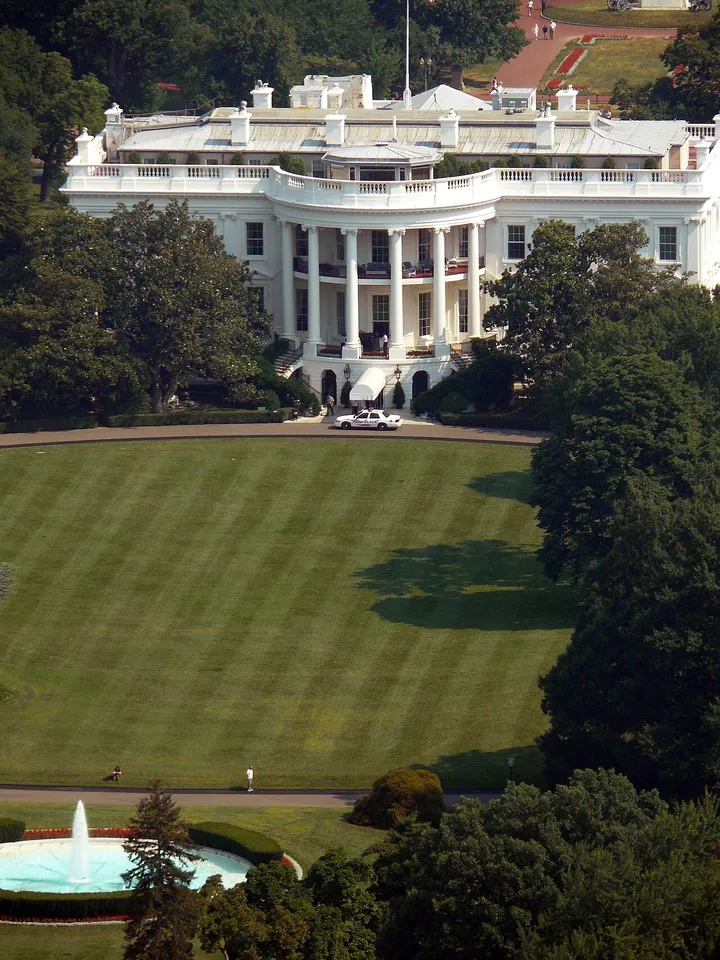
The White House’s south facade viewed from the Washington Monument; architectural context, not a current event.
What do midterm elections change?
Midterm elections include congressional contests and can change the political environment in which a president operates. They do not themselves constitute a new presidential election. A party gaining or losing seats can affect legislative negotiations without automatically changing the president.
This distinction is especially relevant when Trump appears in searches around the 2026 United States elections. His campaigning, endorsements and policy agenda can be part of the coverage, while the actual ballot contests concern other offices. Check the office before interpreting a result as a personal electoral win or loss by the president.
For the wider election cycle, read our US midterm guide. For party terminology, see Democrats versus Republicans. Each page has a different purpose, allowing readers to follow the specific question they need answered.
Popular votes and electoral votes are not the same measure
The United States chooses its president through the Electoral College process rather than simply awarding the office to the candidate with the highest nationwide popular-vote total. Popular votes and electoral votes are therefore different measurements. A report must identify which one it is discussing.
USAGov explains the process and the majority required in the Electoral College. That explanation is useful when reading historical presidential results, but it should not be imported into every other American election. A Senate contest or local office has its own election structure and reporting context.
In a classroom exercise, place popular votes, electoral votes and congressional seats in three separate columns. Ask what each number measures before comparing them. The mistake is not merely mathematical. It is conceptual: different institutions use different units, and a familiar word like votes can conceal that distinction.
How to assess policy claims without choosing a side first
Start by writing the exact claim in neutral language. Determine whether it concerns a documented action, a measured outcome, a prediction or a value judgment. A claim that an order was signed needs a document. A claim that the order improved an outcome needs data and an explanation of causation.
Suppose a politician says a policy created jobs. You would need to know the period, the employment measure, the comparison baseline and other factors that might have influenced the result. A chart showing employment growth alone does not isolate the effect of one policy.
Apply the same questions to criticism. A negative claim can also use a misleading baseline or attribute every change to one person. Neutral analysis does not mean treating every position as equally well supported. It means using consistent evidentiary standards before deciding which explanation is stronger.
Understanding the limits of official biographies
An official biography is a useful source for identity, dates and the administration's presentation of its record. It is not a substitute for independent evaluation of contested outcomes. Read the source's purpose as well as its contents.
For historical study, the presidential library and other archives help locate records from different periods. The White House site provides the current administration's materials. A historian, government agency, campaign and news organization may all discuss the same action while performing different roles.
Use that variety deliberately. Establish an event from primary records, examine any relevant data and then read competing interpretations. Do not present an organization's promotional language as a neutral description merely because it appears on an official-looking page.
Images and videos need context too
A real photograph can still mislead when attached to the wrong date or event. Check the original caption, location and publication context. An official portrait establishes a likeness; it does not show participation in a particular meeting or prove a policy claim.
Videos require the same care. A short clip may omit the question or the sentence that defines what a pronoun refers to. Where possible, compare the excerpt with the full speech or transcript. A complete record can clarify meaning without requiring the reader to accept the speaker's argument.
For students sharing material, add the date and source alongside the clip rather than forwarding only a dramatic caption. This makes later checking easier and reduces the chance that an old event will be mistaken for breaking news. Accuracy includes the context attached to the image, not just whether the image itself is authentic.
A practical note-taking method
Use four headings: claim, evidence, status and open question. Under claim, write what is being asserted. Under evidence, save the relevant document or dataset. Under status, distinguish announced, signed, implemented, challenged or completed where the record supports those labels.
Under open question, record what the available evidence does not establish. Perhaps the implementation deadline has not arrived, or the outcome data covers too short a period. Leaving that question open is more honest than filling the gap with a confident guess.
This method works for supportive and critical coverage alike. It also makes school assignments stronger because a reader can follow how the conclusion was reached. The objective is not to collect the largest number of links; it is to connect the right evidence to the specific claim being examined.
Frequently asked questions
Is Donald Trump the current United States president?
As checked for this guide on 4 November 2026, USAGov identifies Donald John Trump as the current, 47th president. His current term began on 20 January 2025. Always retain the checking date when using an officeholder reference in later work.
Which political party does he represent?
Trump represents the Republican Party in his presidential political career. That party affiliation is separate from the constitutional office of president. Government powers and procedures should be understood through the relevant institutions and documents, not inferred from the party name alone.
Can a presidential announcement change every law immediately?
No. The type of action and its legal authority matter. An announcement, executive direction, agency process and statute are different stages or instruments. Check the actual document and its scope before telling someone that a practical rule has changed for them.
Is this a live update on every Trump-related story?
No. It is an educational profile and document-reading guide. A specific developing story needs its own dated reporting and evidence. This distinction keeps the article useful without pretending that a static page is continuously monitoring every statement, order or event.
Sources
- USAGov current president reference
- National Archives presidential-library biography
- White House administration biography
- Federal Register executive-order collection
- Constitution transcript
- Electoral College explanation
Image credits: cover: Daniel Torok, source, Public domain. Resized and converted to WebP. inline: Ad Meskens, source, CC BY-SA 3.0. Resized and converted to WebP.
Found an error or an outdated detail? Report a correction with the article URL and original source.