
Esteban Ocon Leaving Haas: Confirmed Timeline, Career and F1 Roles
Check Ocon’s confirmed end-of-2026 Haas departure, his Formula 1 career milestones and Hungary win, with clear distinctions between race and reserve roles.
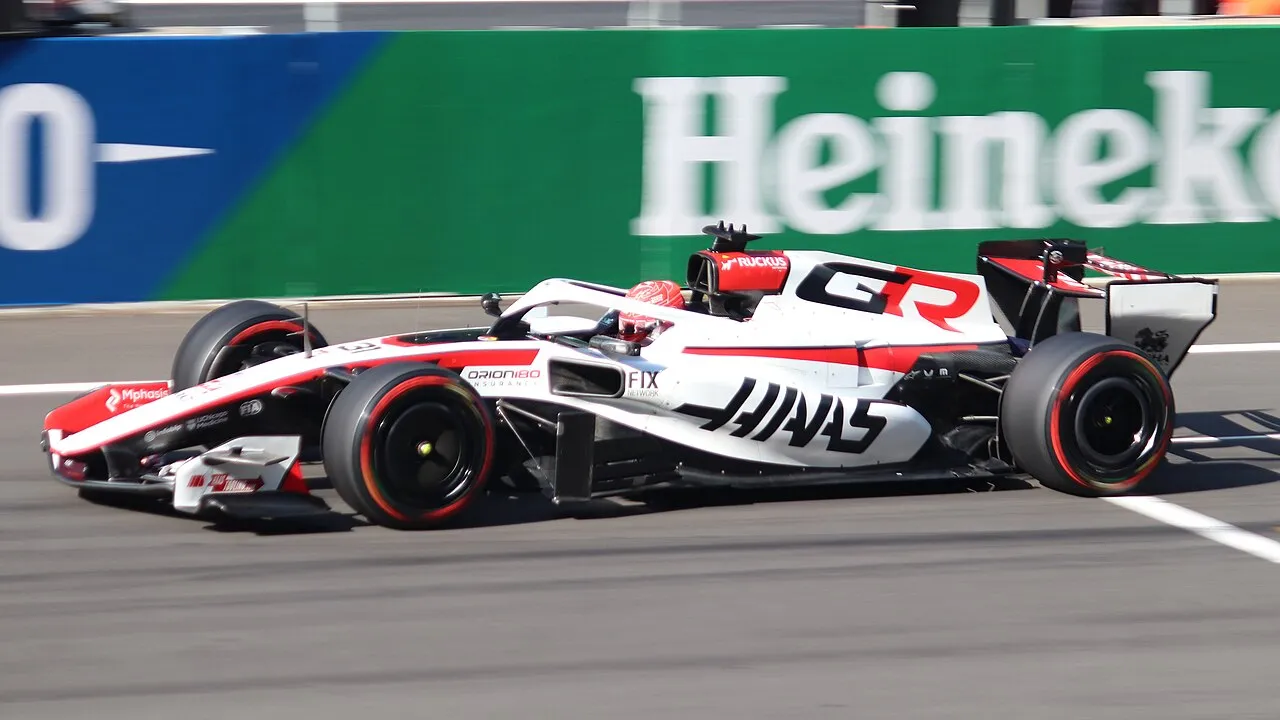
Esteban Ocon is a French Formula 1 driver and a Grand Prix winner. He joined Haas for the 2025 season and is racing in his second season with the team in 2026. Formula 1's official announcement dated 30 September says he will leave Haas when the 2026 campaign ends.
That departure is the confirmed starting point. It should not be confused with an announcement that he has already retired or a guarantee about his next team. This guide explains the timeline, the main career milestones and the difference between a race seat, a reserve role and speculation about future employment. Information was checked on 5 November 2026.
What has been confirmed about Ocon and Haas?
The official Formula 1 report says Ocon and Haas will part ways at the end of the 2026 season. Ocon's own website also carries the departure announcement dated 30 September. These are dated statements about the end of the existing arrangement, rather than evidence that every question about the following season has been settled.
Keep the effective date and the announcement date separate. A driver can announce a future departure while continuing to race for the team during the remaining campaign. Saying that Ocon has already left in every practical sense would therefore go beyond what the end-of-season wording establishes.
Likewise, leaving one team is not identical to leaving Formula 1 permanently. A racing career can involve several teams and different roles. To report a new contract, use its own announcement rather than treating the previous departure as proof that a particular move must follow.
Who is Esteban Ocon?
Haas's driver profile records Ocon's birth on 17 September 1996 in Evreux, France, and identifies him with car number 31. A date-of-birth calculation makes him thirty on 5 November 2026. That is a dated age calculation, not a number that should be copied unchanged into every later season.
His Formula 1 path includes Manor, Force India, a reserve period, Renault, Alpine and Haas. The sequence helps explain why an experienced driver can still be starting a new team chapter. Experience in the championship and time spent inside one particular organisation are different measures.
Use the driver's official profile and the responsible team's biography for identity checks. Similar surnames, old car liveries and abbreviated result lists can create confusion for new viewers. Establish the person, season and team before interpreting a photograph or a performance statistic.
A short career timeline
| Period | Milestone |
|---|---|
| 2016 | Formula 1 debut with Manor at the Belgian Grand Prix |
| 2017-2018 | Raced for Force India |
| 2019 | Reserve-driver period |
| 2020 | Returned to a race seat with Renault |
| 2021 | First Formula 1 victory with Alpine in Hungary |
| 2025 | Began racing for Haas |
| 2026 | Second Haas season; end-of-season departure announced |
The table provides milestones, not every race or contract detail. It also avoids combining a historical team name with the wrong season. Renault and Alpine appear in the same broad career pathway, but an article should still use the name relevant to the year being discussed.
When following a career, separate a first appearance from a first full season. Those milestones can occur in different years. A short debut campaign is still part of the record, while the following full season can involve a different team and a larger body of results to assess.
Why the 2021 Hungarian Grand Prix matters
Ocon won his first Formula 1 Grand Prix with Alpine at the Hungaroring in 2021. The official championship and FIA reports establish that milestone. A first win is a specific achievement, distinct from a first podium, a pole position or a season championship.
A podium means finishing in the top three, while winning is finishing first. Qualifying determines the starting order under the applicable event format; it is not the race itself. Keeping these categories separate helps a beginner understand why a driver can have a podium before a first victory.
When reading an older race report, check the final classified result and any subsequent official decision. The order in which cars cross the line and a later classification can differ. A career milestone such as Ocon's victory should be supported by the final record rather than an incomplete live page.
What a race driver does beyond the visible laps
A race seat involves more than appearing on the starting grid. Drivers work with engineers on preparation, feedback and the car's behaviour. The public can observe some results of that process, but private technical conversations should not be invented to explain a disappointing weekend or a successful one.
For a viewer, separate the driver, the car and the circumstances. Tyre choices, traffic, reliability and incidents can all influence an outcome. This does not remove driver responsibility; it gives the assessment enough context to identify what the evidence actually supports.
A single finishing position cannot fully isolate a driver's contribution. Compare the sequence of the weekend, the available information and the final classification. A thoughtful explanation can recognise a strong performance without claiming to know how the same driver would certainly have finished in another team's car.
Qualifying position and race result are different records
Qualifying reflects the relevant session's performance and rules. A race result reflects the completed race and any official classification decisions. Grid penalties or other circumstances can also affect the starting position, so the fastest qualifying order and the final grid should not automatically be treated as identical.
Suppose an imaginary driver starts twelfth and finishes ninth. The simple position change is three places gained. That arithmetic does not tell you how many on-track overtakes occurred. Pit stops, retirements and penalties can change positions without every change being a direct pass.
Use the same caution with an Ocon result. If the question is about overtaking, look for the actual race actions. If it is about final points or position, use the classification. Choosing the right record prevents a useful statistic from being asked to prove something it does not measure.
What is a reserve-driver role?
A reserve role is different from a regular race seat. The exact duties depend on the organisation and announcement, and can include availability to substitute or support work. Do not assume that the label automatically guarantees race appearances or that every reserve driver has identical responsibilities.
Ocon's career includes a reserve period before returning to a regular race seat. That history shows that a year away from full-time racing did not end his subsequent participation. It does not predict what any future arrangement will be or establish a new contract without an announcement.
When a report describes someone as a candidate for a reserve role, retain that uncertainty. Candidate, negotiation and confirmed appointment are different stages. Removing those distinctions can turn a plausible discussion into a false statement about employment.
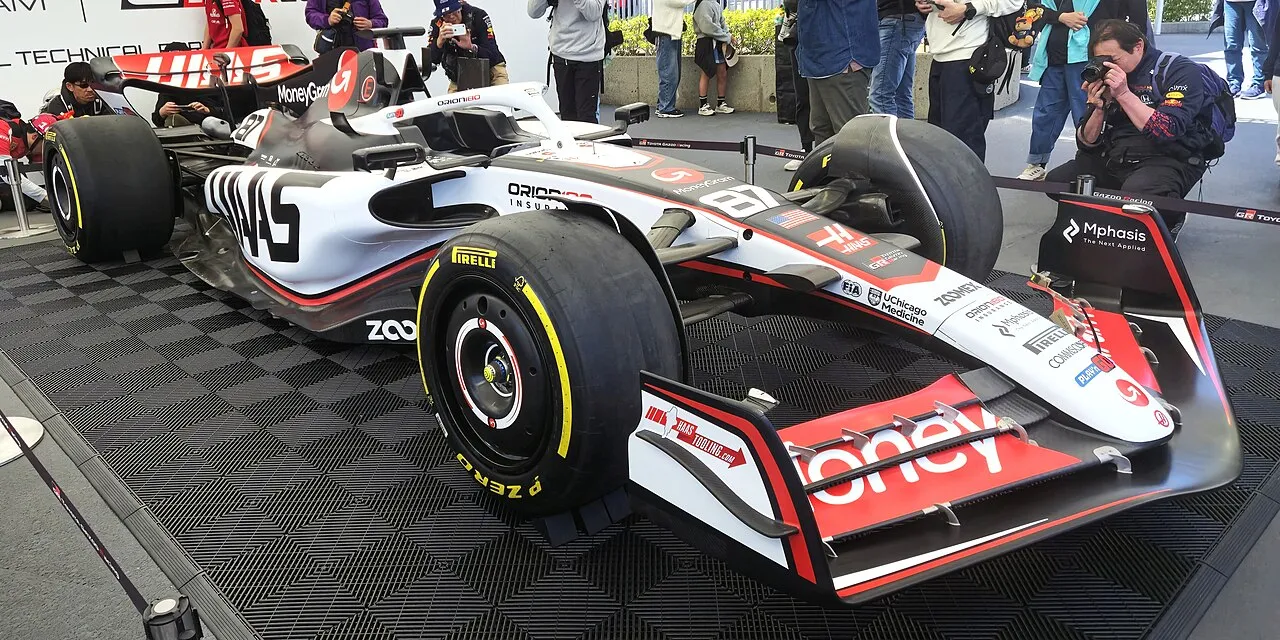
A Haas VF-25 show car at the 2025 Japanese Grand Prix, illustrating the earlier team car rather than the 2026 race specification.
Why a departure announcement does not identify a replacement
The end of one driver's arrangement creates a question about the seat, but it does not answer that question by itself. A team may discuss candidates before announcing a replacement. A report naming a favourite is therefore different from an official statement naming the signed driver.
Read the wording carefully. A source might be reporting an agreement, an offer, a possibility or an opinion about the best fit. Those claims have different evidential strength. The article's headline should not silently upgrade the weakest one into the strongest.
For Ocon's own future, apply the same rule. A departure can be confirmed while the next role remains outside the evidence reviewed here. This page does not assign him to a 2027 team or announce retirement. A later verified announcement would need its own dated update.
Read car photographs with their year attached
An Ocon photograph from Alpine or an earlier season is valid historical material, but it is not an image of a 2026 Haas car. The livery, sponsor names and car design can all differ. A good caption identifies the context instead of allowing a familiar driver to imply the wrong season.
The same applies to a Haas photograph featuring a teammate. It can illustrate the team's car, but the caption should not identify that driver as Ocon. Check the image's source description and visible details before assigning a name.
Photographs on this page are used as clearly labelled driver or team context. They are not presented as evidence of a private contract meeting or as newly taken images of the departure announcement. A relevant image should help orientation without making a claim the source cannot support.
Understanding lap times and gaps
A lap time measures the duration of one lap. A race gap describes a difference between competitors at a defined point or classification. Both are time measurements, but they answer different questions. A fastest lap does not necessarily imply the best overall race result.
In an imaginary exercise, one lap takes ninety seconds and another takes ninety-one. The difference is one second. That does not establish that the quicker driver would gain exactly one second on every later lap, because tyres, fuel, traffic and conditions can change.
When assessing a real session, compare like conditions where possible and keep the limitations visible. A lap affected by traffic is different evidence from a clear run. A short sample can be interesting without justifying an absolute statement about a driver's ability across every circuit.
How team and driver standings relate
Formula 1 maintains driver and constructor standings. They are connected through the competition's points arrangements, but they are different tables. A driver's personal total should not be mistaken for the whole team's total or for the number of races the organisation has won.
Use the current official standings for a present-day rank. A biography's previous-season total is historical information, even when the page is still online. Do not combine a 2025 points figure with a 2026 position to create a record that never actually existed.
Our Leipzig versus Manchester City score guide illustrates the same general reading habit in another sport: identify whether a number describes one event, an individual contribution or the whole campaign. The categories differ, but keeping their scope clear remains essential.
A practical checklist for driver-market news
First identify who made the announcement and its date. Next establish what is confirmed: the ending of an arrangement, a new appointment or something less definite. Then note when the change takes effect. These checks prevent a future departure from being reported as an immediate exit.
Separate a source's facts from its assessment. A journalist can accurately report a departure and also discuss likely candidates. The discussion does not become an official selection because it appears below a confirmed headline. Preserve the distinction when summarising the article.
Finally, check whether newer information has superseded the report. Driver markets change, and a September statement does not automatically answer every November question. This guide identifies the dated confirmed departure and the career context; it avoids treating unresolved future details as settled facts.
A small exercise in reading a career record
Write three different milestones: debut, first podium and first win. Explain what each measures before looking up a year. You will be less likely to confuse an early appearance with a full season or a second-place finish with a victory.
Next, take the confirmed 2026 end-of-season departure and write two statements. One should describe exactly what the announcement establishes. The other should identify a question it leaves open. This is a useful way to practise accuracy without pretending that uncertainty makes the confirmed information unimportant.
Then review a historical photograph. Identify the year, car and team from the source record, and write a caption that keeps those details visible. Combining a correct name with a wrong season is still an error. Good sports reporting depends on getting the relationships between facts right, not only the individual words.
Questions readers are asking
Is Ocon leaving Haas immediately?
The official announcement reviewed here says the arrangement ends after the 2026 campaign. It should be described with that timing. A future end date does not mean the driver ceased every current team responsibility on the day the announcement was published.
Has this page confirmed his next team?
No. The verified departure and a future appointment are separate claims. A new team or role should be reported only when supported by its own announcement. Speculation about an available seat should remain labelled as speculation.
Has Ocon won a Formula 1 Grand Prix?
Yes. He took his first Formula 1 victory with Alpine in the 2021 Hungarian Grand Prix. That milestone is supported by the championship's official account and the FIA report. It is different from a championship title or a qualifying pole position.
Why might an older photo show a different team?
Because Ocon has raced for several organisations. A historical photograph can accurately show him in an earlier car. The caption should identify that period instead of presenting the image as a current Haas scene or evidence of a future contract.
Sources
- Official end-of-2026 departure announcement
- Ocon official website and announcement timeline
- Haas driver biography and career milestones
- Official Formula 1 driver profile
- FIA report on the 2021 Hungarian victory
Image credits: cover: Liauzh, source, CC BY 4.0. Resized and converted to WebP. inline: Liauzh, source, CC BY-SA 4.0. Resized and converted to WebP.
Found an error or an outdated detail? Report a correction with the article URL and original source.