
Leipzig 2-3 Manchester City: Own Goal, Equalisers and Haaland
Understand City’s 3-2 win at Leipzig, Lukeba’s own goal, Baku and Nusa’s equalisers, Fernandez’s header and Haaland’s deciding finish.
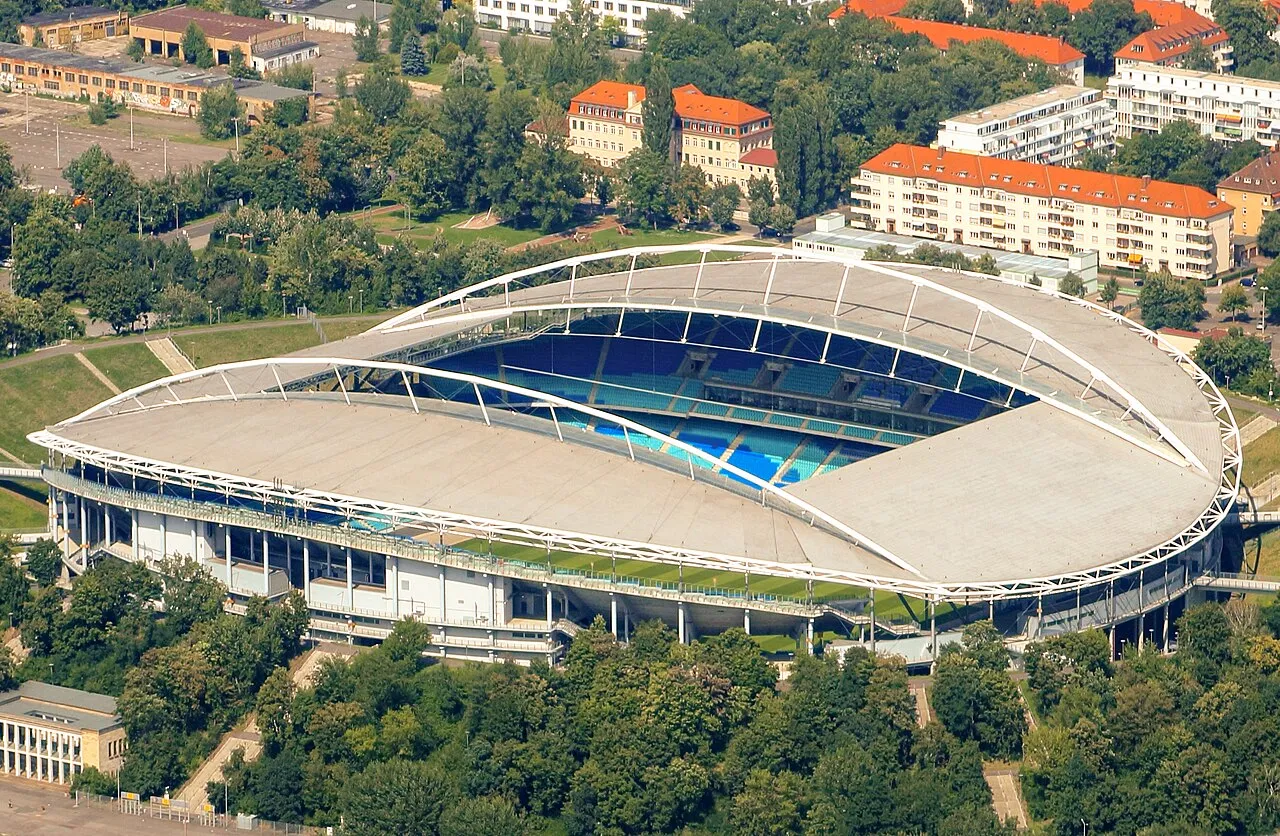
Manchester City beat RB Leipzig 3-2 away in the Champions League on 4 November 2026. A Castello Lukeba own goal and an Enzo Fernandez header were answered by Ridle Baku and Antonio Nusa before Erling Haaland scored City's winner. The final score contains five goals, but only four players scoring for their own side.
That detail makes this match a useful example of how football records work. An own goal increases the opponent's total without becoming a personal goal for one of their attackers. This guide explains the scoring order, the two Leipzig equalisers, Haaland's deciding contribution and the difference between a match result and the wider standings.
What was the Leipzig versus Manchester City result?
City won 3-2. The dated match record lists Lukeba's own goal in the 37th minute, Baku's equaliser in the 49th, Fernandez restoring City's lead in the 58th, Nusa equalising in the 61st and Haaland scoring in the 78th. Leipzig were the home side and appear first in the fixture score.
The result is therefore Leipzig 2-3 Manchester City when the home team is listed first. A headline saying Manchester City won 3-2 describes the same outcome with the winning team named first. Always read the names alongside the numbers rather than assuming that a score display follows a single universal order.
This report was checked on 5 November. It concerns the completed senior Champions League fixture. It does not describe a penalty shootout, an aggregate score across two legs or a domestic-league game. Similar club names on another results page do not make that page the record of this match.
Five goals and two equalisers
| Minute | Recorded scoring event | Score after the event |
|---|---|---|
| 37 | Castello Lukeba own goal | Leipzig 0-1 City |
| 49 | Ridle Baku | Leipzig 1-1 City |
| 58 | Enzo Fernandez | Leipzig 1-2 City |
| 61 | Antonio Nusa | Leipzig 2-2 City |
| 78 | Erling Haaland | Leipzig 2-3 City |
City held the lead three times. Leipzig removed the first two advantages but did not erase the third. That is a more complete description than saying only that Haaland won the game late. His goal decided the final outcome, but the earlier exchanges explain why another goal was needed.
At half-time, City led 1-0. The second half produced four goals, two for each side. Adding the first-half advantage to that level second-half scoring return gives City's one-goal win. This is why looking only at the goals after the interval would fail to explain the complete result.
How an own goal appears in the record
Lukeba's own goal increased City's team total. It did not mean that he was playing as a City attacker or that another City player should automatically be awarded a personal goal. The designation identifies how the scoring action was recorded by the responsible match authorities and data services.
When a shot touches a defender, the final classification can depend on the circumstances of the attempt and the applicable decision. A deflection does not automatically make every goal an own goal. Use the confirmed event record rather than inventing a universal rule from one slow-motion clip.
If a classification is officially changed later, individual player records may be adjusted while the team score remains the same. That is another reason to distinguish a team's goal total from the identity credited with each goal. They are connected records, but they are not identical measurements.
Baku brought Leipzig level after the restart
Baku's goal in the 49th minute removed City's interval advantage. The score became 1-1, so the situation at that point was a draw rather than a Leipzig lead. Language such as turnaround should be used carefully when the scoring team has only restored equality.
The match report describes a finish from a tight angle that caught the goalkeeper out. That is the supported incident description. It should not be expanded into an unsupported claim about the goalkeeper's motivation, a private instruction or a technical diagnosis based on a single still image.
When reviewing the action, consider the angle, the available passing options and what the goalkeeper could reasonably anticipate. A player preparing for a cross can face a different problem when the ball is struck at goal. The useful question is how the situation developed, rather than simply applying a label after seeing the outcome.
Fernandez restored the visitors' advantage
Fernandez's 58th-minute goal made the score 1-2. City had regained the lead rather than extended a lead they still held. The distinction matters because Baku's equaliser had already cancelled the first advantage. A summary that omits that goal can make the match appear more one-sided than the scoring record supports.
The report identifies the goal as a header. Headers can arise from many different situations, so do not assume that every headed goal came from a corner. Check the actual delivery and sequence before assigning a set-piece category or describing a particular crossing pattern.
For a student watching the replay, identify the delivery, the receiver's movement and the final contact separately. This makes the action easier to explain. It also encourages recognition of a provider's contribution without giving an assist to someone whose involvement has not been verified in the event record.
Nusa's response made it level again
Nusa equalised in the 61st minute, three recorded minutes after Fernandez had put City ahead. The score returned to 2-2. It was Leipzig's second equaliser of the match, and it left both sides needing another unanswered goal to turn the level position into a winning one.
The short interval between the goal labels identifies a passage worth watching closely. It does not prove that City lost concentration or that Leipzig followed one particular tactical instruction. Those explanations require evidence from the play or reliable comments, not just the time between two notifications.
A useful viewing habit is to watch what happens immediately after a restart. Where does the ball go? How do the teams position themselves? Does the leading side keep an outlet? These questions help explain a response while avoiding the temptation to treat every quick equaliser as the same kind of mistake.

The Etihad Stadium in Manchester, shown as City club context rather than the venue of the away fixture.
Haaland scored the goal that remained unanswered
Haaland's 78th-minute finish gave City a 3-2 advantage that survived to full time. The report describes Elliot Anderson delivering a low cross for the finish. That links the final touch to the chance's creation, rather than presenting the goal as the work of an isolated striker with no supporting action.
A close-range finish can still depend on timing and position. Watch when the attacker begins moving, how the delivery travels and which space becomes available. The distance of the final touch alone does not measure the value of arriving in the correct place to make it.
Avoid assuming that the published scoring minute is an exact countdown to the final whistle. Regulation time and added time still have to be completed. The goal is called the winner because the completed score remained in City's favour, not because a goal at that minute automatically ends the match.
What this game adds to the table
City receive three league-phase points from the win. Leipzig receive none. The match contributes three goals for and two against to City's campaign record, a goal-difference change of plus one. For Leipzig, the corresponding contribution is minus one.
The own goal counts in those team totals just like another awarded goal. Do not subtract it when calculating the result or the match's goal difference. Its separate classification concerns the scoring event and individual credit, not whether it belongs on the scoreboard.
To identify the clubs' overall positions, use the full competition table with matches played and the relevant timestamp. A single match contribution cannot establish a season total. This result also does not change either club's domestic league points, because the Champions League and domestic competitions maintain separate standings.
A win can contain problems worth examining
City won after conceding two equalisers. A review can recognise both the successful outcome and the defensive questions. Winning does not prove that every decision was correct, just as losing does not prove that every action by Leipzig was ineffective.
Separate outcome, performance and explanation. The outcome is the completed score. Performance observations describe what happened across the game. Explanations propose why those things happened and require support. Confusing the three can produce a confident argument that rests only on the final result.
This is useful when comparing the game with our City versus Brighton result guide. The outcomes differ, but neither score alone supplies a complete account of chance quality, defending or decision-making. Read each fixture's evidence before carrying an explanation from one match into another.
Check the fixture before reading a statistics page
General results pages often include several competitions and may retain unrelated labels such as penalty results from another fixture. Check the dated match entry itself. A search excerpt drawn from a long results page can place nearby text next to the wrong opponent.
Likewise, a pre-match page can remain accessible after the game without updating every section. Its team news may still be useful as a dated record, but a countdown or 0-0 display should not override a completed match report. Identify which part of a page represents the final event.
For this fixture, the final score is supported by the dated report and the listed goals. There is no reason to add a shootout to explain the one-goal margin. A result can be dramatic without inventing an extra stage of competition that did not occur.
Learn to audit a five-goal summary
Write two counters, one for Leipzig and one for City, beginning at zero. Process each event in order. Lukeba's own goal increases City's counter; Baku increases Leipzig's; Fernandez increases City's; Nusa increases Leipzig's; Haaland increases City's. The final counters are two and three.
Now check a second claim: did either side ever hold a two-goal lead? The sequence shows no such state. City's advantages were all one goal, and Leipzig never moved ahead. This is a useful way to catch an exaggerated summary without needing a full statistical database.
Finally, classify the goals by role. The opener created an advantage, Baku and Nusa supplied equalisers, Fernandez restored a lead and Haaland supplied the eventual winner. The labels explain the match's structure and are easier to understand than a list that treats every goal as interchangeable.
Looking for highlights safely
Use official club, competition or authorised broadcaster channels where available. Search with both clubs, the date and the senior competition. A video game simulation or an older European meeting can appear under almost identical search wording and should not be treated as footage of this match.
Stadium photographs used here provide location context. They are not presented as pictures taken during the 4 November game. The distinction matters because a familiar ground can be shown in an image from another season, another event or a period of renovation.
Do not install an unfamiliar extension or provide payment credentials to an unknown page solely to watch a short clip. A legitimate rights holder should be identifiable independently. Regional availability can vary, and this article does not promise that a particular live or replay service is free in every location.
Questions readers are asking
Did Haaland score all three City goals?
No. The record lists a Lukeba own goal, a Fernandez goal and Haaland's winner. City's team total is three, but Haaland's personal contribution to that goal total is one. Keeping team and individual records separate avoids a common misunderstanding.
Did Leipzig take the lead?
Not in the recorded scoring sequence. They equalised twice, at 1-1 and 2-2. City then scored the final goal. An equaliser removes an opponent's lead; it does not create a lead for the side that scores it.
Was this a penalty-shootout victory?
No. The 3-2 figure is the completed match score in a league-phase fixture. Do not attach a shootout label from a general results page or another competition to this dated game. The five listed scoring events account for the result.
Sources
- Dated match report and scoring record
- Manchester City official fixture information
- Official Champions League standings
Image credits: cover: Philipp, source, CC BY 2.0. Resized and converted to WebP. inline: Mike Pennington, source, CC BY-SA 2.0. Resized and converted to WebP.
Found an error or an outdated detail? Report a correction with the article URL and original source.