
Feyenoord 0-3 Inter: Bisseck, Esposito, Zielinski and the Score Timeline
Follow Inter’s 3-0 victory at Feyenoord, the goal sequence and second-half minute labels, with clean sheets, points and goal difference explained.
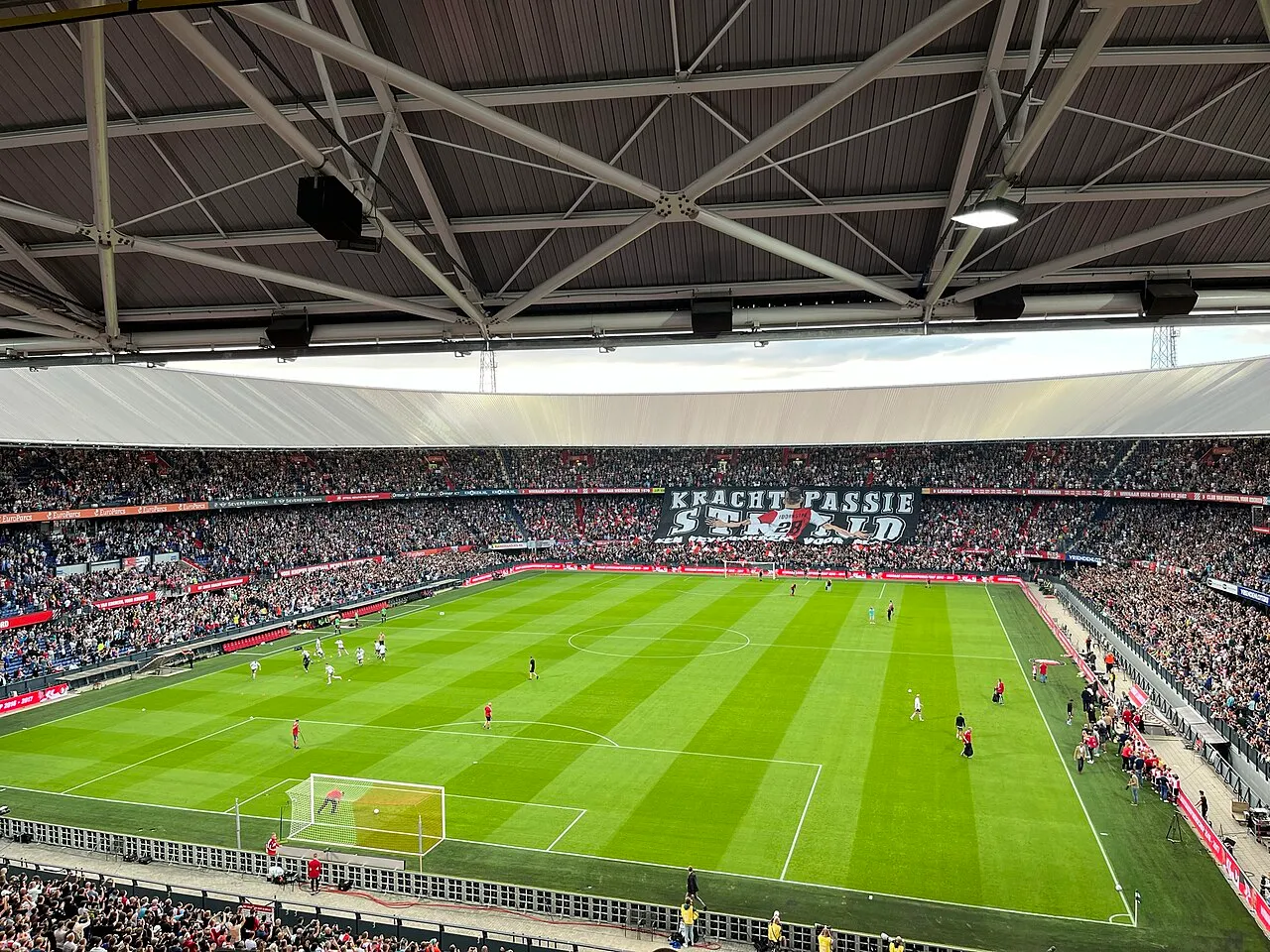
Inter won 3-0 away to Feyenoord at De Kuip on 3 November 2026 in the Champions League league phase. Bisseck scored early, Esposito added the second before half-time and Piotr Zieliński completed the scoring in the second half. Feyenoord remained on three points after four matches.
The match offers a useful contrast with a late comeback: Inter established an advantage early and extended it in stages. For readers, the key is understanding how the score changed the task for each team, what the result means for the competition record and which conclusions require more evidence than a three-goal margin alone.
What was the Feyenoord versus Inter result?
The completed result was Feyenoord 0, Inter 3. It was a home fixture for Feyenoord in Rotterdam and an away win for the Italian club. Both clubs' official records confirm the result. This meeting belongs to the 2026/27 league phase, not the clubs' 2025 knockout fixtures.
| Detail | Confirmed context |
|---|---|
| Date | 3 November 2026 |
| Venue | De Kuip, Rotterdam |
| Competition | UEFA Champions League |
| Stage | League phase, Matchday 4 |
| Half-time | Feyenoord 0-2 Inter |
| Full-time | Feyenoord 0-3 Inter |
The distinction between seasons matters because older Feyenoord–Inter reports also appear in search. A familiar venue and the same club names do not establish that a result belongs to the latest meeting. Check the date and stage before comparing goal scorers, lineups or progression consequences.
How did the scoring develop?
Bisseck opened the scoring in the eighth minute. Esposito added the second in the 34th, giving Inter a two-goal lead at the interval. Zieliński scored nine minutes into the second half, equivalent to the 54th minute of the match, to complete the 3-0 result.
| Match minute | Event | Score afterward |
|---|---|---|
| 8 | Bisseck scores | Feyenoord 0-1 Inter |
| 34 | Esposito scores | Feyenoord 0-2 Inter |
| 54 | Zieliński scores | Feyenoord 0-3 Inter |
Some match centres display second-half events using minutes elapsed since the restart. Read the interface carefully before turning a ninth-minute second-half event into a ninth-minute opening-half goal. The final score can be correct while a copied timeline becomes wrong through that small interpretation error.
Why was the early goal significant?
Feyenoord were behind after eight minutes, leaving most of the match to be played while seeking a response. That gave the home side time to recover, but it also meant that maintaining defensive organization had to coexist with the need to create an equalizer.
An early concession does not require an immediate all-out attack. The sensible response depends on the opponent, the available space and the team's ability to keep possession. Overreacting can expose more opportunities; responding too passively can allow the leading side to settle. The challenge is choosing a useful response rather than simply a dramatic one.
For Inter, the lead made the next phase a test of game management. Could the visitors continue creating danger without taking unnecessary risks? Could they prevent the home crowd from being energized by a quick reply? Those are concrete questions for reviewing the footage, rather than assumptions automatically answered by the first goal.
What changed at 0-2?
Esposito's goal extended Inter's lead before half-time. Feyenoord now needed two goals to draw level rather than one. The break offered an opportunity to regroup, but the scale of the task had increased. A single successful attack after the restart would reduce the deficit without eliminating it.
A two-goal lead can also influence the leading side's choices. It may allow more selective attacking, but it does not make defending optional. A careless concession can quickly transform a comfortable-looking position into a tense one. The way a team handles the minutes after extending its lead is part of the performance.
When watching this phase, track the space behind Feyenoord's attacks and the outlets available to Inter. Do not assume a counterattacking pattern merely because the away side led. Check whether attacks began from recoveries, longer possession or other situations. Similar scorelines can emerge through very different football.
The third goal and the second-half problem
Zieliński's goal arrived relatively early after the restart. That reduced the time in which Feyenoord could turn any half-time adjustments into a recovery. The home side now faced a three-goal deficit, while Inter had an even stronger position to manage.
The important distinction is between keeping the match competitive and needing to change the result. Feyenoord could still seek a goal, improve particular passages or limit further damage, but drawing level now required three unanswered goals. A realistic description should acknowledge that increased difficulty without pretending the match had legally ended before the final whistle.
For a learner, this is a useful example of how the same action changes value with the score. Taking a low-probability attacking risk at 0-3 near the end may be more understandable than taking it at 0-0 early on. The decision must be judged against the problem the team was trying to solve.
What did the result mean for Feyenoord's points?
Feyenoord's official report records three points after four league-phase matches. One win had contributed those three points, while three defeats had added none. The loss to Inter therefore left the existing total unchanged rather than deducting points already earned.
That is an important distinction for new readers. A heavy defeat affects the goals record and may worsen the club's table position relative to others, but ordinary competition points are not subtracted merely because the losing margin is large. The earlier win still counts.
To discuss qualification, use the completed table, remaining fixtures and tournament rules. A difficult position is not automatically mathematical elimination. Similarly, the possibility of recovery is not a promise that it will happen. Good analysis distinguishes the current record from a prediction about the final outcome.
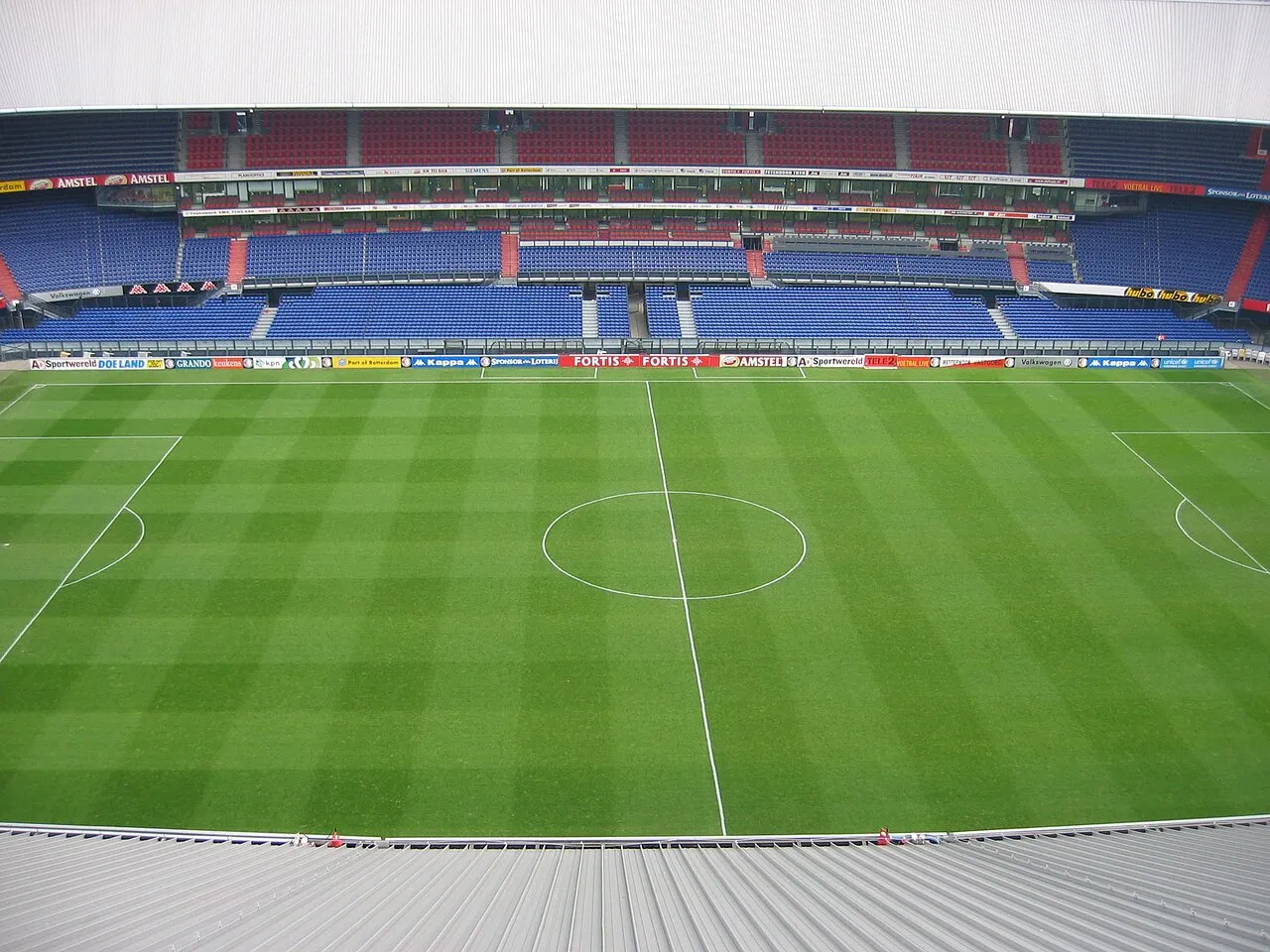
Roof structure at De Kuip in 2006, illustrating the Rotterdam stadium.
Why goal difference matters without becoming the whole story
Feyenoord's goal difference worsened by three in this match, while Inter's improved by three. Those are opposite changes from the same three goals. The direct gap between the clubs' goal differences therefore changes by six, although only three goals were scored.
Points remain the first simple measure of the result: Inter received three and Feyenoord none. Goal difference supplies a different part of the record and can matter under the applicable tie-breakers. Do not describe a 3-0 win as worth more points than a 1-0 win in the same ordinary league-phase system.
For a classroom calculation, imagine a club begins with five goals scored and seven conceded. A 0-3 defeat moves the totals to five and ten, changing the difference from minus two to minus five. Clearly labeling the example as hypothetical prevents it from being mistaken for a live table.
What a clean sheet tells us about Inter
Inter conceded no goals. That is the confirmed defensive outcome. Understanding the performance behind it requires more detail: how Feyenoord's attacks were contained, whether the goalkeeper was called into action and how the team responded when possession was lost.
A clean sheet can result from several contributions working together. Defenders may block a passing route before a shot is created. Midfielders may interrupt a move early. A goalkeeper may save an attempt that reaches the target. An opponent may miss an opportunity. Those events all leave the same zero on the scoreboard but are not identical evidence.
When studying the game, watch the defensive work before the final action. The player who prevents a dangerous pass may contribute as much to a sequence as the player who eventually clears the ball. Short highlights often make the latter more visible because they begin only when the danger is already obvious.
A practical way to study off-ball movement
Choose one Inter attack and follow a player who does not receive the ball. Does that player move a defender, provide a passing option or create space for someone else? An effective run can influence an attack even when it does not appear in the goal or assist columns.
Then watch a Feyenoord defensive sequence from the same angle if available. Identify which players are watching the ball and which are tracking opponents. The balance between those responsibilities can help explain why a receiving player finds space or arrives under pressure.
Avoid inventing a complete formation from a single freeze-frame. Players move between phases, and a camera view may omit part of the pitch. Use repeated observations before deciding that a positioning pattern is consistent rather than accidental.
Headers, long-range shots and the quality of an attempt
The official commentary describes different kinds of attacking moments, including an Esposito header and a notable Bisseck finish. A goal's method can help explain the opportunity, but the label alone does not establish how easy it was. Distance, pressure, body position and the ball's movement all matter.
A header from close range may still be difficult if the player is tightly challenged or the delivery arrives awkwardly. A long-range shot may be well executed but remain a lower-probability option than a clear chance near goal. Evaluate the actual event rather than ranking attempts only by how spectacular they look.
This also helps avoid outcome bias. A shot that narrowly misses can still reflect a reasonable decision, while a goal from a deflection does not necessarily make every preceding choice ideal. The result counts competitively; the decision can still be studied separately.
What comes next for Feyenoord?
The club's report named Porto as its next league-phase opponent later in November. Readers should check the current official calendar before planning viewing, because schedules and local presentation can change. The practical point is that the European campaign continued beyond this defeat.
A useful response focuses on specific improvements. Where were dangerous attacks allowed to develop? Which routes forward remained available? Did the team lose organization after falling behind? Those questions offer more direction than simply demanding more effort without identifying an action that can change.
For supporters, recognizing a poor result does not require abandoning the wider season context. Equally, loyalty does not require denying problems. A clear account can acknowledge the score, investigate the causes and keep the next fixture separate from a prediction made in the immediate aftermath.
A short test of scorecard reading
If a match centre describes a goal as occurring nine minutes into the second half, what should a full-match timeline show? Add the ordinary first-half duration to obtain the 54th minute. Do not add the first half's stoppage time again as though it permanently shifts every second-half event label. Football's reporting convention continues the second half from minute forty-five. The example explains the notation; it does not require guessing the exact clock reading from a rounded minute label. Understanding that convention helps readers reconcile two descriptions of the same event without inventing an extra goal or a separate fixture.
Questions readers often ask
Was this the same tie as Feyenoord–Inter in 2025?
No. The November 2026 game was a league-phase fixture in a new season. Older knockout meetings have different results and progression rules. Always confirm the year before combining information from two match reports.
Why does one site show Zieliński at nine minutes?
A match centre may label the event as nine minutes into the second half. In the full-match timeline, that corresponds to the 54th minute. Read the half marker before copying the number into an article or discussion.
Did Feyenoord lose their previous three points?
No. A defeat does not remove points earned from an earlier win. The total remained three after four matches. The goal difference and relative table position can still worsen, so distinguish those effects from an actual points deduction.
Where can I compare another Inter result?
Read our Milan–Inter derby guide for a contrasting match. Comparing different performances helps show why a club's name alone does not determine how a game unfolds. Each result needs its own timeline, context and evidence.
Sources
- Inter official match centre
- Feyenoord official report
- Feyenoord Champions League calendar
- IFAB Laws of the Game
Image credits: cover: Vincenzo.togni, source, CC BY-SA 4.0. Resized and converted to WebP. inline: No machine-readable author provided. DennisPeeters assumed (based on copyright claims)., source, Public domain. Resized and converted to WebP.
Found an error or an outdated detail? Report a correction with the article URL and original source.