
Imaan Mazari and Hadi Ali Chattha: Understanding the Dated Case Updates
Understand dated reports about Imaan Mazari and Hadi Ali Chattha, keeping separate proceedings, bail, sentences and rights-group assessments distinct.
Imaan Mazari-Hazir and Hadi Ali Chattha are Pakistani human rights lawyers whose legal proceedings have generated substantial public attention. A 29 October 2026 update from Front Line Defenders reported ten-year prison terms in a case concerning an alleged road-barrier incident. Earlier reporting about bail in September concerned other proceedings. Those updates should not be merged into a single undifferentiated case.
This article is a dated explanation of the reporting reviewed on 2 November 2026, followed by a practical lesson in reading legal news. It is not a copy of the judgment, a live appeal tracker or advice about either person’s legal options. Where a rights organisation offers an assessment, that assessment is attributed rather than presented as a court finding.
Who are Imaan Mazari and Hadi Ali Chattha?
The public sources used here describe both as lawyers working on human rights matters in Pakistan. Their professional role is relevant to understanding why rights organisations monitor their cases. It does not remove the need to read the specific proceeding, evidence and decision carefully. Nor does a criminal allegation erase the requirement to distinguish an accusation from an established finding.
Names can appear with spelling variations in English. Imaan Mazari-Hazir is often shortened to Imaan Mazari, while Chattha may appear with alternative transliterations. Compare the people, dates and case descriptions before deciding that a spelling difference identifies a separate event. Do not combine records solely because a search result uses a familiar surname.
A student profile should focus on public professional information needed for the topic. It does not require private addresses, identity numbers or family contact details. The purpose is to understand the legal reporting and the public debate, not to build a personal dossier or expose information unrelated to the proceedings.
What was reported on 29 October 2026?
Front Line Defenders reported convictions in an anti-terrorism proceeding linked to an alleged removal of road barriers in Islamabad on 25 October 2024, during transport arrangements for a visiting cricket team. Its account described sentences on several counts running concurrently, with a longest term of ten years. These are attributed details from that organisation’s case update.
The same update recorded the lawyers’ denial of the charges and raised concerns about the proceedings. Its criticism represents the organisation’s position. This article has not independently reviewed the complete trial record and does not convert that advocacy assessment into a separate judicial determination. Readers should consult the judgment and later orders for their exact legal effect.
Keep the incident date distinct from the decision date. A 2026 report can concern an alleged 2024 event without either date being wrong. A useful summary states both dates and identifies what happened at each point. Otherwise, a reader may mistakenly assume that the alleged incident occurred immediately before the sentence.
How does the September bail update fit?
Amnesty International’s 18 September 2026 statement reported that the Supreme Court had suspended sentences and granted bail on 17 September. It then described a re-arrest connected with another case. That sequence explains why a headline about bail did not, by itself, establish that all legal bases for custody had ended.
This is not a reason to assume that every later proceeding is valid or invalid. It is a reason to identify each one separately. The legal grounds, record and any challenge to an order need to be examined in their own context. A timeline should preserve the distinction rather than making one event stand in for the entire case history.
For an original exercise, imagine a person with fictional files A and B. An order changes the status of file A while file B remains unresolved. Ask learners which conclusions are supported by that information. They can describe the change in A, but they cannot simply declare that B disappeared. Use invented names rather than real case assumptions.
Why should separate proceedings have separate records?
A person’s name is not a unique case identifier. Different complaints, statutes, dates or courts can produce several records involving the same person. A document organiser that uses only a name may accidentally overwrite one proceeding with another. This is both an information-management problem and a source of misleading summaries.
Create a table with proceeding identifier, alleged event, court, document date, decision type and source. Add an uncertainty field if a report omits the formal case number. Do not invent a number to make the table look complete. A clearly marked missing field is safer than an authoritative-looking guess.
This method also helps explain corrections. If an article changes a hearing date, the correction belongs to the relevant proceeding. It should not silently alter every record associated with the people named. Keeping records separate makes it possible to update a story without erasing important distinctions or creating a false chronology.
Conviction, sentence and appeal are different concepts
A conviction is a finding of guilt by a court in a proceeding. A sentence concerns the consequence imposed. An appeal or another challenge asks a competent court to review a decision through an applicable process. Merely knowing that a challenge exists does not tell a reader its outcome or suspend every consequence automatically.
Likewise, a report that a sentence was suspended should not be rewritten as an acquittal. The operative wording of the order matters. This guide does not determine which challenge is available or advise anyone on filing. It explains the vocabulary so that a reader can ask better questions about the source they are examining.
Try sorting six invented cards: accusation, charge, conviction, sentence, appeal filed and appeal decided. Ask students to explain which cards describe a claim, a procedural step or a decision. There may be several steps between them. A headline that contains one card should not automatically be expanded into all the others.

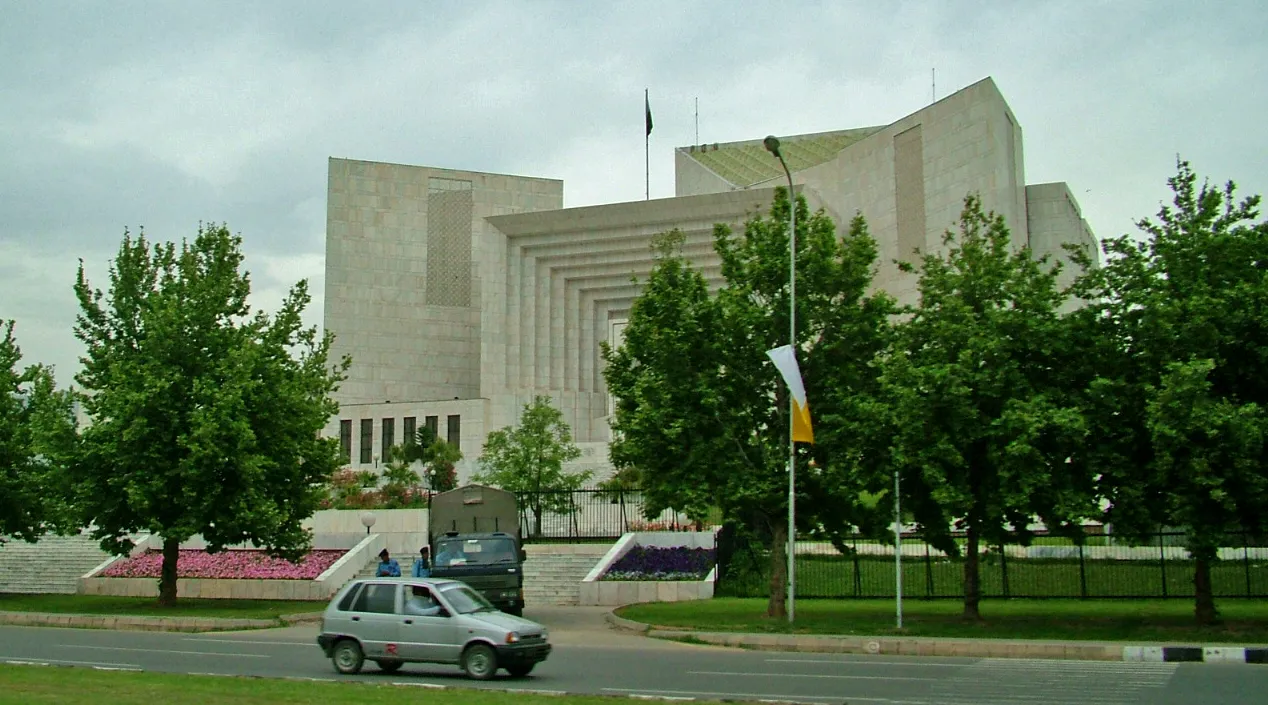
Institutional context, not a photograph of either lawyer, the October trial or a particular order being issued.
What does concurrent sentencing mean in a news summary?
When a report says terms run concurrently, it describes them as running together rather than simply being added end to end. The actual effect depends on the order and applicable law. For this article, the important reading point is that adding every number in a report can produce a misleading headline when the source expressly describes concurrency.
Use a fictional classroom example with terms of two, three and five years stated to run together. A simple timeline can show why the three numbers are not automatically a ten-year combined term. Then label the diagram as a vocabulary illustration, not a legal calculation for any real defendant.
Do not use this simplified diagram to advise someone about release dates, credit for custody or other proceedings. Those questions need the complete record and qualified legal advice. The exercise is valuable because it teaches readers to notice an important condition in a sentence report before performing arithmetic that the document does not support.
How can you distinguish reporting from advocacy?
A rights organisation may document events and also argue that authorities should act differently. Both functions can appear on the same page. Read the factual chronology separately from the organisation’s evaluation and requests. An attributed criticism can be relevant without being mislabelled as a judge’s conclusion.
For example, “the organisation reported a decision on Thursday” and “the organisation considers the prosecution unjust” are different statements. The first concerns its account of an event; the second describes its assessment. A balanced summary does not hide the assessment, but it identifies whose assessment it is and what evidence the organisation offers.
Compare that with a court order, which has its own legal role and scope. Neither document becomes identical to the other because both discuss the same individuals. Good source literacy means understanding what a document is, what it establishes and what additional material is needed, rather than accepting or rejecting it solely by its tone.
Read the operative part of an order carefully
Legal documents can recount submissions, evidence and arguments before stating what the court actually directs. A sentence describing an argument is not necessarily a finding adopting it. When an authentic order is available, identify the court, date, proceeding and operative direction before compressing it into a short summary.
An original teaching example might contain three sections: an applicant requests postponement, an opposing party objects, and the fictional court grants a limited adjournment. Ask students which sentence records the decision. Then ask whether it resolves the underlying case. It does not follow merely from the fact that one request was granted.
Our court-reading guide explains these distinctions in broader civic terms. The aim is not to turn a short article into professional legal training. It is to prevent a common reading error: treating every sentence in a court-related document as though it has the same status.
What should a dated timeline include?
Record the alleged event date, the date of a reported court action and the publication date separately when necessary. Add the proceeding description and the source. If the report was later updated, keep the update date too. These fields allow a reader to see what changed without pretending that all information was available at the beginning.
Avoid a timeline made only of emotionally charged headings. A neutral entry should describe an event in terms that remain understandable to someone who does not share the writer’s assumptions. That does not mean ignoring rights concerns. It means presenting the factual sequence clearly enough for the concerns and responses to be assessed.
For a programming exercise, create fictional timeline records in our courses. Give each record its own identifier and source field. Test what happens when two records share a date but concern different proceedings. They should remain separate entries rather than being merged automatically because their timestamps happen to match.
How should readers handle images and screenshots?
A portrait identifies a person only within the limits of its caption and provenance. A courthouse photograph can illustrate an institutional topic but cannot prove the outcome of a hearing. A screenshot can preserve text while hiding the link, publication date or correction. Treat each as a piece of evidence with a limited scope.
Do not infer a person’s current location from an old image. Do not use a general prison photograph as proof of a particular condition or incident. If the picture is contextual, say so. This is especially important when public attention is intense and familiar images are repeatedly attached to unrelated updates.
In class, pair an invented news summary with a clearly labelled contextual building photograph. Ask students which claims the image actually supports. The answer may be very little beyond identifying the building. That is acceptable: illustration has a legitimate purpose as long as it is not disguised as direct evidence of the reported event.
A responsible reading checklist
Before sharing an update about Imaan Mazari and Hadi Ali Chattha, identify the proceeding, date and source. Check whether the report concerns an allegation, decision, sentence or challenge. Attribute the position of a rights organisation accurately. Do not remove a condition from an order or combine separate proceedings into one simplified story.
If exact legal effect matters, seek the authentic document and qualified interpretation. This article does not promise a current custody status or predict a future result. The sources reviewed here provide dated information, and later orders can change the position. A static article should make that limit visible rather than pretending to be a live legal service.
The central lesson is precise reading. People can discuss public-interest cases seriously while keeping facts, allegations and evaluations distinct. A clear record helps readers understand both the reported decisions and the concerns raised about them. It also leaves room for correction when a new authenticated document answers a question that earlier reporting could not resolve.
Sources
- Front Line Defenders: case update dated 29 October 2026, for the attributed account of the barrier-related proceeding and the organisation’s expressed concerns.
- Amnesty International: statement dated 18 September 2026, for its account of bail, sentence suspension and re-arrest in another matter. The worksheets and case identifiers above are fictional; this is general legal-news education, not case-specific advice.
Image credits: cover: Guilhem Vellut from Annecy, France, source, CC BY 2.0. Resized and converted to WebP. inline: Hussain kevin, source, CC BY-SA 3.0. Resized and converted to WebP.
Found an error or an outdated detail? Report a correction with the article URL and original source.