
India vs Maldives 1-0: SAFF 2026 Result and Group B Standings
Check the India-Maldives SAFF result, Bhat's penalty, Dubey's late saves, final Group B points and what qualification means for India and Pakistan.
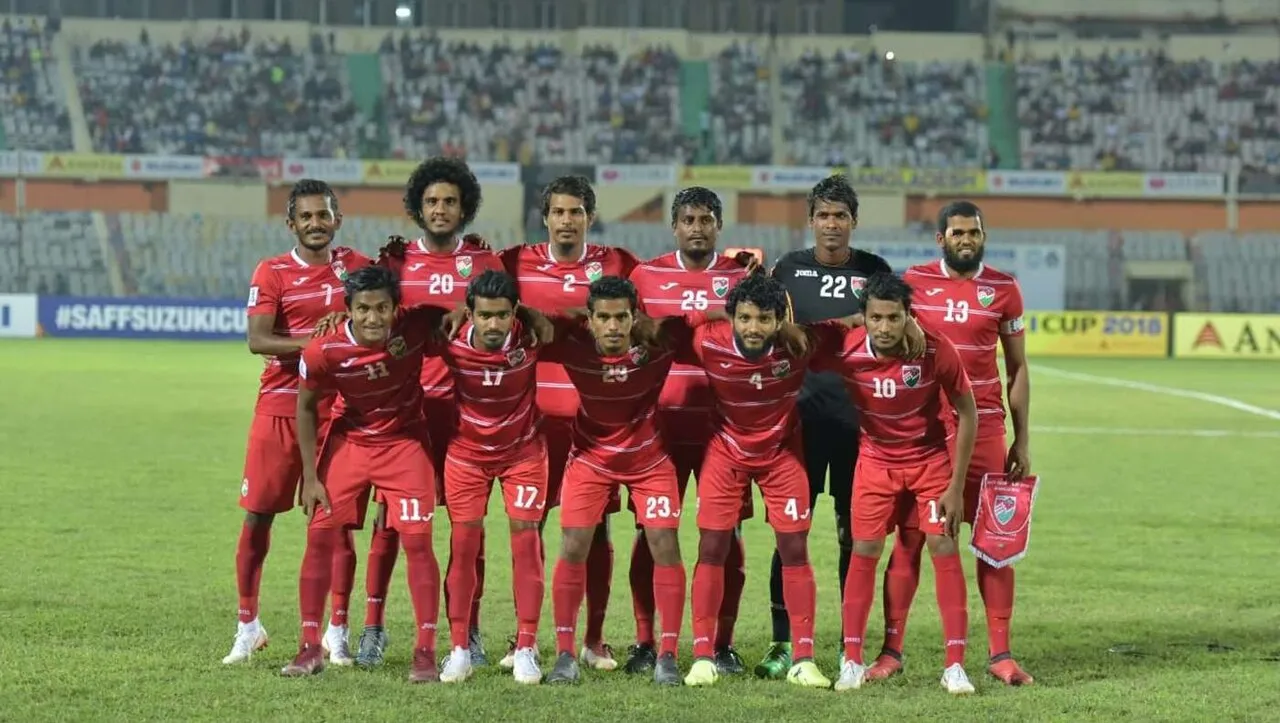
India beat Maldives 1–0 to finish top of SAFF Group B
India defeated Maldives 1–0 in Dhaka on 11 November 2026, with Suhail Ahmad Bhat converting a 38th-minute penalty. The result sent India into the SAFF Championship semi-finals as Group B winners. Pakistan finished second, and Maldives were eliminated from the group.
The outcome matters beyond the scoreline. India completed the group with maximum points, but the narrow margin also made the closing stages important. A converted opportunity still needed to be protected, and the goalkeeper's contribution became part of the result rather than a footnote to the scorer's name.
This is a completed-match review checked on 11 November. The semi-final date is scheduled for 14 November, with the Group B winner meeting the Group A runner-up. It is not a live scoreboard, and it does not announce a semi-final opponent or later result without a separate confirmed bracket update.
The result and the final Group B order
| Position | Team | Points | Outcome |
|---|---|---|---|
| 1 | India | 6 | Qualified as group winner |
| 2 | Pakistan | 3 | Qualified as runner-up |
| 3 | Maldives | 0 | Eliminated |
Read the points column before looking for a tie-break explanation. These positions are separated by points, so there is no need to invent a goal-difference contest to explain why one side finished above another. A table can be straightforward even when the matches themselves were tense.
Winning a group and winning the tournament are different achievements. The group position determines the next part of the route; it does not award the championship. Keeping those stages separate makes the result meaningful without exaggerating it into a title that has not yet been won.
For Pakistan supporters, the second row is also important. A story centred on India's win does not remove Pakistan from the knockout picture. The completed group sends two teams forward, and the runner-up's next assignment comes from the other side of the semi-final bracket.
The decisive goal came from a penalty during the match
The federation report describes Abdul Rabeeh winning the penalty after being brought down by Hussain Sifaau Yoosuf. Bhat converted, taking his competition tally to three. That sequence produced the only goal, but a one-goal lead left the match open to a late change in outcome.
There is a useful distinction between creating a penalty and converting it. The incident that leads to the award and the execution of the kick are separate contributions. A good match summary can recognise both without treating the scorer as the only player involved in the move.
The finish also needs to be described in the right category. This was a penalty scored during play, not a penalty shoot-out used to decide a tied knockout contest. The difference affects how the score is recorded and how a reader understands what happened before the final whistle.
When sharing the result, write the scorer, the minute and the penalty label together. Avoid a bare phrase such as “India won on penalties,” because that commonly suggests a shoot-out. Here the official match result remains a one-goal win within the game itself.
Why Dubey's late interventions mattered
Priyansh Dubey made late saves, including a stoppage-time block against Ethan Ibrahim Zaki, to help preserve the clean sheet. That is a reminder that the decisive action in a narrow match is not always another goal. Preventing an equaliser can protect the value of the goal already scored.
Consider the change a single late concession could make. A team leading by one is not holding an insurmountable margin: one successful opposing attack changes the match from a win to a draw. That relationship explains why a goalkeeper can be central to a result even when the scorer receives the first line of the report.
It does not follow that the goalkeeper alone deserves all the defensive credit. Positioning, pressure on the ball, recovering runners and the circumstances of each chance all contribute to a defensive sequence. Without a complete event record, it is better to identify the documented intervention than assign an invented percentage of responsibility.
The clean sheet is therefore an outcome to appreciate and a starting point for analysis. It tells us that no goal was conceded. It does not by itself prove that no opportunities were allowed, that every defensive decision was correct or that the same approach will work against every future opponent.
A changed lineup still had to function as a team
Naushad Moosa made seven changes from the side that beat Pakistan. The changes included Dubey in goal and Chinglensana Singh Konsham taking the captaincy. A different starting selection made the match an examination of combinations as well as individual ability.
Rotation is often discussed as though it means either complete confidence or a complete disregard for the opponent. Neither conclusion follows automatically from the number of changes. Selection can reflect availability, recovery, preparation and the coach's assessment of the assignment. The team still has to execute its responsibilities together.
For a supporter, the more useful questions concern relationships on the pitch. Who offers a passing option when the ball is under pressure? How does the side react when possession changes? Are players covering the spaces left by a teammate's movement? Those questions create a clearer discussion than simply counting unfamiliar names.
They should also remain questions unless the evidence answers them. A selected eleven identifies who started; it does not tell you the complete tactical instructions or every player's condition. An explanation becomes more reliable when it distinguishes the published selection from an interpretation of how that selection performed.
The Pakistan opener gives the closing stages extra context
India began the group with a 3–2 victory over Pakistan on 5 November. Suhail scored twice and Manglenthang Kipgen once before Pakistan's two stoppage-time goals. The earlier result supplied three points, but its finish showed how quickly a comfortable-looking position could become uncomfortable.
The comparison is useful because the margins and the routes to them were different. A three-goal advantage and a one-goal advantage ask different questions of a team. In both situations, the final minutes still count, and an apparent early command does not remove the need to finish the contest properly.
There is no need to claim that one match mechanically caused every decision in the next. Coaches and players can take lessons from an earlier finish, but a later opponent brings different circumstances. Use the first game as context rather than as a script that must explain all subsequent events.
For Pakistan readers, the opener should also be remembered as a completed match rather than a permanent judgment of the side. A group campaign contains more than one performance. The final table is built from the set of results, and the next stage creates a new assignment for the teams that progress.
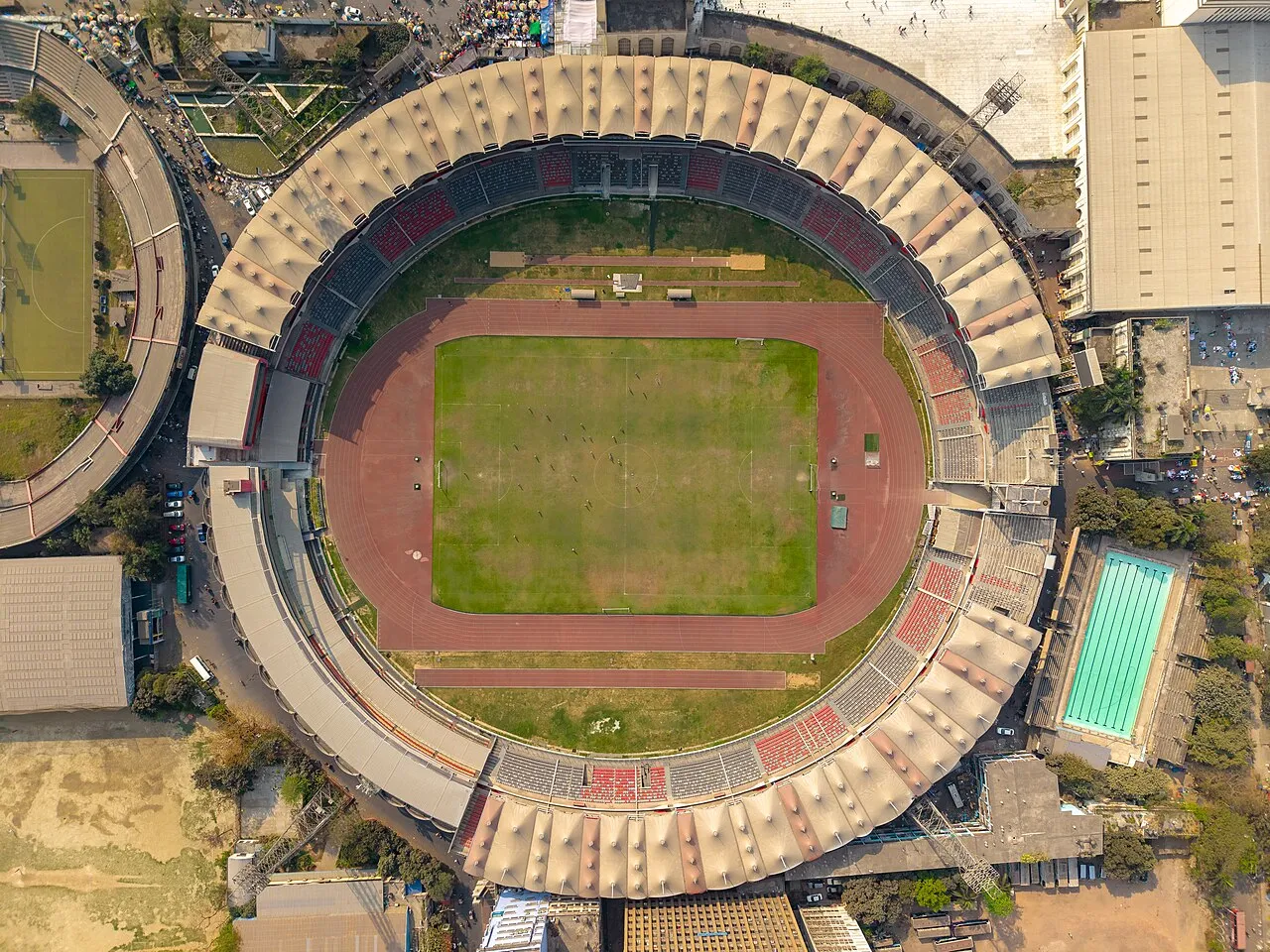
National Stadium, Dhaka. This venue photograph is not a still from the India-Maldives match.
How India's six points fit together
Under the familiar three-points-for-a-win system, two victories produce six points. India's opening win and the Maldives result therefore fit the final total. The calculation is simple, but it helps connect the narrative of individual games with the standings instead of treating the table as an unrelated graphic.
A useful habit is to keep match points separate from goals. Winning by one goal does not normally provide one league point, and scoring three times does not independently produce three points. The match result supplies the points; the goals explain the score and can matter separately under the competition's ranking rules.
In an invented example, Team A wins 1–0 and Team B wins 4–0. Both receive the same points for a win, although the scorelines affect their goal records differently. This example explains the arithmetic; it does not describe an additional match in this tournament.
The distinction is especially helpful when a young reader follows a table for the first time. Start with played, won, drawn and lost, then connect those outcomes to points. Add goal difference only when its meaning and relevance are clear. More columns do not automatically make an explanation easier to understand.
What the penalty law adds to the explanation
A penalty kick is a restart for qualifying offences committed by a defending player inside that team's penalty area while the ball is in play. The kick has its own procedure and positioning requirements. It is not simply a normal shot that happens to be taken near the goal.
The taker is identified, the ball is placed on the penalty mark, and the referee's signal is part of the procedure. Other players and the defending goalkeeper have specified positioning obligations. Those details explain why a referee may manage the setup before allowing the kick to be taken.
For this review, the important point is the awarded and converted kick recorded in the official report. A short written summary cannot replace the referee's view of the original incident or establish an alternative decision from an incomplete description. Do not invent a controversy merely because a penalty decided the score.
The broader lesson is to describe the decision precisely. Identify that a penalty was awarded, state what the match report records about the incident and distinguish the subsequent kick from later play. That is enough to explain the scoring sequence without presenting speculation as an officiating finding.
The semi-final changes the competitive situation
The published tournament structure takes the top two teams from each group into the semi-finals. A group winner faces the other group's runner-up, with the winners of those knockout matches advancing to the final. The scheduled final date is 17 November.
The important transition is from accumulating a group total to dealing with the next elimination match. A successful group campaign provides a route and some evidence of form, but it does not transfer a goal advantage into the semi-final. The next match begins with a fresh score.
Avoid turning a bracket position into a prediction. “Group winner” identifies how a side reached the stage; it does not guarantee that its next opponent will be easy. Team availability, preparation and the actual contest still matter, and a narrow group result should not be used to manufacture certainty either way.
The precise opponent should come from an updated official bracket. This review records the route established by Group B's finish. A preview, an earlier draw document and a completed knockout fixture answer different questions, so check which kind of page you are reading before sharing the next pairing as confirmed.
A practical viewing note for Pakistan supporters
Dhaka's standard time is one hour ahead of Pakistan's. If a later fixture is explicitly published for 15:00 in Bangladesh, the corresponding Pakistan time is 14:00. That is a conversion example, not a newly verified kick-off announcement for the semi-final.
A listing in Indian Standard Time needs a different conversion because Pakistan is thirty minutes behind India. Read the time-zone label rather than assuming that every South Asian sports page displays the same local clock. The venue alone does not establish which zone a website is using.
Before making a viewing plan, confirm the teams, date, time zone and the service available in your own location. A broadcaster or app mentioned in another market may not hold the same rights in Pakistan. This article does not promise a free stream or name a local rights holder that has not been checked.
If you plan to follow highlights instead, look for clearly labelled official coverage. A clip from an older India-Maldives match can look plausible when shared without its date. The competition, venue and match date are useful checks before treating any video as evidence of this result.
What can be taken forward from the win?
India can take the completed group outcome into its preparation: two wins, first place and a place in the next stage. Within that result, the narrow margin gives a specific reason to value both the scoring action and the work that kept the lead intact.
For a thoughtful review, separate the established outcome from the questions it leaves. The result is settled; the quality of every phase, the best selection for the next match and the eventual tournament winner are different discussions. A good report can explain the achievement without pretending those future questions have already been answered.
The same approach applies to Maldives. Elimination is a competitive outcome, not a complete assessment of every player's ability or the country's football programme. Describe the campaign result accurately and avoid turning one score into a sweeping claim about a whole team or population.
For the broader international schedule, see our Nations League Pakistan-time guide. It covers a separate competition. More checked sports articles are available through Blogs and Updates, where each match report should be read with its own date and context.
Quick answers about India versus Maldives
What was the final score?
India won 1–0. The deciding goal was a penalty during the match, so the result should not be described as a penalty shoot-out victory. The win completed India's Group B campaign and secured first place in that group.
Did Pakistan qualify too?
Yes. Pakistan finished second in Group B with three points. The competition's group-to-semi-final structure advances two teams, so India's first-place finish and Pakistan's qualification can both be true. They represent different positions within the same completed group.
Has India already won the championship?
No. Finishing first in a group secures a place in the next stage, not the tournament trophy. The semi-finals and final are separate matches. Any later championship result needs its own confirmed match report rather than an assumption based on the group table.
Sources
- Official India-Maldives match report
- Official report of India's opening win over Pakistan
- Federation's tournament structure and draw announcement
- Current-campaign preview and venue context
- IFAB Law 14: the penalty kick
Image credits: cover: The President's Office of the Republic of Maldives, source, CC BY 4.0. Resized and converted to WebP. inline: Jubair Bin Iqbal, source, CC BY-SA 4.0. Resized and converted to WebP.
Found an error or an outdated detail? Report a correction with the article URL and original source.