
KP Police Anti-Drone System: The Reported Update and Public Guidance
Understand the reported Safe City integration, distinguish drone and anti-drone functions, and read dated advisories and technology claims with care.

Reports about Khyber Pakhtunkhwa Police's anti-drone systems bring together several different subjects: public safety, remotely operated aircraft, surveillance technology and the way government projects are described. Understanding the difference between them is more useful than assuming every device in a headline performs the same job.
A report dated 30 October 2026, describing a briefing by the KP Safe Cities project director, says police drone monitoring and anti-drone systems have been connected with Peshawar's Safe City command centre. This guide explains that reported development at a public-information level, alongside an earlier provincial advisory and practical lessons in reading technology claims.
What has been reported?
The October report attributes the integration update to DIG Ijaz Ahmed, the Safe Cities project director. It describes central monitoring and coordination involving police surveillance drones and anti-drone systems. These are attributed statements about the project, not an independent performance test conducted for this article.
That distinction matters. An official briefing can establish what an organisation says it has introduced. Measuring how reliably it works in different circumstances would require a separate evaluation, with a stated method and evidence.
The guide therefore does not publish a claimed detection accuracy, guaranteed coverage map or percentage reduction in incidents. Nor does it infer that every system mentioned in an older procurement story is identical to the equipment in the newer integration report.
For a reader who wants the short answer, the subject is a reported connection between existing policing technologies and a central monitoring setting. It is not evidence that every drone seen by a member of the public is hostile or that technology has removed all uncertainty.
Drone and anti-drone describe different functions
A drone is an aircraft operated without a pilot sitting inside it. A camera-equipped drone can provide an aerial view. The term “anti-drone” instead refers broadly to systems intended to address unwanted drone activity. One is an aircraft; the other describes a protective function.
This is similar to the difference between a computer and a security tool that monitors computer activity. Both may appear in the same project, but their roles are not interchangeable.
Even within one broad category, do not assume identical capabilities. A photograph of a small consumer camera drone does not identify the precise equipment in a police programme. A headline using “smart” or “AI” also does not tell the reader which decisions are automated and which require a human assessment.
The drone image in this article is explicitly illustrative. It is not labelled as a police asset, an intercepted aircraft or evidence from a particular incident.
Why central monitoring is a separate claim
Connecting information to a central setting can help people view related reports together. That is different from manufacturing a new sensor or proving that every incoming item has been interpreted correctly.
Consider an invented school example. Three classrooms submit attendance reports to one office. The office now has a combined view, but an incorrect entry in one classroom still needs to be investigated. Centralising the reports has changed their organisation; it has not automatically corrected every source record.
This analogy explains the distinction without describing the private architecture of a police system. A student can understand integration as a data-management idea while recognising that real public-safety operations have additional responsibilities.
When reading the news, ask what was connected, what benefit officials expect and what evidence is available about results. Keep those as three separate questions rather than treating an announcement of integration as proof of every hoped-for outcome.
An earlier KP advisory needs its date preserved
The provincial information department published a drone advisory on 2 March 2026 describing temporary restrictions on outdoor private drone flying. It referred to private individuals, commercial operators and organisations, and directed people to report suspicious activity to the nearest police station or district control room.
That is a dated advisory. This article does not establish whether every part remains unchanged on a reader's later travel or filming date. A person considering a flight needs current instructions from the relevant authorities, rather than treating an old news page or another person's social-media experience as permission.
It is equally important not to convert an earlier temporary notice into an invented permanent rule. Preserve its wording, scope and date, then check for a later official instruction.
The October technology report and the March advisory concern related subject matter, but they do different jobs. One describes a reported project update; the other communicates a public restriction at a particular time. Neither should silently replace the other.
Seeing an object and knowing its purpose are different
A person may see a small flying object, hear a sound or receive a forwarded video. Those observations do not automatically establish the object's owner, authorisation or purpose.
A useful description keeps uncertainty visible. “I saw an object from this safe location at this time” is an observation. “It belongs to a named person and has a hostile purpose” adds conclusions that may not be supported.
That distinction is useful for public reporting and for ordinary media literacy. A clear report can help the appropriate authorities assess what happened without the public circulating unverified accusations about a neighbour or an organisation.
Avoid following an aircraft, confronting a suspected operator or trying to interfere with it. Reporting a concern through the appropriate local channel is different from taking enforcement into your own hands. Keep personal safety ahead of obtaining a closer photograph.
What a clear public report should communicate
If reporting a concern, communicate what you observed, when you observed it and where you were safely located. Distinguish your own observation from something a third party forwarded. If you did not see an event yourself, do not describe it as firsthand evidence.
For an original classroom exercise, compare these invented notes:
- “A strange thing was everywhere yesterday.”
- “At about 5 pm on the stated date, I saw a small flying object from my own courtyard. I could not identify its operator.”
The second note is more useful because it states a time, a context and a limit. It does not need an accusation to be informative. These are fictional writing examples, not reports of an actual incident.
Keep sensitive personal details out of public posts. A report to an authorised channel and a viral message in a public group are not the same audience. The information appropriate for one may not be appropriate for the other.
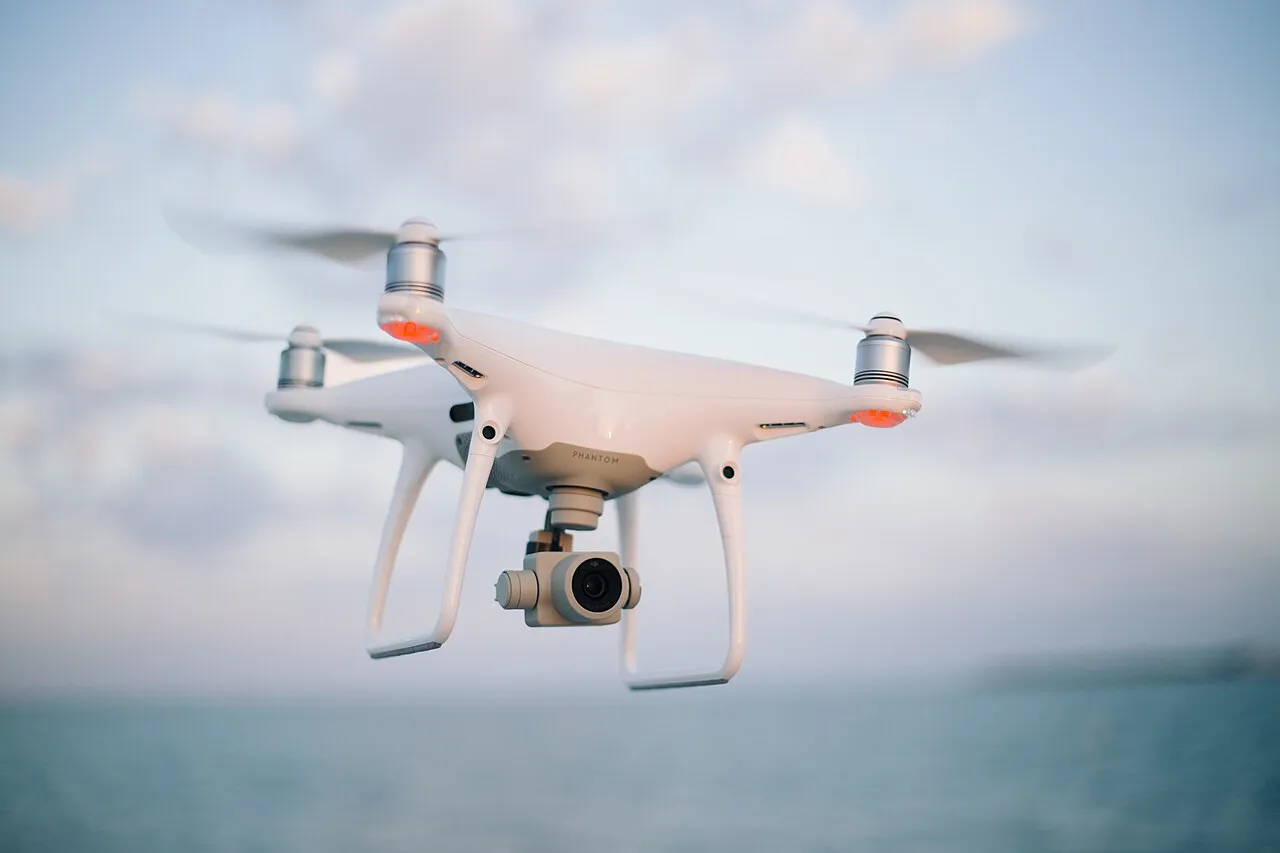
An illustrative camera quadcopter. It is not identified as KP Police equipment, an intercepted aircraft or a device involved in an incident.
Detection, assessment and response are not one event
In a general information system, detection means something has been noticed. Assessment asks what that signal means. A response is a later action based on the situation and the responsible authority's procedures.
An everyday comparison is a smoke alarm. An alarm draws attention, but understanding the cause and deciding what to do remain important. The existence of an alert does not by itself describe every detail of the underlying event.
This is a conceptual explanation, not a description of the KP system's specific operation. It helps a reader avoid a common headline error: using “detected,” “identified” and “stopped” as though they necessarily mean the same thing.
When checking a claim, look for the actual verb used in the source. If a report says a capability was introduced, do not rewrite it as a completed interception. If it describes an intention, do not change the tense to make it an established outcome.
Why a headline percentage needs a denominator
Suppose a fictional classroom classifier is tested on 100 labelled examples and gets 95 correct. That overall figure still does not tell you which five were wrong. It could have missed important examples, raised unnecessary alerts or made a mixture of errors.
A false positive is an alert for something that does not belong to the target category. A false negative is a missed example that does belong. The distinction matters whenever a system's results inform a human decision.
These are general data-learning concepts, not published measurements for KP Police. This guide does not attach the invented 95% result to any real equipment.
The practical lesson is to ask what was tested, how the examples were labelled and which errors were counted. A large percentage without that information can create more confidence than the evidence supports.
Procurement documents and operational results answer different questions
A public tender, budget provision, delivery announcement and integration briefing are different stages of a project. A budget line can show that an expenditure was proposed or provided for; it does not by itself prove that equipment was delivered, installed and successfully evaluated.
Similarly, a delivery photograph does not establish every later claim about availability or performance. The document should support the specific statement being made, rather than serving as a general badge of authority for unrelated conclusions.
For a student research table, use columns for document type, publication date, claim supported and questions still open. Do not merge every document mentioning drones into a single undated “latest update.”
This method is useful well beyond policing. School construction, public transport and hospital technology projects also produce documents at different stages. Learning to identify the stage makes a citizen a more careful reader.
Privacy belongs in the discussion too
Public-safety technology raises questions about who may access information, how errors are corrected and how long records are retained. Those are appropriate accountability questions even when a project has a legitimate safety purpose.
This article does not claim to have audited KP's internal access controls or retention policy. Instead, it suggests questions a public-interest explanation should answer when the information is available: what is the stated purpose, who is responsible and what route exists for concerns?
Keep a distinction between asking for accountability and revealing operational details. A public discussion can focus on governance, accuracy and lawful use without publishing sensitive locations, access information or instructions for interference.
Students designing their own websites can apply the same principle on a smaller scale. Collect only the information a task needs, limit access to it and explain what happens when something is wrong.
A safe learning project with invented reports
Create a small list of fictional observations for a classroom exercise. Give each record a time, a broad place label, a source type and a status such as “unreviewed” or “reviewed.” Do not use real people's identities or real security locations.
Then build a filter that separates firsthand notes from forwarded claims. Add a rule that prevents an unreviewed observation from being displayed as a confirmed incident. The goal is careful information handling, not a functioning surveillance or interception tool.
Our programming courses offer a place to practise lists, conditions and readable interfaces. You can also use our viral-video verification guide to learn why a video's upload date and the date of the event may differ.
The strongest result from the exercise is a clear record that communicates its limits. More colourful graphics do not make an uncertain claim more certain.
Frequently asked questions
Does the reported update mean every drone is a threat?
No. Equipment type, authorisation and purpose need assessment. A member of the public should avoid identifying an operator or alleging intent from appearance alone.
Is the March advisory a current flight permit guide?
No. It is a dated official notice. Check current instructions with the relevant authorities before planning an activity; this article does not issue permission.
Are foreign aviation rules Pakistan's rules?
No. Foreign regulator resources may explain their own jurisdictions, but their permissions and enforcement procedures should not be copied into a Pakistan legal guide. The local advisory cited here is a separate provincial source.
Are the images actual police equipment photographs?
No. The captions identify a Peshawar landmark and an illustrative camera drone. They do not depict a deployment, a security incident or the private configuration of the reported system.
Sources
Image credits: cover: Junaid Khalid, source, CC BY-SA 4.0. Resized and converted to WebP. inline: Josh Sorenson, source, CC0. Resized and converted to WebP.
Found an error or an outdated detail? Report a correction with the article URL and original source.