
Levante 0–2 Atlético: Goals, Saves and Clean-Sheet Meaning
Explore Levante vs Atlético’s 0-2 result and learn why a clean sheet, a save, an effort against the crossbar and a league snapshot mean different things.
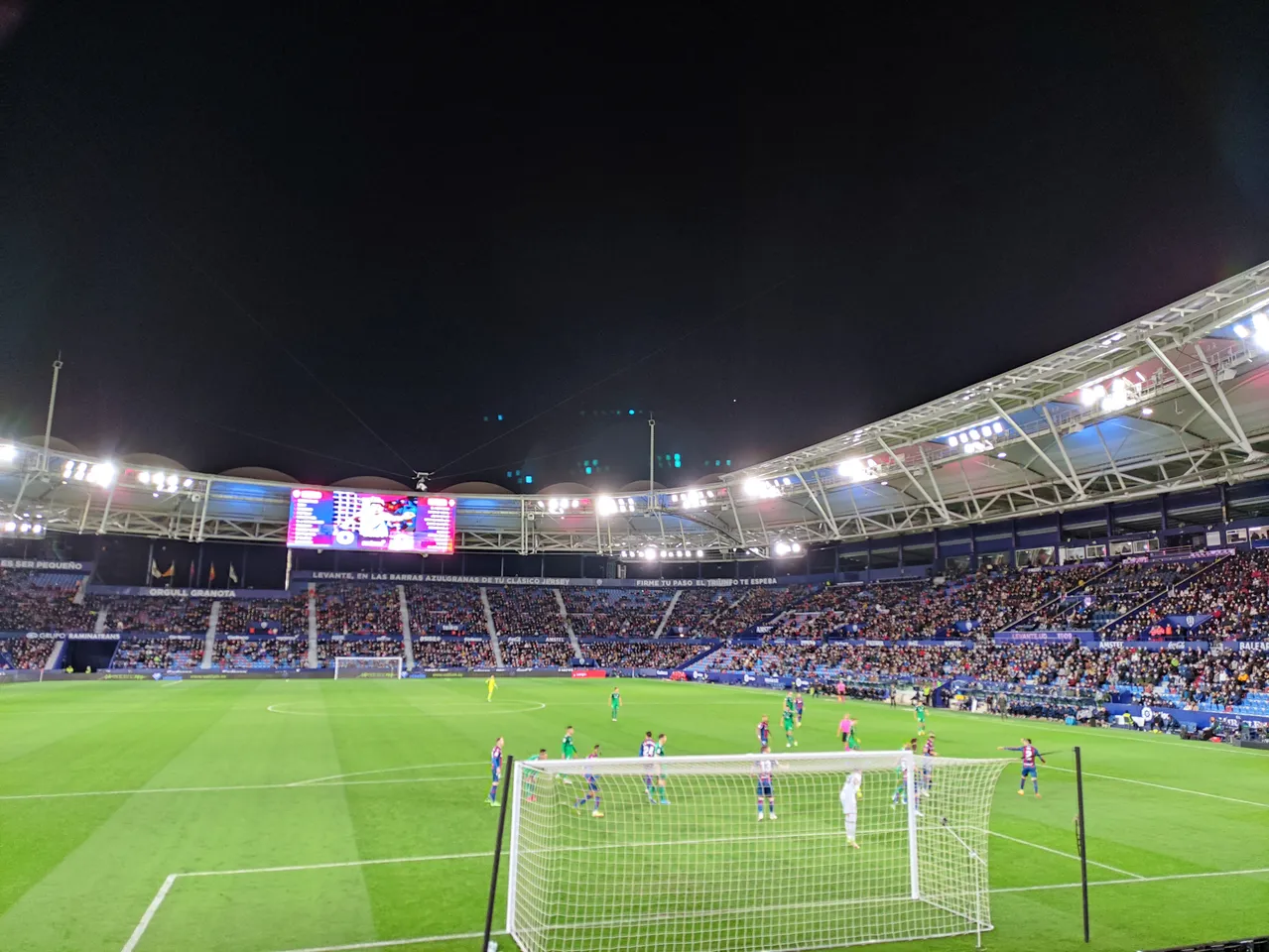
Atlético de Madrid won 2–0 away to Levante at the Ciutat de València on 31 October 2026. Levante's official account credits Grimaldo and Giuliano with the goals and describes several home opportunities stopped by Jan Oblak. The result is a useful starting point for learning why a clean sheet does not mean the opponent never threatened.
This guide was checked on 2 November 2026. It explains the confirmed result and offers original ways to observe goalkeeping, chances and match reports. It is not an automatically updated league table, a betting prediction or a claim to have measured every shot. Historical illustrations are labelled separately from the October fixture.
Who won Levante versus Atlético?
Atlético won 2–0 as the visiting side. In the home-first listing, the match reads Levante 0–2 Atlético de Madrid. The home club's report lists Grimaldo's goal at minute 35 and Giuliano's at 61. Those minute labels are attributed to that report rather than blended with differently rounded descriptions elsewhere.
The first practical lesson is to keep the scorer and team together. A list that contains only two player names cannot tell an unfamiliar reader which side benefited. A useful event record includes the scorer, team, period and reported minute. The two confirmed scoring events should accumulate into the recorded full-time result.
The venue matters as an identifier too. A match between the same clubs can occur in Valencia or Madrid, in another season or competition. Names alone do not uniquely identify the event. Attach the date and home team before looking up highlights, because an older meeting can otherwise appear to corroborate the wrong score.
Try building a small result card with four fields: date, venue, home score and away score. Read it from Levante's perspective, then Atlético's. You should describe the same two-goal margin each time. If you change the winner while changing the word order, correct the labels before adding any interpretation.
What does Atlético's clean sheet actually mean?
A team clean sheet means the opponent finished without a goal. It is an outcome, not a claim that no attack reached the penalty area or that the goalkeeper had nothing to do. Levante's report describes saves by Oblak, demonstrating why the final zero should be read alongside the events behind it.
This distinction prevents a familiar overstatement. “Levante did not score” is supported by the result. “Levante created nothing” is a much stronger assertion about the entire game. To make that second claim, a writer would need evidence beyond a scoreboard. A zero in the goals column cannot supply it on its own.
Imagine two fictional 0–2 matches. In one, the losing side rarely approaches goal. In the other, the goalkeeper makes several important interventions. The final score is identical, while the underlying match stories differ. That is why a thoughtful summary includes a small amount of event context without pretending the score explains every performance detail.
For a learner's worksheet, separate an outcome column from an observation column. Put “no goals conceded” under outcome. Record a specific described save under observation. You can connect the two in discussion, but keeping them distinct stops a result label from silently expanding into a judgement it cannot justify.
How can you read a goalkeeper's intervention?
Start by identifying the attacking action, the goalkeeper's response and the recorded outcome. The home report describes Oblak stopping a Requena effort and later using his foot against an Etta Eyong attempt. These are reported match incidents; they do not establish reaction times, exact distances or a complete statistical save count.
A useful original observation card contains three short prompts: where was the ball coming from, what did the goalkeeper visibly do, and where did the ball finish? If a clip does not show one of those stages, mark it unclear. The card should allow uncertainty instead of forcing a confident answer for every field.
Do not infer a full coaching explanation from a single freeze-frame. A still photograph may show a hand or foot near the ball but omit the preceding movement and next action. A continuous replay can provide more context. Even then, a viewer should distinguish what the footage shows from an explanation of what the player intended.
This approach works particularly well in a group. Ask two learners to describe the same clip without using adjectives such as incredible or impossible. Compare their concrete observations first. Once they agree about the visible action, they can discuss its importance. That order makes praise more meaningful because it rests on a shared description.
Is hitting the crossbar the same as scoring?
No. An effort striking the crossbar is not itself a goal. The ball's complete subsequent outcome matters. Levante's account describes a Kang In effort hitting the bar before Atlético's second goal, so the report distinguishes a threatening attempt from the later scoring event rather than counting both as goals.
For a first lesson, sort invented outcomes into simple labelled boxes: goal, saved, wide and woodwork with the next outcome noted. Avoid treating these classroom boxes as an official provider's complete statistics specification. Different data products may classify more complicated sequences according to their published definitions.
The same caution applies to a rebound. One attacking sequence can contain several actions. If an initial effort hits the frame and another player scores afterwards, a timeline should distinguish the actions rather than assigning two goals. Use the confirmed goal record to decide what belongs in the score, not the number of dramatic moments in a replay.
Now cover the scoreboard and watch a fictional sequence twice. On the first viewing, count attacking actions. On the second, count confirmed goals. The totals need not match. This is a simple but effective way to understand why highlights feel busy while the result remains low-scoring. Activity and scoring are related, but they are not the same quantity.
Alejandro Grimaldo in an earlier photograph. Player context only, not the October 2026 Levante goal or proof of current club kit.
What can the two scoring times show?
The home report places Atlético's first goal before half-time and the second after the interval. That establishes when the lead was created and extended. It does not reveal the exact length of every possession, the coaches' private instructions or a mathematical probability that Levante would recover.
Build a three-stage score line: 0–0 before the opener, 0–1 after it, and 0–2 after the second goal. At each stage, ask which team would need to score next to change the state. This is a match-state exercise, not a prediction about which side was certain to score or what tactics either coach actually ordered.
In a fictional follow-up, let the home team score once after falling two behind. The state becomes 1–2, not level. A second home goal would be needed to equalise if no other scoring occurred. That small exercise is valuable for beginners because expressions such as “back in the game” can sound like equality even when a deficit remains.
Minute labels also have limited precision. If one provider describes an incident at 35 and another calls it the 36th minute, inspect their conventions before declaring a contradiction. Here the scorer list follows the named home report consistently. Consistency with attribution is preferable to inventing a precision the source does not supply.
Why do substitutes not automatically explain the result?
The report lists substitutions for both sides, including a group of Levante changes during the second half. A substitution is a confirmed personnel event. Saying exactly why the coach made it, or that it alone caused a later improvement, requires more evidence than a replacement appearing in the team list.
A common reasoning trap is to assume that because event B followed event A, A must have caused B. A team may create an opportunity after a substitution, but other conditions changed too: time remaining, opposition behaviour and the location of play. Record the sequence first, then look for supporting explanations before announcing a single cause.
You can practise with a fictional school team. Note a replacement at one point and a chance five minutes later. Ask what you would need to know to connect them convincingly. Did the new player participate? Was the move repeated? Does the coach explain the role? These questions make analysis more careful without making it less interesting.
For a beginner's summary, it is often enough to state that changes occurred and preserve the confirmed result. A longer tactical claim should add evidence, not simply extra confident wording. You are learning to explain a match, rather than to create a story that sounds certain because it contains technical vocabulary.
How should you read the table reference?
Levante's report describes Atlético moving into first place at that point in the day's action. That is dated report context, not a permanent live standing. Other teams can play later, and the table can change. A static article should not present a momentary position as an automatically maintained current ranking.
The safer wording attaches both the source and the timing. Readers then know whether they are seeing a historical description or a live table. If the question is who leads today, consult the current competition table. A match report remains useful for what happened in that match, even after its surrounding table context has changed.
For an invented table exercise, give Team A 20 points and Team B 21 before Team A wins. Under a three-point win system, A moves to 23. But you still need to know whether B has played its corresponding fixture. A snapshot without matches played can encourage a false comparison between teams with different schedules.
This is also why our football standings explanations separate points from games played. Although the league is different, the data-reading habit transfers: label the competition, date and number of completed fixtures before interpreting a position. Do not transfer league-specific tie-break rules without checking them.
Make a balanced Levante–Atlético summary
Write a direct opening sentence with date and result. Add the scorers and a short, attributed observation about the goalkeeper's interventions. Keep the current table and next-match predictions out unless separately verified. The aim is to preserve the useful details of this fixture without presenting a complete tactical study you have not actually performed.
Then test your draft for three shortcuts: did a clean sheet become “no chances,” did an effort against the bar become a goal, or did a historical first-place reference become “leaders now”? Correcting those shortcuts improves the summary more than adding dramatic adjectives. Each correction protects a distinction that readers can apply to another match.
You can build the observation card as a small interface in our programming courses. Give each event a named type and prevent a non-goal event from changing the score. The result is an educational project that links careful watching with clear data modelling, rather than a page that merely repeats a final number.
A short review exercise
Imagine you are given three statements about a fictional match. The first says the winning goalkeeper kept a clean sheet. The second says the losing team hit the post once. The third says the winner scored in each half. Can all three be true together? Yes: none requires the losing team to have scored. Explain the answer using the outcome of each action rather than treating every dangerous moment as a goal.
Now change the second statement to say the ball crossed the goal line legally after the rebound. The first statement would no longer fit if the goal was awarded against the same side in the same match. That change shows why complete outcomes matter. A description ending at “hit the post” leaves out what happened next; a confirmed awarded goal changes the score.
Finally, give your exercise to someone who has not read this guide. If they can explain the difference without memorising the original fixture, you have learned a transferable idea. The point is not to remember every October incident. It is to read another match more accurately because the labels and evidence now make sense.
Sources
- Levante: official Atlético match report, for the result, scorer labels and described incidents.
- Atlético de Madrid: official site, for corroboration of the 31 October 2026 away result. Worksheet scenarios and generic observation methods are original teaching material.
Image credits: cover: Francesc Fort, source, CC BY-SA 4.0. Resized and converted to WebP. inline: Catherine Kõrtsmik from Tallinn, Estonia, source, CC BY 2.0. Resized and converted to WebP.
Found an error or an outdated detail? Report a correction with the article URL and original source.