
Loans in Pakistan: Compare Fees, Cash Received and Repayment
Learn to compare net loan proceeds, required fees and total repayment with fictional examples. Check official provider information without treating a listing as a recommendation.

A loan should be understood through the money you actually receive, every required repayment, the dates and the written conditions. A small advertised instalment or a fast approval message does not tell you the complete cost. Before comparing offers, put the relevant figures on the same basis.
This Pakistan-focused financial-literacy guide uses fictional calculations and official sources for checking providers and disclosures. It does not recommend a lender, decide what you can afford or promise loan approval, a particular rate or debt relief.
What should you identify before comparing a loan?
Start with the provider's full legal name, product name and regulator or official status where applicable. Then identify the amount requested, the amount to be disbursed, repayment schedule, fees and the conditions that can change the amount due.
Do not assume that two advertisements showing the same loan amount describe the same product. One may deduct a fee before disbursement, while another may include charges within instalments. The written offer is needed to distinguish them.
Keep the actual documents rather than relying entirely on a sales conversation. If a term is unclear, ask for an explanation tied to the written offer. An encouraging message is not a substitute for knowing what you are agreeing to repay.
What is the difference between principal and net cash received?
The stated principal and the amount that reaches your account can differ when a charge is deducted at the start. For comparison, record both. Otherwise, you may evaluate the cost against money you never actually received.
Consider this fictional teaching example, not a real loan offer:
| Item | Invented amount |
|---|---|
| Stated loan principal | Rs. 10,000 |
| Fee deducted before disbursement | Rs. 500 |
| Net cash received | Rs. 9,500 |
| Total required repayment | Rs. 11,000 |
The borrower receives 9,500 but must repay 11,000 under the invented conditions. Subtracting net cash received from total repayment gives a difference of 1,500 rupees. Looking only at 11,000 minus the stated principal would miss the effect of the deducted fee.
The calculation is intentionally simple. It does not establish an annual percentage rate, a legal charge limit or the terms of any app. Real offers require their actual payment dates and all relevant conditions.
How do you calculate total repayment?
List every scheduled payment and add charges that are not already included. Be careful not to count the same fee twice. If the contract says a fee is included in each instalment, adding it again separately would overstate the total.
For a second fictional example, imagine six instalments of Rs. 2,000 and a separate upfront charge of Rs. 300. The instalments total Rs. 12,000. Adding the separate charge gives Rs. 12,300 in required outflows under that example.
Now change the assumption: if the Rs. 300 is already part of the six instalments, the scheduled total remains Rs. 12,000. The wording determines the correct arithmetic. That is why a clear fee description matters as much as a calculator.
Keep optional costs separate from required charges and label any conditional amount. A late-payment charge may depend on what happens later, while a processing fee may be required from the beginning. Do not combine every possible scenario into one unexplained number.
Why is a smaller instalment not automatically a cheaper loan?
A longer repayment period can produce a smaller periodic payment while increasing the number of payments. Compare both the amount per instalment and the complete schedule, not just the number emphasized in an advertisement.
Use a fictional comparison: twelve payments of Rs. 1,000 total Rs. 12,000, while twenty-four payments of Rs. 600 total Rs. 14,400. The second has a smaller payment but a larger simple total. This does not establish which real product is suitable; it illustrates why one instalment figure is incomplete.
You would still need to compare the net amount received, dates, fees and other conditions. Two offers with different loan amounts cannot be treated as identical simply because their monthly payments are close.
For personal affordability, consider your actual commitments and obtain appropriate advice when needed. This article cannot determine a safe borrowing amount from a general income example.
What information should a written disclosure help you understand?
Look for the charge structure, repayment timing, applicable rate basis, fees, early-settlement conditions and consequences of missed payments. Ask which amounts are fixed and which may change, and under what stated conditions.
SBP's 2016 product-disclosure circular introduced an upfront Product Key Fact Statement framework for personal, housing and auto finance offered by banks and microfinance banks, effective from 2017. It is useful historical context for why concise written disclosure matters. This article does not treat that older circular as a complete statement of every current rule.
For an actual decision, consult the current disclosure and agreement supplied by the relevant regulated provider, along with current applicable guidance. If two documents conflict, seek clarification before accepting rather than choosing the version with the smaller-looking cost.
How can you check a digital lending app in Pakistan?
SECP publishes a whitelist for digital lending apps administered by licensed lending NBFCs. The document page checked for this guide was labelled as of 11 September 2026. Follow the official regulator's current listing rather than a copied social-media graphic.
Match the app and the company behind it, not merely a similar logo or spelling. A lookalike name can lead to the wrong application. Use the official listing and its linked information to identify the provider you actually intend to inspect.
This article does not reproduce a supposedly permanent list of approved names. A dated list can change, and a provider's status is not a personal recommendation or a guarantee that a particular product suits you.
Do not treat absence from one NBFC list alone as a full legal assessment of every financial product. Different types of regulated providers can fall within different frameworks. Establish the provider type and consult the appropriate authority rather than applying one list indiscriminately.
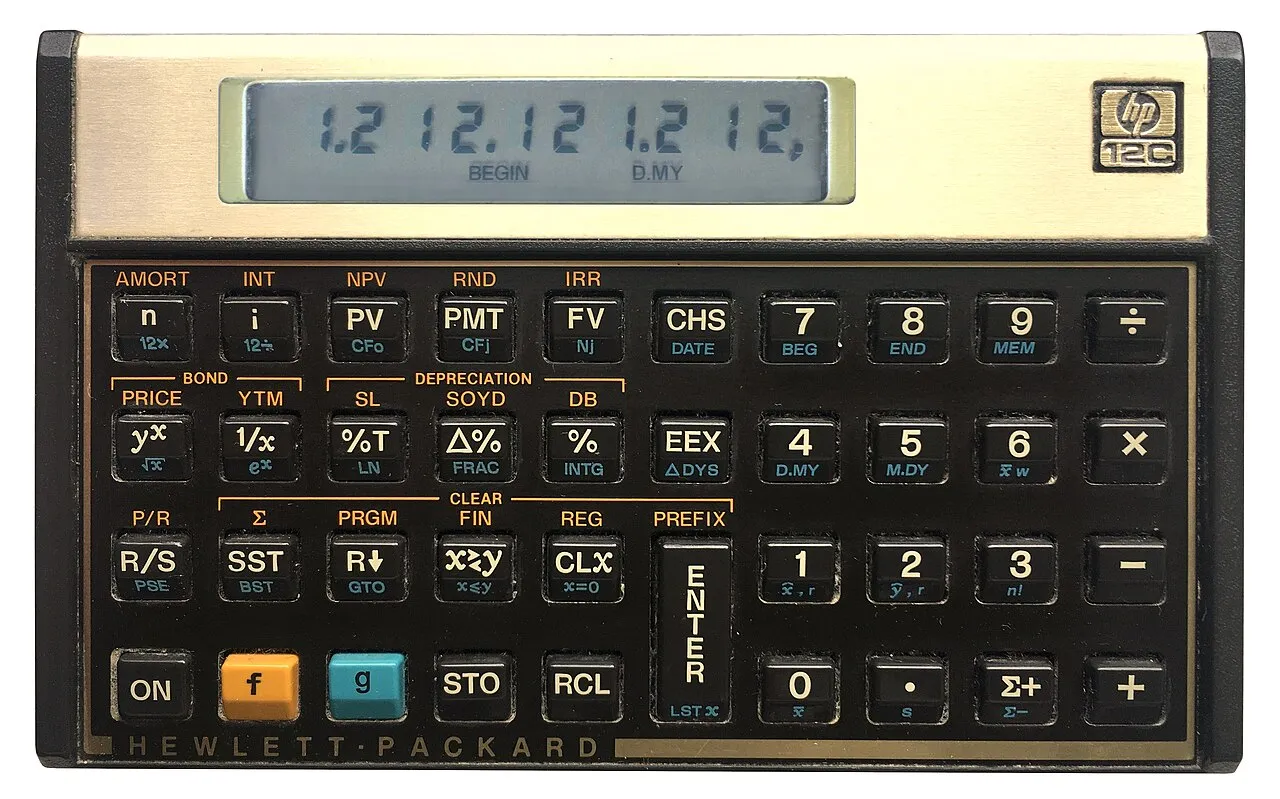
Historical financial calculator, shown to illustrate careful arithmetic. No specific calculator is required or recommended for the examples.
Does an official listing mean the borrowing is risk-free?
No. Checking a provider's status and deciding whether to borrow are separate tasks. Even a legitimate product can have costs, conditions and repayment obligations that need careful consideration for your circumstances.
Read the actual offer rather than assuming a regulator has selected the product for you. This guide does not rank apps, provide affiliate links or tell readers that a listed product guarantees a beneficial outcome.
If a salesperson uses an official logo to imply personal approval of your application or a guaranteed return, ask for the precise written basis. A regulator's name should not replace an explanation of the product and its obligations.
What should you check about rate comparisons?
Identify whether a quoted number is monthly, annual, flat, reducing-balance or another stated measure. Similar-looking percentages can refer to different periods and calculation bases. They should not be compared as though the labels do not matter.
The fictional difference of Rs. 1,500 in the first example is a cash difference under specified assumptions. Dividing it by Rs. 9,500 produces a period cost ratio, but it does not automatically produce a correctly calculated annual percentage rate.
An annualized comparison can require the actual timing of disbursement and payments, along with the applicable method. Do not multiply a convenient percentage by twelve and publish it as a regulator-compliant APR without checking those requirements.
If the calculation is not clear, ask the provider or a qualified professional to explain it using your actual schedule. A label that remains ambiguous after explanation is a reason to seek clarification, not to invent a favourable interpretation.
How can you keep a useful payment record?
Maintain a private table with the due date, amount due, amount paid, payment date and reference. Keep the lender's confirmations and note any difference between your record and the provider's displayed balance.
Use a clear status such as scheduled, paid or awaiting confirmation. A payment initiated on a device and a payment credited by the provider can be different stages, so retain the actual confirmation rather than relying on memory.
Do not share a complete account statement publicly when asking for help. A redacted example may be enough to explain the arithmetic, while the provider may need fuller details through its legitimate private support process.
If you suspect an error, identify the particular transaction or charge you are questioning. “This payment reference is not reflected” is more actionable than an unsupported statement that every part of the account is wrong.
What if an app or collector threatens you?
Keep a factual record of the messages and use appropriate official complaint channels. Do not publish private contact lists or intimate material to prove what happened. Protect the evidence and avoid giving further passwords or one-time codes to an unknown person promising to resolve the problem.
For personal online fraud, harassment or similar cybercrime concerns, our NCCIA reporting guide explains the official route and how to prepare a chronology. It does not guarantee a recovery or a particular legal outcome.
For a financial dispute, identify the actual provider and relevant complaint process. This article cannot decide liability, cancel an agreement or determine what a reader owes. Obtain current case-specific professional guidance where necessary.
How can students practise the comparison without taking a loan?
Use invented offers in a spreadsheet or a small program. Store the principal, deducted fees, net disbursement, payment amounts and dates as separate fields. Then calculate the scheduled total and identify which assumptions affect it.
Add validation. Reject a negative number of payments, mark a missing fee as unknown and avoid assuming every empty field means zero. Display the example's fictional label prominently so that nobody mistakes the output for a real quotation.
Change one condition at a time. If you change the fee, term and payment amount together, it becomes harder to explain which change affected the total. Our programming courses provide a place to practise this kind of careful input handling.
What should you know before accepting a real offer?
You should be able to identify the provider, net amount received, payment schedule, required charges and important conditions in the written agreement. You should also know where to ask about an unexplained term and how to retain a record of what you accepted.
This guide offers a method for reading and checking, not a verdict that borrowing is right for a particular person. Use current official information and appropriately qualified advice for decisions that depend on your finances, obligations and legal position.
Sources
Source 1: SECP digital lending app whitelist page
Source 2: SBP historical product-disclosure circular
Checked 1 November 2026. Amounts and offers in the exercises are fictional. No lender endorsement, current APR, individual affordability assessment or loan approval guarantee is made.
Image credits: cover: Nafis Fuad Ayon, source, CC BY-SA 4.0. Resized and converted to WebP. inline: Pittigrilli, source, CC0. Resized and converted to WebP.
Found an error or an outdated detail? Report a correction with the article URL and original source.