
Manchester United: Origins, Old Trafford and History Explained
Explore Manchester United’s Newton Heath origins, 1902 name change and Old Trafford move, with a clear timeline and practical history-learning activities.
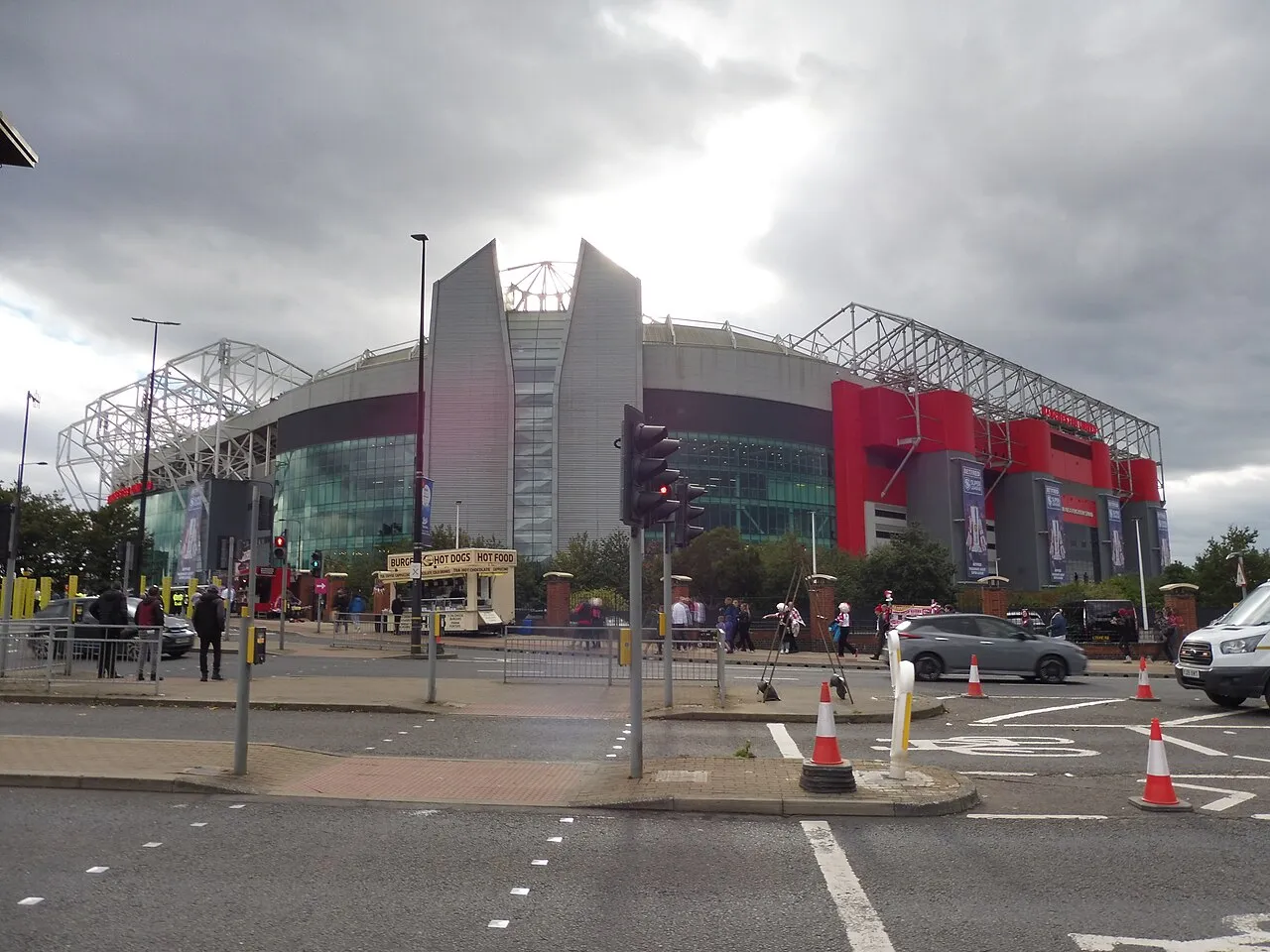
Manchester United began as Newton Heath L&YR Football Club in 1878, adopted its present name in 1902 and moved to Old Trafford in 1910. Those three dates describe different changes: a foundation, a renaming and a new home. Separating them makes the club's history much easier to understand than treating every milestone as another beginning.
This guide, checked on 2 November 2026, introduces the club through documented history and practical learning activities. It is not a live squad, injury or transfer feed. Historical photographs illustrate people and places from the club's story; they do not establish current stadium arrangements, admission, capacity or selection for the next match.
When was Manchester United founded?
The club traces its foundation to 1878 under the name Newton Heath L&YR. The Manchester United name followed in 1902. The official history also records entry into the English First Division for 1892–93, a first league title in 1908 and the move to Old Trafford in 1910. These milestones belong on separate timeline entries.
If a quiz asks for the foundation year, answer the foundation question rather than substituting the renaming date. If it asks when the present name was adopted, 1902 is the relevant milestone. The wording of the question determines which date belongs in the answer. Memorising the dates without their labels is less useful than understanding the events.
Make a five-card timeline: foundation, First Division entry, name change, first league title and stadium move. Arrange the cards before adding years, then use the source to check the order. This small activity helps you see history as a sequence of changes rather than a collection of numbers detached from what happened.
It also prevents a common writing shortcut. A sentence such as “United started in 1902 at Old Trafford” combines milestones that did not occur together. The statement sounds concise but loses accuracy. Good historical writing can remain short while keeping the name change and the later move distinct.
Why does the Newton Heath name matter?
The earlier name connects the club to its railway origins and a particular stage of Manchester's working history. A modern football identity can preserve that past without using the original name in every fixture listing. An organisation can remain historically continuous while changing its public name and later its home ground.
For a learner, this is an example of the difference between an entity and its labels. A database that treats Newton Heath and Manchester United as entirely unrelated clubs could split a historical record incorrectly. A database that ignores the name change would also erase useful information. The better approach stores the entity and the date-bounded names separately.
Try the same idea with a fictional school that changes its name in 2005. Its earlier photographs do not become photographs of a different institution merely because the sign above the gate looked different. Yet a caption should still use the historically appropriate name when describing the image. Continuity and accurate period labels can coexist.
This is why a historical shirt colour or crest should not automatically be described as the current one. The object may faithfully represent an earlier period. Identify its date before deciding whether it is an error. Understanding the timeline makes a museum display, old programme or anniversary image more interesting and less confusing.
What does Old Trafford represent in the story?
Old Trafford became United's home in 1910 according to the club's history. It is a venue associated with the club, not the date the club itself was founded. Ground history and club history overlap, but each has its own milestones. A stadium photograph should be captioned with that distinction in mind.
An old exterior photograph can show architecture and signage from its period. It cannot confirm today's seating arrangement or visitor access. Renovations, temporary arrangements and operating policies can change. If your question concerns a visit, use the club's current venue information rather than a historical image or an undated travel paragraph.
For an original observation exercise, sketch the visible outline of a stadium photograph and mark only what you can see: stands, entrances, signs and surrounding space. Put unseen features in a separate questions list. Do not infer a dressing-room route, security procedure or exact capacity from a view that does not establish those details.
You can extend the exercise by comparing two dated photographs. Ask which visible features changed and which remained recognisable. That is evidence-based visual comparison. Avoid assuming that every difference came from reconstruction; camera position, cropping and lighting can also change how a place appears. Date and viewpoint are part of the evidence.
How should you understand the Busby era?
The club's 1960s history describes Matt Busby's rebuilding after the Munich Air Disaster, including the continuity provided by survivors and the arrival or development of other players. It records the 1963 FA Cup win over Leicester. This is a human history as well as a sporting timeline, and tragedy should be treated with care rather than used as decoration.
When learning this period, separate remembrance from a trophy count. A disaster is not simply a dramatic chapter before later success; it affected people and families. A respectful summary does not invent private feelings or reduce lives to a device for making a football story more exciting. Use documented accounts and measured language.
A timeline can include both sporting and non-sporting events without implying that they have the same meaning. Give each a clear label and explain why it belongs. The reader should understand whether an entry records a result, a rebuilding decision or an event remembered for reasons extending beyond football.
For a school project, choose one question about rebuilding rather than trying to retell an entire decade in a paragraph. Which players link two periods? What does a dated team photograph establish? Which claims require a fuller account? A focused question encourages careful reading and avoids a confident summary built from scattered quotations.
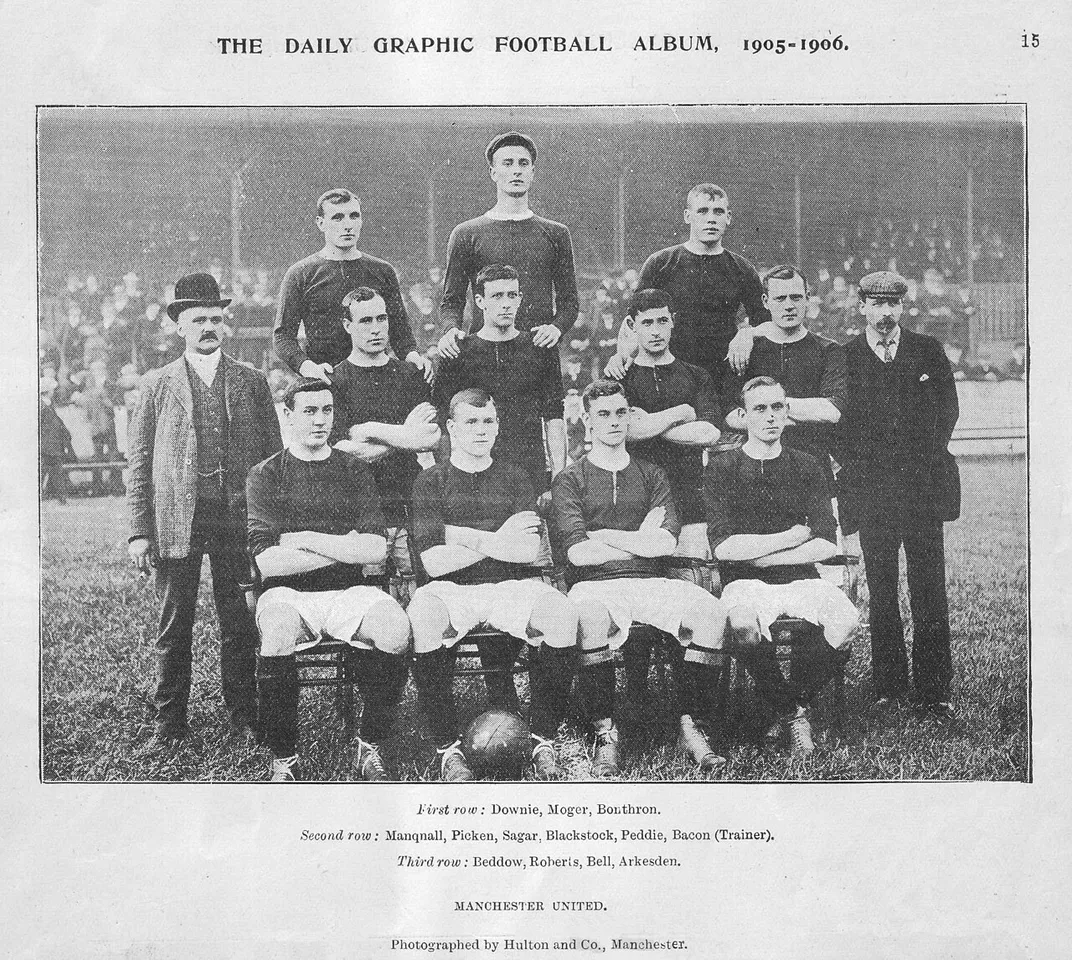
Manchester United in 1905-06. A historical team image, not a current squad photograph.
What changed during Alex Ferguson's 1990s?
United's official decade account describes the 1990 FA Cup as Ferguson's first trophy as manager and records the 1991 European Cup Winners' Cup victory over Barcelona. These are different competitions and separate achievements. A domestic cup win, a league championship and a European trophy should not be merged into one unnamed total.
To organise the period, create rows for seasons and columns for competitions. Put a result only in the relevant column. This makes it possible to discuss a season with several achievements without counting the same event twice or implying a club won a competition that it did not enter under that name.
Historical competition names matter too. The European Cup Winners' Cup is not simply another name for the current Champions League. When formats and competitions change, a modern label can create a false equivalence. Keep the historical name in your timeline and explain its context instead of replacing it with the most familiar contemporary term.
Do not turn a later run of success into proof that every earlier decision was obviously destined to work. Retrospective narratives can make uncertainty disappear. A dated report captures what was known then; a history explains the sequence afterwards. Reading both kinds of source helps you recognise how hindsight changes the tone of an account.
Why should club records and current form be separate?
Historical achievements describe what happened across earlier seasons. Current form describes a specifically defined recent set of matches. A club can have a distinguished past and a difficult recent run, or the reverse. Neither record cancels the other, and a list of historic trophies does not predict the next result.
For a fictional comparison, Club A has many old titles but two wins in its latest five league matches. Club B has fewer historical titles but four recent wins. Which is “better” depends on the question. The historical achievement question and the recent-results question require different evidence and should not share an unclear heading.
If you calculate recent form, define the sample. Are you using league matches only, all first-team competitions or a particular venue? A five-match record changes when those boundaries change. State them before comparing clubs, rather than choosing a convenient sequence after seeing which one supports a preferred argument.
The same care applies to players. A legendary former player does not belong in a current team sheet because a historical article appears near a match preview. Verify the season and selection. Our separate Chelsea–United match explainer should be used only if its dated fixture is the one you want, not as a live roster.
How do you read a club's own history critically?
A club's official history is a useful primary source for how it presents its origins and milestones. It also has an institutional perspective. Distinguish verifiable dates and results from celebratory descriptions such as greatest or most thrilling. You can report the former without adopting every promotional judgement as an independently established ranking.
Make two columns while reading: concrete claim and evaluative language. Put a dated stadium move in the first. Put an adjective praising an era in the second. This does not make the source useless. It makes your use of it more precise, because you can explain which statements are event records and which express a viewpoint.
For a deeper project, compare an official history with a contemporary match record or archive. Check whether they answer the same question before calling differences contradictions. One may summarise a decade while another describes a single afternoon. Different levels of detail can coexist without either account necessarily being wrong.
Always retain the source beside your notes. If you later discover a correction or a more precise date, you can trace which statement needs updating. A page full of unattributed facts may look polished, but it makes the next round of learning harder because the route back to the evidence has disappeared.
Build a small United history project
Choose six to eight milestones and give each a year, event type and one-sentence explanation. Use an original design rather than copying a club page's layout or photographs without permission. Keep captions clear and historical images dated where possible. The project should teach the sequence, not impersonate an official club publication.
Then add a simple filter for names, grounds and competitions. A learner selecting “grounds” should see venue changes rather than every trophy. This is a useful beginner interface problem: the same source collection can support several views when the records have meaningful categories. Our programming courses provide a place to build that idea.
Test the project with someone new to the club. Ask why 1878, 1902 and 1910 all appear. If they can identify foundation, renaming and ground move, the project has preserved the central distinction. If they think the club was founded three times, simplify the labels before adding more animation or extra dates.
Finally, separate the historical project from a current-news section. The former can remain useful for years; the latter needs regular dated updates. A well-labelled page can offer both, but an old article should not silently claim that a manager, player, capacity or ticket price remains current. History is strongest when it stays clear about its own time frame.
Before finishing your timeline, ask a second reader to find one answer using only the labels: when did the name change? They should not need to remember the prose or infer it from a trophy photograph. Then ask which source supports the answer. A project that makes both the event and its evidence easy to locate has done more than display a famous crest. It has created a small research tool that another learner can understand, question and improve without starting the investigation again from scratch.
Sources
- Manchester United: institutional history, for foundation, name change, league entry, first title and Old Trafford milestones.
- Manchester United: 1960s history, for the documented rebuilding context and 1963 cup result.
- Manchester United: 1990s history, for the early Ferguson-era cup milestones. Fictional club comparisons and project activities are original learning examples.
Image credits: cover: Hullian111, source, CC BY-SA 4.0. Resized and converted to WebP. inline: Hulton & Co. Studio of Manchester, source, Public domain. Resized and converted to WebP.
Found an error or an outdated detail? Report a correction with the article URL and original source.