
NASA Explained: Missions, Spacecraft, Instruments and Learning Resources
Learn how NASA missions, spacecraft and instruments work together, read scientific images, and build a project using official learning resources.
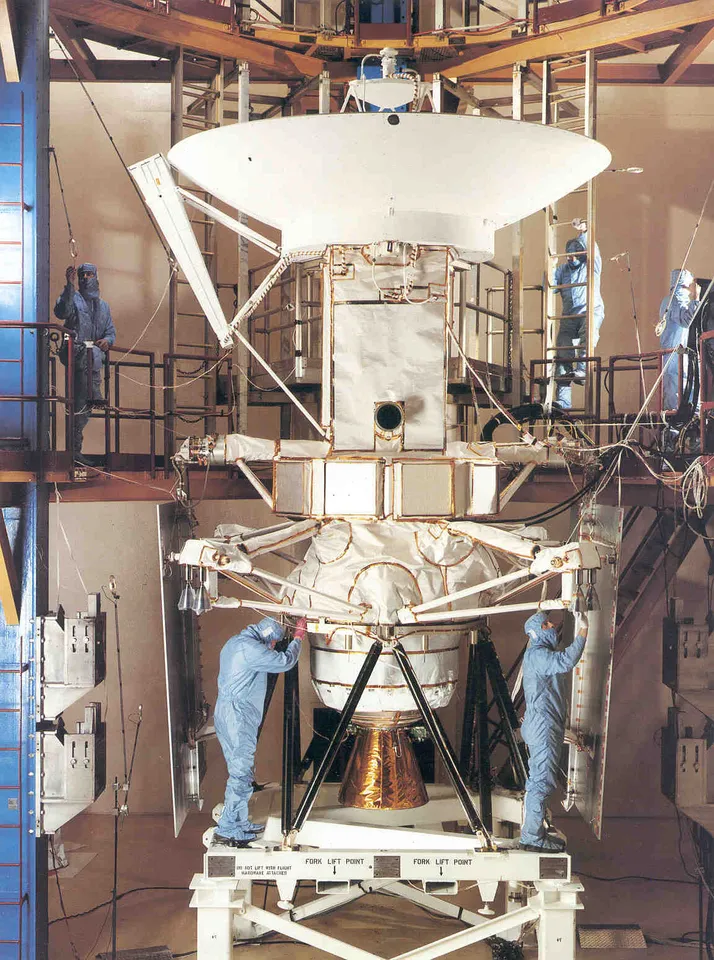
NASA is the United States' civilian agency for aeronautics and space research. Its work includes studying Earth, exploring the Solar System, investigating the wider universe and supporting human spaceflight. Understanding the agency means looking beyond a spectacular launch photograph to the scientific questions, engineering systems and evidence behind a mission.
This guide was checked on 5 November 2026. It explains how to explore NASA's official resources and use them for meaningful learning. It does not announce a launch, promise an internship or identify an unverified discovery as established fact. Time-sensitive mission arrangements should be checked on the relevant current official page.
What does NASA actually do?
NASA's official description covers research in air and space, scientific discovery, exploration and technology. That scope includes much more than sending astronauts into orbit. A mission observing Earth's atmosphere and a spacecraft investigating another planet can both contribute to the agency's work while using very different instruments and operating environments.
For a beginner, a useful classification is question, tool and evidence. Ask what a project wants to discover, what equipment it uses and what observations would help answer the question. This structure makes a mission easier to understand than memorising a list of names without knowing why the projects exist.
Try classifying a public mission page yourself. Write one sentence describing its central question, one naming an instrument or observation method and one describing the kind of result it produces. If you cannot complete an entry, read further rather than filling the gap with an assumption based on the mission's photograph.
How are NASA, a mission and a spacecraft different?
NASA is an agency. A mission is an organised programme of work with particular objectives. A spacecraft is a physical system used for some missions. These terms overlap in conversation but are not interchangeable. Keeping them separate helps readers understand which organisation is responsible for a claim and which object is being described.
A mission can involve scientific teams, engineering groups, contractors and international partners. Identify their stated roles instead of treating every organisation named on a page as though it performs the same task. Collaboration does not make a scientific result less meaningful; it explains how specialised work is organised.
Build a relationship diagram for one mission using boxes labelled agency, mission, spacecraft and instrument. Add only relationships supported by the official description. This exercise reveals a common reading mistake: moving from the name of an agency to an assumption about who built, launched or operates every component.
What is the difference between a rocket and a spacecraft?
A launch vehicle provides a way to place a payload on an intended journey. A spacecraft performs its own mission functions, which may include communication, navigation and scientific observations. The vehicle shown during launch and the object conducting research afterwards are therefore not necessarily the same system doing the same job.
Imagine a delivery example for learning: a vehicle transports a measuring instrument to a location, then the instrument collects observations there. The transport problem and the measurement problem have different requirements. The analogy is incomplete, but it helps explain why a launch success and a scientific result should be discussed separately.
When reading an update, identify which stage it concerns. A launch, a trajectory adjustment, an instrument checkout and a published research result answer different questions about progress. Avoid compressing them into the single claim that a mission has succeeded completely or failed entirely without reading the stated objectives and conditions.
How do robotic and human missions differ?
Robotic missions can carry instruments into environments where direct human work would require very different arrangements. Human missions include additional requirements connected with supporting people and their activities. Neither description establishes that one kind of mission is always more valuable; the appropriate design depends on the purpose and conditions.
For a classroom comparison, choose a task such as photographing a distant surface or investigating how people perform an experiment in orbit. List what must be observed and what must be controlled. Then ask which parts require a person at the location and which can be measured remotely.
Keep the reasoning connected to the question. A dramatic image of an astronaut does not establish that human presence is required for every measurement. Equally, a successful robotic instrument does not answer every question about people living and working beyond Earth. Scientific usefulness depends on the evidence needed, not only the visual appeal of the mission.
Why does a mission need several instruments?
Different instruments can measure different properties. A camera, a detector and a sensor may produce information in forms that require different interpretation. Read what a specific instrument measures rather than assuming every colourful mission image is an ordinary photograph showing exactly what a human observer would see.
Use an everyday object to explore this idea safely. Describe its appearance, measure its length and record its mass using suitable classroom equipment. These observations concern the same object but answer different questions. One measurement cannot replace all the others merely because it is easier to display.
Then consider uncertainty and units. A measurement described only as twelve is incomplete until the quantity and unit are identified. Mission data also need context. Learning to ask what was measured, in which units and under what conditions is a practical foundation for understanding more complicated scientific observations.
How should I read a NASA image caption?
Start with the object, instrument, observation date and explanation of the presentation. Captions can distinguish photographs, illustrations, processed observations and combinations of data. A visually convincing image does not establish which of these it is. The caption is part of the evidence, not an optional decoration beneath it.
Check whether the date describes when the observation occurred or when the page was published. An older observation can be released or discussed later. This is not automatically misleading, but the distinction matters if someone presents the image as a new event happening today.
For an exercise, write a caption containing only supported details. Then compare it with a dramatic social-media description of the same material. Identify which extra claims need evidence. A careful caption can still be interesting: it helps the reader understand what the image genuinely reveals instead of relying on an invented story.
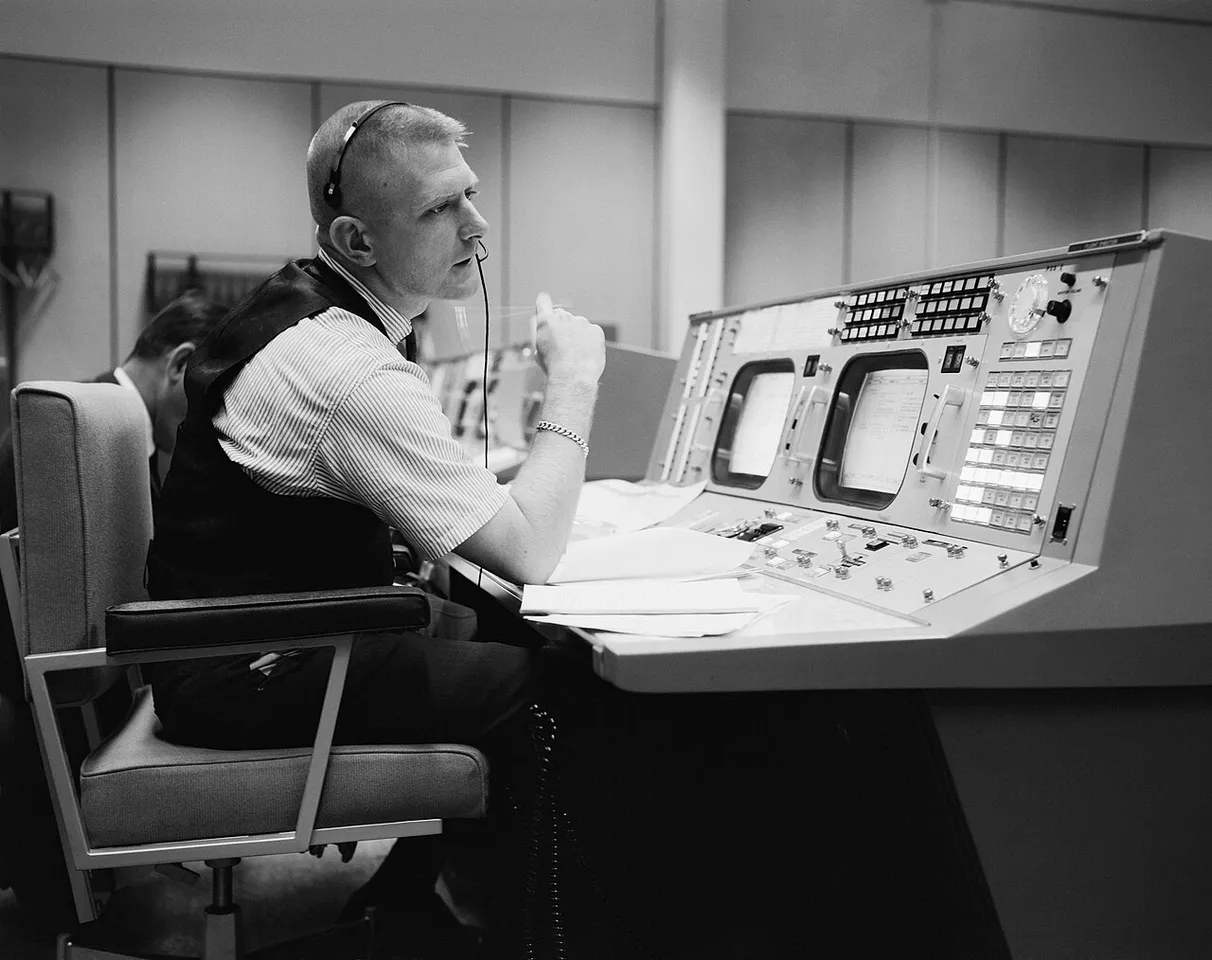
NASA flight director Eugene Kranz at mission control in 1965, shown as historical teamwork context rather than a current mission event.
What does a scientific mission update establish?
Read the wording carefully. An observation, an interpretation and a prediction are related but different statements. A team may report a measured pattern and discuss possible explanations without claiming that every uncertainty has been resolved. Preserving that distinction is a sign of accurate reporting rather than a lack of confidence.
Use a three-column notebook headed observed, inferred and still uncertain. Put each statement from an update into the appropriate column. If a statement does not fit clearly, reread its context. This prevents a tentative explanation from becoming an absolute claim when the information is summarised for classmates.
Ask what further evidence would strengthen or challenge the explanation. You do not need to design a real spacecraft experiment to practise this reasoning. Even a simple classroom investigation benefits from distinguishing the result actually recorded from the larger conclusion someone hopes to draw from it.
Why do space communications involve delays?
Signals require time to travel across distance. The practical delay depends on the separation involved, and communication also requires systems that send, receive and interpret information. A spacecraft should not be imagined as a nearby device that can always be controlled instantly through an ordinary interactive conversation.
In an invented learning example, suppose a message takes ten minutes to travel one way. A reply cannot complete the round trip in less than twenty minutes of travel time, before considering processing or operational delays. The arithmetic illustrates the relationship; it is not a statement about a particular current mission.
For a deeper example, read the Voyager one-light-day guide. Keep the mission-specific distance and date attached to that example. A delay calculated for one spacecraft should not be copied into an explanation of another spacecraft operating at a different location.
How can NASA resources support a school project?
Choose one narrow question rather than attempting a presentation about all of space. For example, investigate how an instrument measures something or how a mission's observations answer a particular question. A manageable project allows you to explain the evidence instead of filling slides with unrelated photographs.
Keep a source register naming each page, image and observation you use. Record the relevant date and the reason the item belongs in your project. This makes later checking easier and helps you distinguish a primary mission update from an article discussing someone else's summary of it.
Write the main explanation in your own words. A collection of copied captions does not demonstrate understanding. Explain the relationship between the question, the method and the result, then use images where they clarify that relationship. The audience should be able to follow your reasoning even before seeing an impressive photograph.
How can beginners practise with scientific data?
Start with a small, clearly labelled dataset whose quantities and units you understand. Before plotting it, identify what one row represents. Then decide which question a table or chart should answer. Selecting a chart before understanding the observations can produce a polished picture with a weak or confusing interpretation.
Keep missing values and limitations visible. Do not replace an absent observation with a convenient invented number unless the entire exercise is explicitly a simulation. A simple project that acknowledges its limits is more useful than a complicated chart that hides how the data were collected or changed.
The programming courses offer a place to practise related computational skills. For a first exercise, use invented values and label them as practice. Once you understand the method, explore an appropriate official dataset and its documentation rather than assuming that every downloaded file can be interpreted in the same way.
How should I assess a claim about a NASA opportunity?
Use the official opportunity page and read its eligibility, location, application process and deadline. A general interest in science does not establish that every programme accepts every applicant. This guide does not verify a current vacancy or promise that a course, internship or recruitment exercise is open.
Be cautious about messages requesting payment or private account access to guarantee selection. Check the issuing organisation and the actual application route. An attractive poster can be copied, and a familiar institutional name in a message does not establish that the sender is authorised to act on its behalf.
For preparation, focus on demonstrable learning: a clear scientific explanation, a documented project or a small programming exercise. Keep claims about your own work accurate. A modest project that you can explain and reproduce is more valuable educationally than a complicated submission whose methods and assumptions you do not understand.
Keep a record of corrections made during a project. Explaining why an early interpretation changed demonstrates scientific reasoning and makes the final presentation easier for another learner to check.
Frequently asked questions
Is every space news story a NASA announcement?
No. Identify the organisation and source for the particular claim. Universities, other agencies, companies and independent researchers also work on space-related questions. A report should name the relevant authority rather than attaching NASA's name to any dramatic story simply because it concerns the universe.
Does an illustration show a spacecraft's current surroundings?
An illustration explains an idea or scene; it is not automatically a direct observation. Read the caption and credit. Historical photographs also need their original context. In a project, label the image honestly so readers can distinguish explanatory artwork from evidence collected by an instrument at a stated time.
What should I learn before tackling advanced mission data?
Practise units, graphs, source reading and the difference between observation and inference. These skills make advanced material easier to approach. You do not need to memorise every mission name first, but you do need to explain what a measurement represents and which conclusions its evidence can reasonably support.
Sources
- NASA: about the agency
- NASA Science: missions and scientific research
- NASA: learning resources
- NASA: images and media usage guidance
Image credits: cover: NASA, source, Public domain. Resized and converted to WebP. inline: Adam Cuerden, source, Public domain. Resized and converted to WebP.
Found an error or an outdated detail? Report a correction with the article URL and original source.