
Nidhi Razdan and the Fake Harvard Offer: Student Safety Guide
Read the documented 2021 account with its date intact, then practise independently verifying a job offer using fictional examples and a student worksheet.

Nidhi Razdan's account of a fraudulent Harvard job offer remains a useful reminder for students and job seekers: a convincing recruitment process is not the same thing as a verified appointment. The lesson is not that an educated person should be mocked for trusting somebody. It is that a check outside the original conversation can matter more than the polish inside it.
This page revisits her published account from January 2021 and develops an original, practical checking exercise for job and internship offers. It does not report a new 2026 incident, name an alleged perpetrator or claim to establish the outcome of a criminal investigation.
What did Nidhi Razdan say about the Harvard offer?
In a first-person article dated 16 January 2021, the journalist said she had believed she was taking a teaching position at Harvard after leaving NDTV in 2020. She described discovering that the appointment was not genuine and characterised the process as an elaborate phishing attack. The account was her explanation of an impersonation, not confirmation that she had become a Harvard professor.
That distinction matters when reading old biographies. A page copied from an announcement can retain a title that later proved incorrect. Check whether the person or institution subsequently corrected the record rather than repeating the earliest version because it appears in several search results.
Her account also describes exchanges that appeared professional and the later importance of contacting the institution. This article does not reproduce the private correspondence or infer who operated the scheme. The public case supplies a limited historical example; the exercises below are fictional and are not additional allegations about it.
What is phishing in an employment context?
Phishing uses a message or impersonation to persuade a person to take an unsafe action, such as disclosing credentials, opening a harmful file or supplying sensitive information. A recruitment approach can provide the setting for that persuasion. The request may arrive as email, a social message or another form of contact.
NIST's guidance recommends checking a suspicious request through contact information obtained independently, rather than through the message itself. The US Federal Trade Commission also warns that bogus recruiters can use official-looking offers and paperwork to seek money or personal information. Those are general warnings, not proof that every unexpected recruiter is fraudulent.
For a student, the key question is therefore more useful than "does this look professional?" Ask, "can the organisation independently confirm this particular vacancy, recruiter and next step?" A real institution's name on a document does not by itself answer that question.
Keep the jurisdiction clear. The US sources below provide prevention guidance. Their reporting routes are not automatically the right route for someone in Pakistan. If an incident needs reporting, use the official service appropriate to your location and circumstances.
A fictional internship offer: pause before replying
Imagine a student receives a message from "Aster Learning Research," a fictional organisation used only for this exercise. The message offers a remote internship, praises a public class project and asks for identity documents before supplying a job description. It includes an impressive logo and a short deadline.
You do not need to declare the offer genuine or criminal from that paragraph alone. Start by identifying what remains unverified. Does the organisation exist? Does the vacancy exist? Does the sender represent it? Is the document request appropriate for the stage? Each is a separate question.
Now imagine the sender supplies three more items: a PDF offer, a calendar invitation and a testimonial. If all three arrived through the same unverified sender, they do not become three independent confirmations. They remain material supplied within one channel of communication.
That is the central reasoning exercise. Count independent checks, not decorative documents. A dozen files can make a story feel substantial without adding an outside source that confirms who is communicating with you.
Build a verification record with four separate questions
| Question | Useful record to keep | What remains insufficient on its own |
|---|---|---|
| Who is the organisation? | Its independently located official identity and contact route | A logo in an attached file |
| Does the vacancy exist? | The role reference and confirmation through a trusted institutional route | An unsolicited job description alone |
| Who represents it? | Independently confirmed recruiter identity and authority | A display name matching a real employee |
| What is the next step? | A confirmed process, purpose and timing for requested information | Pressure to submit immediately |
This is a checking worksheet, not an automated fraud score. A missing public vacancy does not conclusively prove fraud because hiring processes vary. Equally, a genuine advertised vacancy does not prove the person messaging you is authorised to recruit for it.
The worksheet is designed to reveal what you still need to ask. Write "not checked" when something has not been checked. Do not turn absence of evidence into a reassuring green mark just because you want the opportunity to be real.
Add the date and route used for each confirmation. "Called the number shown in the suspicious message" is not the same action as "contacted the institution using a number independently located through its established website." The record should preserve that distinction.
Why the sender's name is not enough
An email display name is the friendly label a reader sees. It can resemble a real organisation without establishing that the message came from it. The address and the relevant domain need attention too, and even a plausible-looking address should not replace independent confirmation of a sensitive request.
In a fictional example, the display name says "University Careers Team" while the message asks you to sign into a personal account using an unfamiliar link. Your first job is not to fix the link or test it with your real password. It is to leave that route and verify the request safely.
A padlock or HTTPS on a website indicates a protected connection to that site; it is not an award proving the site's claims are honest. Likewise, clear English and an attractive layout do not authenticate the sender. Treat appearance as appearance until identity has been established.
If you want to study domain names, do so with harmless examples in a class exercise. Do not visit a suspected attack link simply to see what happens. Practical curiosity should not require exposing a real account, identity document or device.
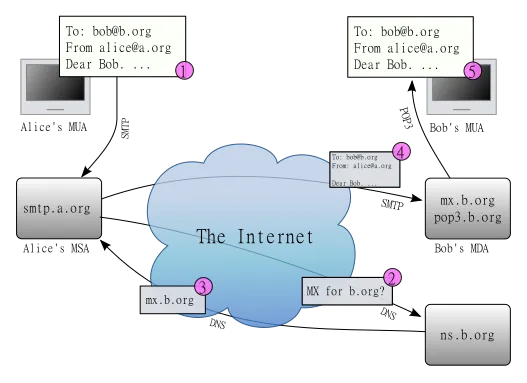
General email illustration. It is not a screenshot of a message sent to Nidhi Razdan and contains no case evidence.
Check what information belongs at each stage
A recruitment process can legitimately require information, but purpose and timing matter. Before sending something sensitive, ask which verified organisation needs it, why it needs it now and how it will be handled. A request should be understandable without forcing you to rely entirely on the sender's urgency.
For the fictional internship, prepare a list of the requested items. Separate a public portfolio link from a passport scan, a bank detail or an account password. These are not equivalent disclosures. Treating them as one ordinary "application pack" hides important differences in sensitivity.
Then write a question beside each item: can this stage proceed without it until identity and process are confirmed? The aim is to make the decision explicit. It is not a universal rule about every employer's paperwork or a claim that all onboarding processes follow one sequence.
Keep unnecessary sensitive information out of public requests for help as well. If you ask a teacher or experienced person to review an offer, remove passwords, codes and private identifiers. They can often examine the process and wording without seeing a complete identity document.
Use a calm confirmation message through a trusted route
After locating the institution independently, a brief enquiry can state the claimed role, reference and recruiter name. Ask whether the vacancy and contact are genuine and which official channel should be used next. You do not need to attach every personal document to ask that question.
Here is original sample wording for a legitimate enquiry, not a message to send back to a suspected scammer:
I received an offer claiming to be for your internship programme. Before proceeding, please confirm whether the role reference and recruiter are authorised, and direct me to your official application process. I have not included identity or banking documents in this enquiry.
Send the enquiry only through a route you have independently established as belonging to the institution. A reply from the same questionable conversation does not resolve the identity problem, however warmly it reassures you.
Allow for ordinary response time without letting silence become approval. "I have not received confirmation" means exactly that. If the purported recruiter insists there is no time for the institution to confirm its own offer, preserve that pressure as part of the record rather than treating it as a reason to skip the check.
What if you already shared something?
Stop using the suspicious route and identify exactly what was disclosed or opened. An email address, a reused password, an identity scan and a payment create different concerns. A useful response starts with an accurate inventory rather than an assumption that either nothing happened or every account is lost.
NIST advises changing affected passwords and addressing reuse elsewhere, and contacting the relevant financial institution if an account is compromised. Use known official channels for those actions. Do not follow a new "recovery" link offered by the same unverified sender.
For a school or workplace device or account, involve the responsible support team and follow its incident process. Save the original messages and relevant times without continuing to engage. Where reporting is appropriate, use the official local reporting route; a public social-media accusation is not a substitute for an incident report.
Readers in Pakistan can consult our NCCIA reporting-route and evidence guide for the distinction between evidence preparation and a public allegation. This page does not submit a complaint, promise recovery or establish that a particular legal offence has been proved.
A classroom exercise that does not collect real data
Use the fictional Aster Learning example and give students a blank verification worksheet. Ask them to list what they know, what they merely suspect and what they would check next. Nobody needs to supply a real email password, identification number or phone contact.
In a second round, add an independently confirmed vacancy but leave the sender unconfirmed. Students should notice that one verified fact does not automatically verify the rest. In a third round, confirm the authorised recruiter through a trusted route and ask which remaining information requests still need an explanation.
The exercise teaches a sequence of decisions rather than a slogan such as "every stranger is a scammer." A useful outcome is a student who can explain why a check is independent, what it establishes and what it leaves unresolved.
Students learning through our programming courses can represent those checks as separate fields in a local practice form. Avoid a single "safe" checkbox that hides several unanswered questions. The interface should make uncertainty visible without requesting real sensitive data for a demonstration.
Questions about Nidhi Razdan and job-offer checks
Was she actually a Harvard professor in the documented episode?
Her January 2021 first-person account says the appointment she had believed in was not genuine. Describe that correction clearly. Do not copy an old announced job title as an established appointment, and do not turn an article about the correction into a claim about a new position today.
Does this article identify who carried out the impersonation?
No. It does not establish the identity of an operator or report an investigative finding. The historical account is attributed to its author. The fictional exercises are separate teaching material and should not be presented as additional details of her experience.
Does good grammar prove an offer is genuine?
No. Writing quality and identity are different matters. A well-written message may still need verification, just as an awkwardly written legitimate message may need clarification. The useful step is independent confirmation of the institution, role, sender and process.
Does passing this checklist make an offer completely risk-free?
No checklist guarantees that. The worksheet helps organise verification and avoid treating appearance as proof. If an important fact remains unresolved, retain that uncertainty and use an appropriate trusted contact before making an irreversible decision.
Why use a 2021 case in a student guide now?
Because the reasoning remains useful: verify an identity outside the channel making the claim. The date stays visible so readers know this is a historical case with present-day prevention lessons, rather than a recycled story presented as a fresh incident.
Sources
- Nidhi Razdan's first-person account, 16 January 2021
- NIST phishing prevention and response guidance
- FTC job-offer scam warning
Image credits: cover: British High Commission, New Delhi, source, CC BY-SA 2.0. Resized and converted to WebP. inline: Yzmo at English Wikipedia, source, CC BY-SA 3.0. Resized and converted to WebP.
Found an error or an outdated detail? Report a correction with the article URL and original source.