
Pakistan U19 vs Bangladesh: Asia Cup Semi-Final Time and Nepal Win
Check Pakistan U19 vs Bangladesh semi-final time, the Nepal result, Ahmed Hussain’s all-round display and Hamza Zahoor’s group-stage recovery.
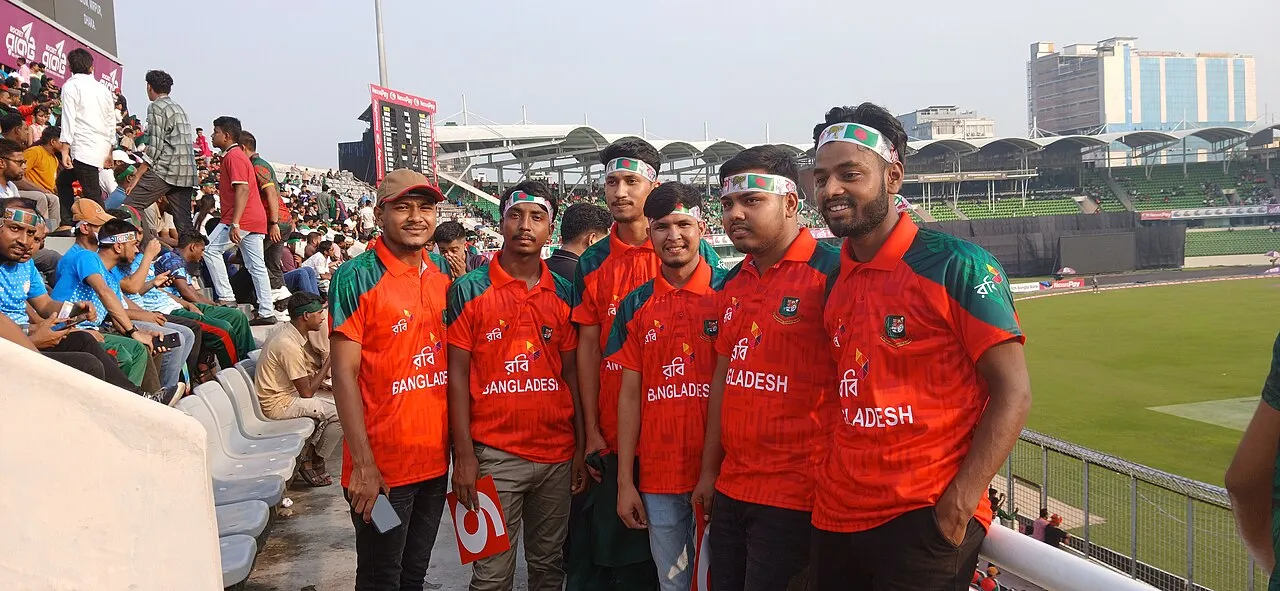
Pakistan U19 face Bangladesh in the Asia Cup semi-final
Pakistan Under-19s will face Bangladesh Under-19s in the ACC Men's U19 Asia Cup semi-final on Thursday, 12 November 2026, at Al Amerat Cricket Ground in Muscat, Oman. PCB's preview schedules first ball for 10:00am Pakistan time. Pakistan enter the knockout match after winning all three Group A games.
This is a preview published on 11 November, not a live score or a completed semi-final report. Pakistan's 101-run victory over Nepal is already recorded; Bangladesh are the next opponents. Keeping those two fixtures separate is important because searches for the Nepal result and the upcoming Bangladesh match are appearing together.
The central question is whether Pakistan can carry their group-stage recovery skills into a single knockout game. Their wins have not all followed the same pattern. A comfortable opening chase, a difficult recovery against India and an all-round performance against Nepal provide different examples of how the team has reached this stage.
The semi-final: date, time and stage
| Detail | Confirmed information |
|---|---|
| Teams | Pakistan U19 vs Bangladesh U19 |
| Competition | ACC Men's U19 Asia Cup 2026 |
| Stage | First semi-final |
| Date | Thursday, 12 November 2026 |
| Venue | Al Amerat Cricket Ground, Muscat, Oman |
| Scheduled first ball | 10:00am PKT |
| Corresponding Oman time | 9:00am, calculated |
| Corresponding India time | 10:30am, calculated |
Pakistan is one hour ahead of Oman and thirty minutes behind India. All three times fall on the same calendar date. Use the time-zone label when sharing the fixture rather than forwarding “9am” or “10am” without explaining whose clock it refers to.
The final is scheduled for 14 November. That is the tournament's next stage, not a fixture Pakistan have already secured. A semi-final berth and a final berth are different achievements; the knockout result still has to be decided.
The PCB tournament page lists the Bangladesh fixture separately from the completed matches. If a scorecard service shows a placeholder or no score yet, that should not be interpreted as zero runs scored in a match that has started.
Pakistan's route through Group A
| Date | Opponent | Pakistan's result |
|---|---|---|
| 6 November | UAE U19 | Won by nine wickets |
| 8 November | India U19 | Won by three wickets |
| 10 November | Nepal U19 | Won by 101 runs |
Those three wins put Pakistan at the top of Group A. They describe the completed group campaign, not a prediction of the next result. Bangladesh's semi-final place represents a new opposition challenge rather than another row that can be added to the wins column in advance.
For the opening match in more detail, read our Pakistan U19–UAE result report. This article concentrates on the semi-final and the lessons from the later group games, rather than presenting the same opening result under a new headline.
The broader Oman tournament guide explains the schedule and groups. This page adds the newly confirmed opponent and the completed Nepal result, which were not the same information as a pre-tournament fixture list.
Ahmed Hussain and Farhan Yousaf rebuild against Nepal
Pakistan made 275 for seven against Nepal after being asked to bat. Ahmed Hussain scored 89 from 73 balls and captain Farhan Yousaf 74 from 95. Their 135-run fourth-wicket partnership began with the team at 64 for three, giving the innings a recovery phase rather than an uninterrupted start-to-finish surge.
Nepal were dismissed for 174 in 43.4 overs. Ahmed also took four wickets for 35 from ten overs and was named Player of the Match. Hasnain Abbas Dar contributed 25 from 23 balls late in Pakistan's innings, while Nepal's Bipin Sharma took three for 58.
The margin is a direct subtraction: 275 minus 174 equals 101. It is a victory by runs because Pakistan set a total and defended it. Do not describe the same result as a win by wickets or mistake 276, the initial winning target, for Pakistan's first-innings total.
The partnership offers a useful question for the semi-final: how does the team respond if early wickets interrupt its plan? The Nepal match supplies evidence that a recovery is possible. It does not guarantee that a similar partnership will happen against another bowling attack.
The India chase tested a different skill
Against India, Pakistan chased 209 and reached 209 for seven in 48.1 overs. Hamza Zahoor finished unbeaten on 100 from 108 balls after Pakistan had fallen to 61 for five. His 107-run sixth-wicket stand with Hasnain Abbas Dar helped turn a fragile chase into a three-wicket victory.
That result had eleven legal deliveries remaining in a fifty-over innings: 300 total deliveries minus 289 used. The notation 48.1 means forty-eight completed overs plus one ball. It is not the decimal number 48.1 multiplied by six.
India's Arjun Rajput had earlier made 107 from 85 balls in a total of 208. Pakistan therefore won despite the opposition also producing a century. An individual milestone can be outstanding without deciding the team result by itself.
The practical contrast is valuable. Against Nepal, Pakistan rebuilt while setting a target; against India, they rebuilt while chasing one. The scoreboard pressure differs, so neither innings should be treated as a complete tactical template for every future situation.
Why a partnership matters more than one attacking over
A partnership is the run increase while two batters share the crease. It includes extras, so it is not always identical to the sum of the runs those players score during that period. It ends when a wicket falls or the innings concludes.
For a hypothetical exercise, a team is 70 for four when a pair comes together and 150 when the next wicket falls. The partnership is 80. If the batters contribute 45 and 30 during that period, the remaining five come from extras. This is an example, not an alternative record of Pakistan's group matches.
The important part for a young player is the sequence. An early boundary may relieve pressure, but several quiet overs do not automatically mean the recovery has failed. The pair must balance a scoring opportunity against the cost of giving the next batter another immediate crisis.
Watch whether singles remain available. A controlled single changes the striker and can prevent a bowler from repeatedly delivering to the same batter. Running, calling and backing up are therefore part of partnership building, even though a highlights package often concentrates on fours and sixes.
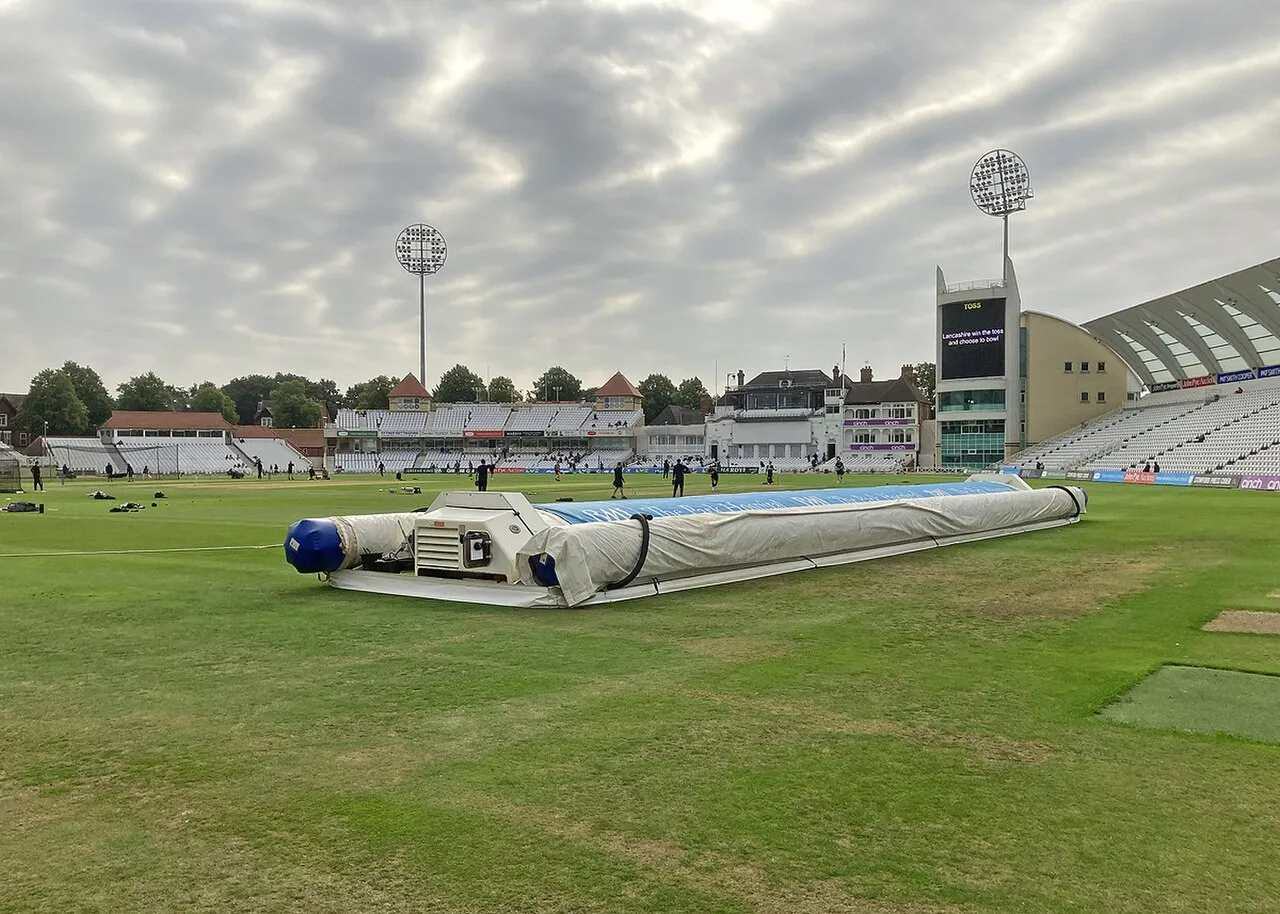
Illustrative archive: pre-match practice at Trent Bridge, England. This does not show Pakistan U19, Bangladesh U19 or their Oman training sessions.
Understanding Ahmed's all-round contribution
An all-round performance means the player has contributed with both bat and ball. The two contributions should still be assessed separately: batting runs are not converted into bowling wickets, and bowling economy does not describe the pace of a batting innings.
For example, bowling figures of three for thirty from ten overs would give an economy rate of three runs per over. A batting score of thirty from twenty balls would give a strike rate of 150 runs per hundred balls. These invented figures measure different activities and should not be compared as if they shared one scale.
Workload and match role also affect opportunity. A player who bowls a full allocation has a different sample from someone used for two overs. A batter who arrives late in a successful chase may never have the opportunity to make a large personal score.
For the semi-final, look at how responsibilities are shared rather than assuming one player must repeat every part of an earlier performance. A team can win through a different combination of batting, bowling and fielding contributions from the one that succeeded in the previous game.
The selected squad is not the confirmed eleven
PCB's squad list names Farhan Yousuf as captain, alongside Abdul Qadir, Abdul Subhan, Ahmed Hussain, Ali Raza, Hamza Zahoor, Hasnain Abbas Dar, Hayam Khan, Huzaifa Ahsan, Jahangir Bilal, Mohammad Huzaifa, Mohammad Seyam, Niqab Shafiq, Rizwanullah and Usman Khan. The board's running reports also use the spelling Farhan Yousaf.
Those spelling variants should not be counted as two captains or two separate players. Use the official match sheet to resolve the name attached to a particular innings. Similar caution applies to abbreviated names that can hide the distinction between different squad members.
Selection in the fifteen does not guarantee an appearance in the semi-final. The actual eleven is confirmed separately. Until then, a predicted lineup should be labelled as a prediction, and an older group-match XI should not be copied as though it were a new announcement.
Head coach Shahid Anwar leads the support group. A preview can identify his stated team role without inventing private selection discussions, dressing-room speeches or a promise that a particular player will start.
What to watch when Pakistan bat first
If Pakistan set a target, begin with wickets and deliveries remaining rather than deciding on a “winning score” before the conditions are known. A total that is difficult on one surface may be manageable on another. No verified pitch inspection or weather forecast is supplied here.
During a recovery, watch how the batters choose which deliveries to attack. A pair may reduce risk against an accurate bowler and look for scoring opportunities elsewhere. That is different from abandoning the need to score. The innings still has a finite number of legal deliveries.
Toward the finish, note which batters are established and how many wickets remain. A boundary attempt from a set batter and the same attempt from a new arrival may carry different risks. Context makes the decision understandable; the result of one shot does not prove whether every similar choice is correct.
Field placement supplies another clue. A gap may offer a single that keeps the innings moving even when the boundary is protected. Following those smaller exchanges can make a fifty-over match easier to understand than watching only for dramatic strokes.
What to watch if Pakistan chase
In a chase, the target gives an explicit numerical problem. Required runs divided by remaining overs produces the required rate, but wickets determine how much risk the side can reasonably take. Neither number should be read alone.
Consider a hypothetical chase needing 60 from 60 balls. The required rate is six an over. If the next over brings only three runs, the new requirement is 57 from 54 balls, about 6.33 an over. That is a change to manage, not proof that the chase has already been lost.
Now add the wicket context. A pair with seven wickets available has more resources than a last pair facing the same requirement. A sensible assessment explains both the rate and the resources, rather than presenting a large required-rate figure without the rest of the situation.
If interruptions produce an officially revised target, use that revised figure. Do not keep calculating from the original target after the match officials have changed the equation. This preview does not invent a rain scenario or claim that an interruption is expected.
Bangladesh are new opponents, not a guaranteed outcome
An unbeaten group stage creates confidence, but knockout cricket still requires a performance in the next match. Earlier margins do not award extra runs at the start of the semi-final. Both sides begin the new game with its own toss, conditions and selection decisions.
Avoid using a result from another age group or a senior international as a substitute for evidence about these teams. Under-19 cricket is a separate category. Players can share names with senior cricketers, while teams carrying the same country label can have completely different squads.
The useful focus is on the cricket available to observe: the opening spells, the response to wickets, catching and the quality of decisions under pressure. A forecast becomes less credible, not more, when it treats a ranking, reputation or national rivalry as a guarantee.
Where to follow the correct scorecard
Use the official tournament match list and select the 12 November Pakistan U19–Bangladesh U19 semi-final. The Nepal match is dated 10 November and the India match 8 November. Checking the date before reading the total prevents an old completed score from being mistaken for a live one.
A scorecard and a video stream are different services. This article supplies no verified Pakistan broadcaster or free-video promise. An official match page can still identify the teams, stage, innings and status without offering a live picture.
Archive images are also distinct from live evidence. The photographs on this page are labelled for context; they do not show the forthcoming semi-final, identify its playing eleven or establish the state of the pitch. Read the captions before treating any image as a match-day update.
Questions about the U19 semi-final
Is Pakistan playing Nepal again on 12 November?
No. The next confirmed opponent is Bangladesh U19. The Nepal fixture was Pakistan's final group match and ended in a 101-run win. The semi-final is a separate knockout fixture.
Has Pakistan already qualified for the final?
No. Pakistan qualified for the semi-final by topping Group A. A place in the scheduled 14 November final depends on the semi-final outcome; this preview does not report that result in advance.
What time should Pakistan readers use?
PCB schedules first ball for 10:00am PKT on Thursday 12 November. That corresponds to 9:00am in Oman and 10:30am in India. Keep the time-zone label attached when forwarding the schedule.
Is this the senior Asia Cup or Rising Stars event?
No. The match belongs to the ACC Men's U19 Asia Cup. Senior internationals and A-team or Rising Stars competitions have different participants and fixtures. Match the full tournament title before using a result or roster.
Sources
- PCB: Pakistan U19–Bangladesh semi-final preview, 11 November 2026
- PCB: Nepal victory report, 10 November 2026
- PCB: Pakistan–Nepal official scorecard
- PCB: Hamza Zahoor's century in the India chase
- PCB: tournament introduction and selected squad
- PCB: current tournament match list
Image credits: cover: DeloarAkram, source, CC BY 4.0. Resized and converted to WebP. inline: Trent Bridge Cricket Ground: pre-match practice by John Sutton, source, CC BY-SA 2.0. Resized and converted to WebP.
Found an error or an outdated detail? Report a correction with the article URL and original source.