
PIA New Cabin-Crew Uniforms: HSY, the Rollout and Working Design
Explore PIA’s new HSY cabin-crew uniforms, the reported October rollout and the practical design questions behind airline workwear and branding.
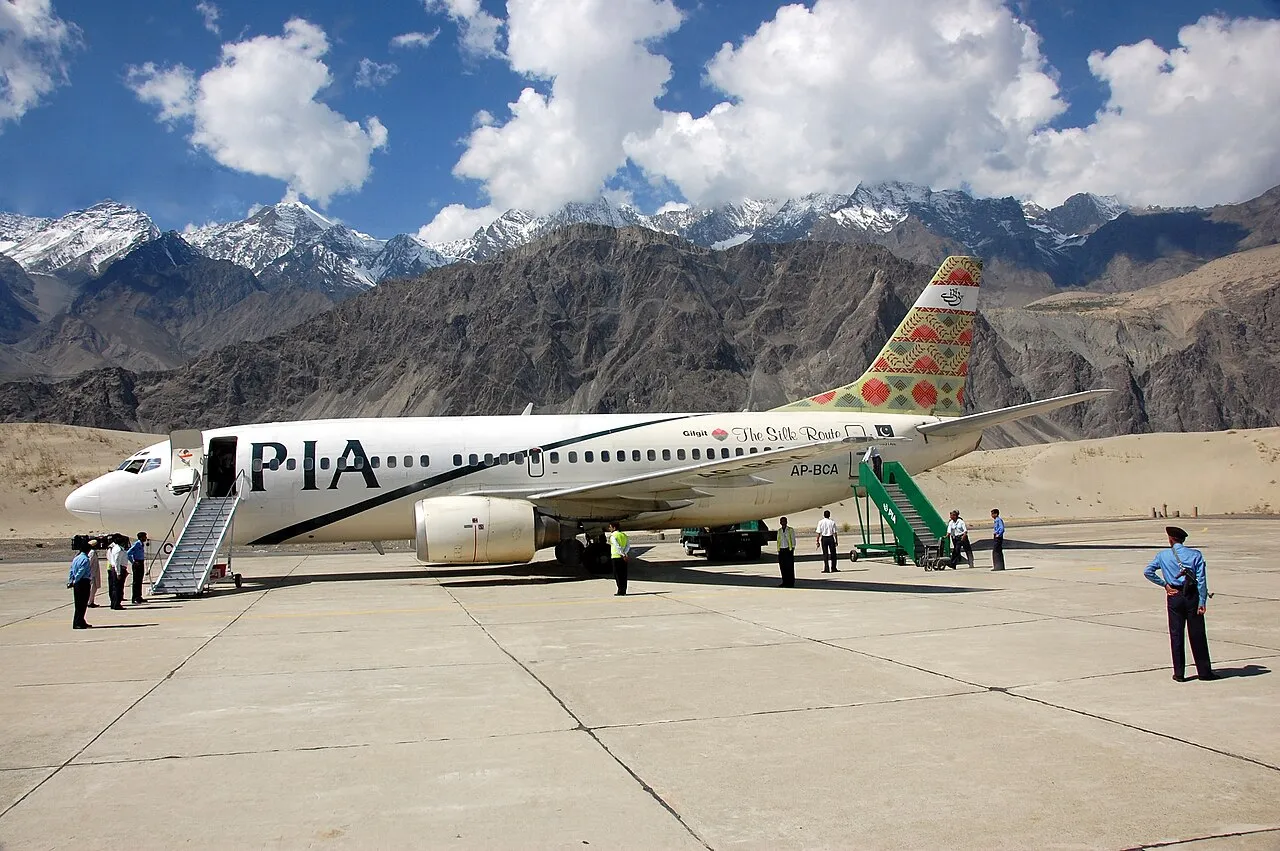
Pakistan International Airlines selected Hassan Sheheryar Yasin's designs for new cabin-crew uniforms in October 2026. The reported rollout date was 31 October, linked to the airline's planned Dreamliner inaugural service from London to Islamabad. The announcement concerns crew clothing and visual identity; it should not be confused with a new recruitment scheme or a guarantee about every flight's onboard service.
The useful questions extend beyond whether the clothes look attractive. A working airline uniform must support movement, identification, repeated use and a consistent professional appearance. This guide explains the reported announcement and the design questions that help readers evaluate it without mistaking promotional language for independently measured performance.
What has PIA announced?
Reports of the airline's October announcement identify HSY, the professional name of designer Hassan Sheheryar Yasin, as the selected designer. The new uniforms were presented as part of PIA's updated visual identity. The stated in-service date was 31 October 2026, with the initial rollout connected to the London–Islamabad Dreamliner service.
The announcement and actual use across every route are different claims. A planned introduction date does not establish that every crew member on every aircraft changes clothing simultaneously. Airline rollouts can involve logistics and schedules, so an observation from one flight should not automatically be generalized to the entire network.
For an individual journey, the flight booking and airline travel instructions remain the relevant operational documents. A uniform announcement does not change the passenger's baggage allowance, visa requirements or ticket conditions unless the airline separately states an applicable change.
Who is HSY in this announcement?
HSY refers to Hassan Sheheryar Yasin, the Pakistani fashion designer whose work was selected from the competing proposals described in the reporting. The designer's role concerns the uniform collection. It should not be confused with the airline's operational management, aircraft certification or cabin-crew recruitment authority.
This distinction matters because brand announcements can be summarized too loosely. Saying a designer created the new uniform is a specific claim about design. Saying that the designer changed the airline's safety or punctuality would require entirely different evidence and should not be inferred from the same announcement.
Readers can appreciate the clothing as design while still evaluating airline services through separate records. A visual update can be a legitimate project without becoming proof that every other aspect of the business has improved.
What is the purpose of a cabin-crew uniform?
A uniform helps passengers recognize staff and supports a consistent appearance across a large workforce. In an unfamiliar cabin, identifying the person responsible for assistance can be useful. The clothing also communicates the airline's visual identity through its coordinated design.
However, clothing is only one part of recognition. Crew introductions, instructions and normal professional procedures also matter. Passengers should follow the airline's onboard guidance rather than make assumptions based entirely on a garment's color or a photograph they saw online.
The uniform must also function as workwear. Cabin duties involve standing, reaching, bending and moving through a constrained environment. A design that looks effective in a staged photograph still needs to work during repeated practical use. That is why appearance and usability should be discussed together.
What does ergonomic movement mean in practice?
The announcement's design description emphasized movement and long-haul use. In practical terms, a work garment should allow the wearer to perform required tasks without unnecessary restriction. Sleeve shape, fit, closures and how the garment behaves when seated or reaching can all influence that experience.
These are design considerations, not independent test results for this particular collection. A press release can state the intended qualities, while wear trials and real use would provide evidence about whether those qualities are consistently achieved across different wearers and working conditions.
The distinction is useful in any product story. A claim that a design aims to be comfortable is not the same as a published comparison showing measured comfort. Readers should preserve the difference between intent, marketing language and demonstrated performance.
Fabric choice is more than a luxury label
Workwear fabrics must balance several demands. Breathability, durability, ease of care and how the material holds its shape can pull in different directions. A fabric that looks excellent in a studio may require maintenance that is difficult in a working rotation.
Fit also affects how fabric performs. The same material can feel different depending on tailoring, lining and the amount of room allowed for movement. It is therefore incomplete to judge a uniform by a fabric name without considering the finished garment and its use.
This guide does not assign unverified fiber percentages, technical ratings or safety certifications to PIA's new collection. Those details require the relevant specification or official documentation. Inventing them would make the article more detailed in appearance while making it less reliable.
Why consistency matters across a workforce
A uniform collection needs to be produced in suitable sizes and maintained consistently. The design visible at a launch is only the beginning. The practical system includes fitting, replacement, cleaning, repair and the availability of matching components over time.
This is a useful example of the difference between a design concept and an operating system. A good concept can still face implementation problems if replacements are unavailable or fitting is inconsistent. Conversely, careful implementation can help a restrained design look coherent across many staff members.
For students interested in fashion or business, map the process from drawing to daily use. Identify who designs, manufactures, distributes, fits and maintains the clothing. The exercise reveals how many decisions sit behind a seemingly simple photograph of a new outfit.
Uniform design and airline branding
An airline's identity includes its name, aircraft appearance, digital services, printed material and staff presentation. Uniforms are one visible part of that system. A change can signal a new presentation without changing the legal or operational identity of the airline.
Good branding is consistent enough to be recognizable but flexible enough to work in different contexts. A garment, an aircraft tail and a mobile booking screen do not need to look identical. They need a coherent relationship that helps people recognize the organization.
That relationship should also remain legible in practical conditions. A launch photograph may use controlled lighting, while passengers encounter crew in terminals, boarding areas and aircraft cabins. The real design challenge includes those ordinary environments, not only the presentation event.
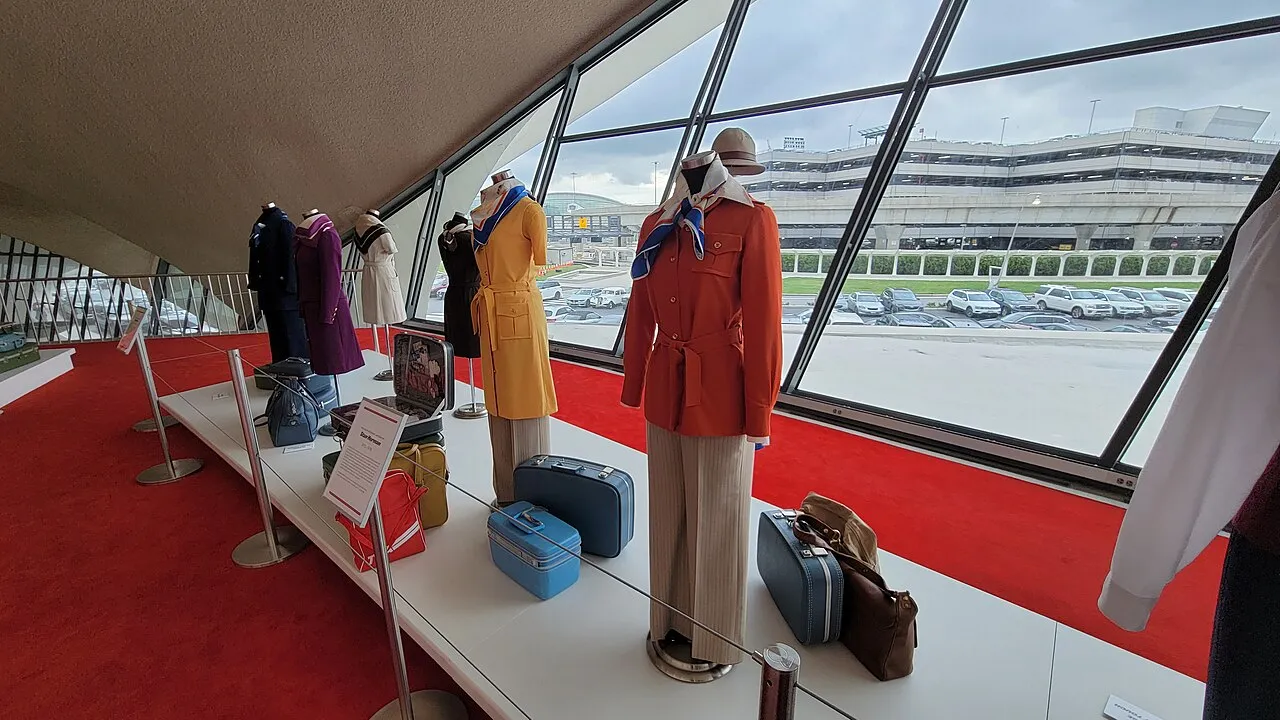
Vintage airline uniforms in a TWA Hotel exhibit; comparative design history, not PIA’s 2026 collection.
The historical context should be labeled clearly
PIA has a history of working with fashion designers, including the well-known Pierre Cardin association in the 1960s. Historical uniform photographs can help explain that tradition. They should not be presented as images of the newly selected 2026 collection.
The same rule applies to aircraft photographs. A picture of a PIA aircraft can illustrate the airline, but it does not prove that the aircraft is the particular Dreamliner mentioned in the rollout announcement. Registration, aircraft type, date and caption matter when making a specific identification.
Image captions in a responsible article should tell readers what they are actually seeing. A contextual photograph is useful when honestly labeled. Its usefulness does not require pretending that it depicts the exact event, aircraft or garment discussed in the latest news.
What should passengers expect from a uniform announcement?
Expect a change in staff presentation where the new collection is introduced. Do not automatically expect different fares, baggage allowances, flight times or meal services. Those aspects of a journey depend on the booking and airline's operational information.
Likewise, do not treat an older uniform seen on one route as immediate proof that the announcement was false. A network-wide rollout can differ from a launch date or first-service date. Establish what the airline actually promised before deciding whether an individual observation contradicts it.
If a practical travel question arises, use the official airline contact route and your booking reference privately. A fashion article cannot resolve a ticket change, confirm a visa requirement or determine whether an individual flight will operate on time.
Is this connected with cabin-crew hiring?
A uniform launch is not, by itself, a recruitment notice. Scammers sometimes attach familiar brand names and attractive images to fake job offers. An announcement about clothing should not be used as evidence that an applicant must pay a fee to an unknown person or submit documents through an unofficial form.
Check recruitment information through the airline's own careers or official notice channels. Confirm the role, deadline and application process independently. Do not assume that a message is genuine because it includes the new uniform photograph or a recognizable logo.
Keep personal documents, passwords and verification codes out of public comments. A legitimate-looking post can be copied by someone who has no connection to the airline. The visual identity may be authentic while the surrounding message is fraudulent.
How to evaluate the announcement fairly
Separate four questions: what was selected, when it was scheduled to appear, how it is intended to function and what has actually been observed in service. Each question has a different kind of evidence. A designer credit answers the first, while a rollout statement answers the second.
Practical performance needs a different basis. Wearer feedback, maintenance experience and operational observations could inform that discussion, but unsupported social-media praise or criticism should not be transformed into a comprehensive technical assessment.
It is also possible to hold two ideas at once: a uniform update can be professionally important, and passengers can still ask separate questions about service quality. One project should not be used to silence every other concern, nor should unrelated criticism make the design announcement impossible to describe accurately.
A classroom design exercise
Create a fictional work-uniform brief for a role that involves movement, public interaction and repeated daily use. List the tasks before choosing colors or decorative details. Ask which parts of the clothing need flexibility, identification or convenient maintenance.
Then distinguish requirements from preferences. Being able to perform the job comfortably is a requirement; a particular decorative treatment may be a preference. Where two requirements conflict, explain the trade-off instead of assuming that one material or silhouette can maximize every quality simultaneously.
Finally write an honest caption for a concept image. State that it is a proposal and identify what has not been tested. This exercise teaches a wider communication skill: a design can be compelling without exaggerating the evidence behind it.
Keep three kinds of evidence separate
| Question | Relevant evidence |
|---|---|
| Who designed the collection? | The design-selection announcement |
| Where has it entered use? | A dated rollout statement or verified service observation |
| Has airline punctuality improved? | Operational performance data |
The third question cannot be answered by the first two. This simple separation prevents a visual update from carrying claims it was never designed to establish. It also allows the design to be assessed on its own professional requirements. A reader can like the collection, dislike it or reserve judgment while still describing the announcement accurately. Personal taste and a verified operational claim are different kinds of statement.
Common questions
Who designed PIA's new cabin-crew uniforms?
The October 2026 reporting identifies Hassan Sheheryar Yasin, known as HSY, as the selected designer. The announcement followed a design-selection process described in the reporting. That credit concerns the collection, not airline operational management.
When were they due to enter service?
The reported introduction date was 31 October 2026, linked to the planned London–Islamabad Dreamliner inaugural service. Treat that as the stated rollout plan rather than proof that every route and crew member changed simultaneously.
Does a new uniform mean passenger rules changed?
No automatic change follows for baggage, tickets or entry requirements. Check the conditions attached to your own booking and the airline's current travel instructions. A visual-identity announcement should not be substituted for those operational documents.
Where can I read about the aircraft context?
Our Boeing 787-9 and PIA guide explains the aircraft story separately. Keeping aircraft specifications, crew clothing and passenger conditions in their own categories helps readers understand what each announcement actually establishes.
Sources
- Uniform selection and rollout reporting
- Announcement and historical design context
- PIA official website
Image credits: cover: Maria Ly from San Francisco, USA; modification by Diaa abdelmoneim, source, CC BY 2.0. Resized and converted to WebP. inline: Charles from Port Chester, New York, source, CC BY 2.0. Resized and converted to WebP.
Found an error or an outdated detail? Report a correction with the article URL and original source.