
Sanjay Gupta: Film Credits, Kaante and a Guide to His Work
Identify the Hindi filmmaker behind Kaante, distinguish directing from producing credits and explore his work with practical, spoiler-light film-study questions.

Sanjay Gupta, the Hindi filmmaker associated with Kaante, Kaabil and Mumbai Saga, is the director meant in this guide. He should not be confused with other public figures sharing the same name. Following news of his death, readers looking back at his work can benefit from a careful distinction between his directing credits, producing credits and the wider teams behind each film.
PTI reported his death on 31 October 2026. Some published accounts give conflicting ages, so this page does not assert a precise age or speculate about private circumstances. Its main purpose is to help readers identify his work and approach it through informed film-study questions rather than unverified personal details.
Which Sanjay Gupta are readers searching for?
The filmmaker worked in Hindi cinema as a director and producer. A name alone is not a reliable identifier, especially when search results mix entertainment, business and medical personalities. Check the occupation, a credited film and the context of the page before attaching a photograph or biographical claim to the person you mean.
For this director, Kaante is a useful anchor. Its production-company record names Sanjay Gupta as director, lists a release date of 20 December 2002 and identifies its ensemble cast. That gives readers a specific production record to consult instead of relying on a name match alone.
The photograph accompanying this article is a historical image of the filmmaker at a book launch, not an image from a recent event. The inline clapperboard photograph is a general filmmaking illustration. It is not presented as equipment from his productions.
What can the Kaante production record establish?
Pritish Nandy Communications' page lists Gupta as director and includes him among the producers. Its cast list includes Amitabh Bachchan, Sanjay Dutt, Suniel Shetty, Mahesh Manjrekar, Lucky Ali and Kumar Gaurav. The same source describes a story built around six strangers and a planned crime.
These details establish credits and a broad premise. They do not prove every claim someone might make about the film's influence, audience response or financial performance. A production page, a review and an audited financial statement answer different questions.
When reading about a film, preserve those distinctions. “The production company lists this credit” is a different statement from “Every critic agreed this was the director's best work.” The first can be checked against a record; the second would require a defined set of reviews and a defensible comparison.
Which other films help orient a new reader?
The following selection is a starting point, not a complete filmography. PTI's career report identifies these directing credits and years. A separate producing credit should not automatically be converted into a directing credit when compiling a list.
| Film | Year | How to use the entry |
|---|---|---|
| Aatish: Feel the Fire | 1994 | An early directing-credit reference |
| Kaante | 2002 | Cross-check against the production-company page |
| Musafir | 2004 | Another title in his directing career |
| Shootout at Wadala | 2013 | Keep its title distinct from Lokhandwala |
| Jazbaa | 2015 | A later directing-credit reference |
| Kaabil | 2017 | A widely searched title associated with him |
| Mumbai Saga | 2021 | A later career reference |
One recurring source of confusion is Shootout at Lokhandwala. The PTI report identifies Gupta with producing and writing work on that film and names Apoorva Lakhia as its director. Sharing a thematic connection or a similar title does not make two films interchangeable entries in a director's filmography.
Before sharing a list, check the role column as carefully as the title column. This simple habit avoids attributing someone else's directing work to the more familiar name associated with a project.
How should a beginner study an ensemble film?
An ensemble story gives you a useful observation task: track how the film helps you distinguish several important characters. You do not need to begin with a verdict about whether you liked every character. Start by noting the information the film supplies and when it supplies it.
Create a small viewing sheet with one row per central character. Record the character's stated aim, an important choice and one relationship that changes. Keep the entries brief enough to update while watching without turning the activity into a transcription exercise.
Then ask what would become unclear if one introduction were removed. Would you lose a motivation, a relationship or information needed later? This question directs attention to storytelling function rather than simply counting how many actors appear.
If you watch Kaante, use this as an observation method, not a prewritten conclusion about its scenes. This guide is not claiming a fresh scene-by-scene viewing or supplying quotations from its dialogue. Your notes should come from the version you actually watch.
What is the difference between plot summary and analysis?
A plot summary describes what happens. Analysis asks how the film communicates it and what effect particular choices have. Both can be useful, but a review made entirely from a long summary leaves little room for the writer's reasoning.
For an original fictional example, imagine a character receiving a letter. “She receives a letter and leaves the room” is a summary. “The camera withholds the letter's contents, so the audience sees her reaction before learning its cause” is analysis. The second statement identifies a technique and explains its effect.
This invented example is not a scene attributed to Gupta or any named film. It demonstrates the type of question you can ask about a scene you have actually watched. Always distinguish a teaching illustration from evidence about a specific production.
When writing your own response, support an interpretation with a concrete observation. If you say a scene creates uncertainty, identify the information being delayed. If you say a relationship changes, identify the choice or exchange that supports your reading.
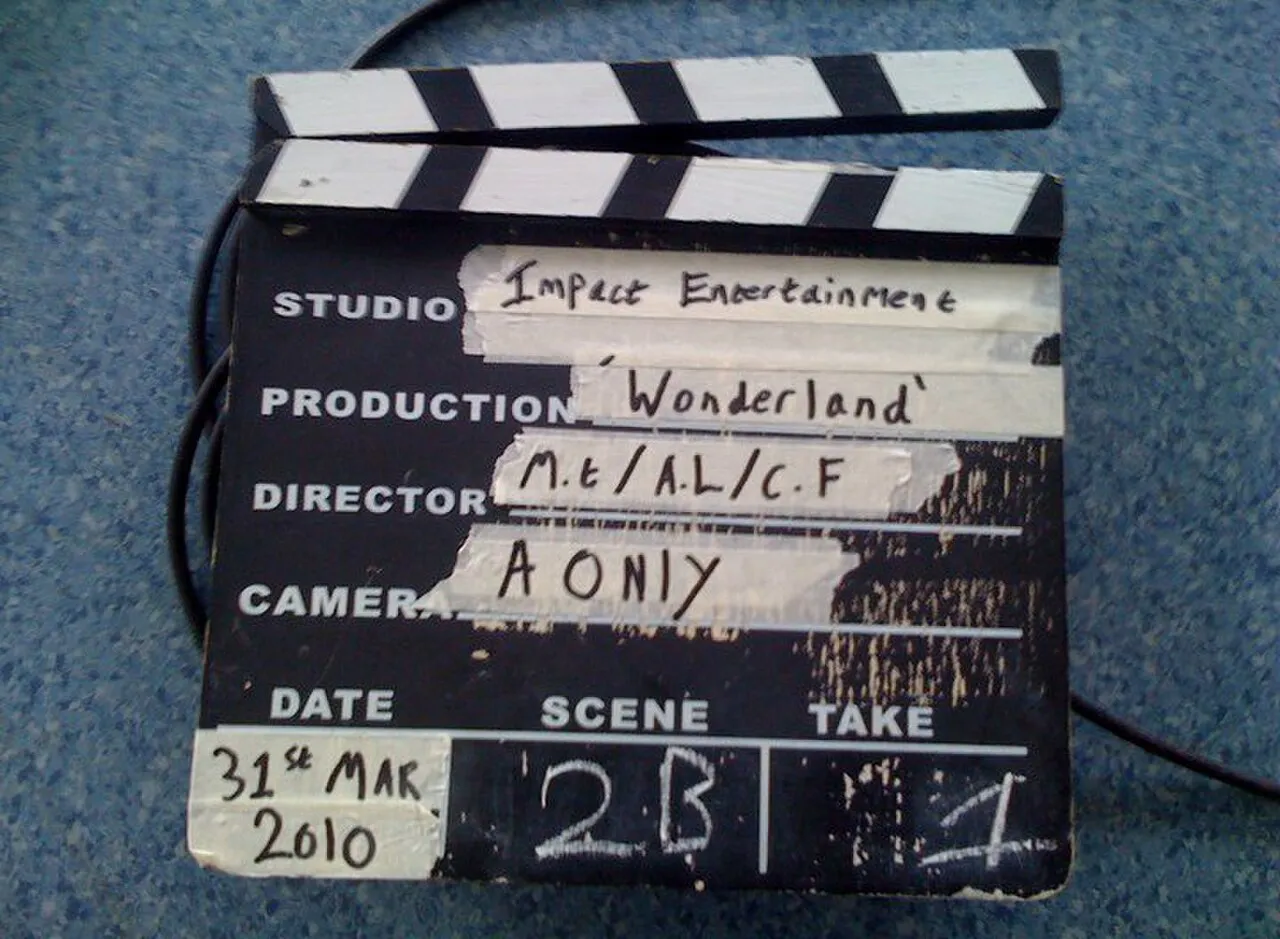
A traditional clapperboard, shown as a general filmmaking illustration. It is not identified as equipment from Gupta’s productions.
How can you discuss style without repeating vague praise?
Words such as “stylish,” “intense” and “cinematic” need explanation. They can introduce an opinion, but they do not show what you noticed. Name the feature you mean: framing, lighting, colour, editing pace, sound, performance or the order in which information is revealed.
For example, “The scene cuts frequently between two locations” is an observation someone else can examine. Explaining whether those cuts create a comparison, a sense of urgency or a misunderstanding is the next step. Keep observation and interpretation connected.
Avoid treating a single screenshot as proof of an entire film's visual approach. A still image cannot show editing rhythm, and it may not reveal the scene's sound or narrative context. Use an appropriate kind of evidence for each claim.
The same care applies to promotional trailers. A trailer is a selected presentation of a film. If you have watched only the trailer, say so and limit your conclusions accordingly rather than publishing a review that implies you watched the complete work.
How do directing and producing differ in a credit list?
For a reader researching a particular film, the safest starting point is the actual credit attached to that production. Do not assume the same person performed every role because their name appears prominently on a poster or a news headline.
A useful research table has separate columns for director, producer and writer. Leave a cell unresolved if you have not checked it. An empty, clearly marked research field is better than a confident but incorrect credit copied from a mixed-role biography.
This is especially important when a filmmaker has worked in more than one capacity. A career article may discuss all of those roles in one paragraph, while a list titled “films directed by” requires a narrower selection.
When two records disagree, inspect the film's own credits and the distributor or production company's record. Record the discrepancy if you cannot resolve it. Do not quietly select whichever version makes the article easier to finish.
How can students write a balanced short film response?
Begin with a question you can answer from your viewing. For instance: how clearly does the film introduce its central conflict, or how does a scene change your understanding of a character? A focused question produces a more coherent response than trying to evaluate every department at once.
Write one observation, explain its effect and connect it to your judgement. If your judgement is mixed, identify the trade-off. A scene can communicate information clearly while feeling slow to you; a rapid sequence can feel energetic while leaving a relationship underexplained.
Use your own language and avoid copying a critic's phrasing. If you cite another review, distinguish its argument from yours. Agreement becomes meaningful when you explain the evidence that persuaded you, not merely when you repeat the conclusion.
Finish by checking whether your opening claim matches the examples you supplied. If the paragraph promises an analysis of sound but discusses only the plot, revise the claim or add relevant observations. This is a writing skill students can apply beyond film.
Where should viewers look for availability and age guidance?
Check a legitimate distributor, cinema or streaming service for your own country and the current date. Availability can change between regions and over time. This article does not promise that a named film is currently available free in Pakistan or on any particular subscription service.
Read the applicable age classification and content information before choosing a title for a younger viewer or a classroom activity. A film being discussed on an educational website does not mean every scene is suitable for every learner.
Do not use unofficial download pages as evidence of distribution rights. A search result containing a familiar poster is not proof that the website has permission to supply the film. Our purpose here is film literacy, not directing readers to unauthorized copies.
What should readers avoid repeating after a death report?
Keep the confirmed reporting separate from speculation about private circumstances. Do not turn an unverified social-media post into a family statement or present a conflicting age as settled simply because it appears in a headline.
For a career retrospective, verified credits and thoughtful discussion are more useful than rumours. Readers can explore how a film tells its story without circulating private details that this article cannot establish independently.
If you are practising media writing, compare the role labels and source types before sharing a summary. That exercise connects naturally with our AI answer-checking guide: fluent wording does not remove the need to check the evidence behind a claim.
Sources
Source 1: Kaante production record
Source 2: PTI career and news report
Checked 1 November 2026. Film-study exercises and the letter scene are original teaching illustrations. This page does not assert a precise age, publish private medical conclusions or promise current streaming availability.
Image credits: cover: Bollywood Hungama, source, CC BY 3.0. Resized and converted to WebP. inline: MrGandy, source, Public domain. Resized and converted to WebP.
Found an error or an outdated detail? Report a correction with the article URL and original source.