
Tilak Varma: Batting, Strike Rotation and Cricket Records
Explore Tilak Varma with clear explanations, worked examples, source checks and practical questions for independent student learning.

Tilak Varma is an India left-handed batter associated with Hyderabad and Mumbai Indians. Official profile material places his T20I debut against West Indies at Tarouba in 2023 and records later ODI involvement. A useful guide should keep domestic, franchise and international records separate while explaining the batting skills and numerical measures used to discuss a developing career.
This article was checked on 2 November 2026. It is not a live career-total feed, current selection promise or personal coaching plan. The exercises use fictional innings and simplified strike-rotation models, clearly separated from the limited sourced profile facts.
What do the official profiles establish?
BCCI's profile describes Varma as a left-handed batter from Hyderabad and identifies the two international format milestones separately. Mumbai Indians and the official IPL profile provide franchise context, including his arrival through the 2022 auction. Those records concern different teams and competitions, not one combined table with interchangeable totals.
A player can have an international role and a franchise role in the same year. The existence of one does not prove selection in every fixture of the other. Use the actual squad and playing eleven for match-specific claims rather than treating a general profile as a guarantee of an appearance.
For an original research note, create separate fields for home association, franchise, national side and dated debut categories. Add a source to each field. This keeps the information understandable and makes later updates easier without rewriting a whole career from an isolated search snippet.
Why does left-handed batting belong in a profile?
It describes the batter's stance and can be relevant to angles, field placement and matchups. It does not determine every shot, scoring area or weakness. A style label is a broad identifier, not a complete analysis of a particular innings or a prescription for another learner's technique.
For an original classroom drawing, place a fictional batter at the crease and label the off and leg sides relative to that batter. Then reverse the stance and discuss which labels change. The exercise helps explain why field descriptions are relative to the striker rather than fixed compass directions.
Keep the model conceptual. It is not a measured wagon wheel or a diagram of Varma's actual scoring pattern. A real shot-distribution claim needs the relevant innings data or suitable footage, not an assumption based solely on the hand used to bat.
What does rotating the strike mean?
It refers to changing which batter faces deliveries through scoring and the structure of overs. A single can move the batters between ends, while the end of an over also changes the direction of bowling. The exact outcome depends on the sequence, including any wickets or unusual events that the simplified model leaves out.
Use an original paper activity with two labelled counters at opposite ends. In a simplified legal-ball model with no wicket, move the counters after an odd number of completed runs and leave their relative ends unchanged after an even number. Track who faces next rather than relying only on the total runs.
The activity teaches state changes, not professional batting technique. It can be completed at a desk without a bat or hard ball. Learners can understand the logic of a chase and a partnership before attempting any physical practice under suitable supervision.
What happens at the end of an over?
In the simplified model, the bowling direction changes after a completed over. Combined with the batters' end positions, that determines who faces the next over. A single from the final ball can therefore have a different next-over consequence from a single earlier in the over.
For an original example with no wicket or unusual event, Batter A faces the last ball and completes one run. The batters change ends, then the direction changes for the next over. Under those stated assumptions, A is positioned to face again. Drawing both changes makes the result easier to understand than memorising a slogan.
Do not apply the model blindly to a real scorecard without checking the actual events. Dismissals, running and the relevant laws can introduce additional detail. A classroom simulation is useful when its assumptions are visible, not when it pretends that every possible incident has been included.
How can a batter contribute without a boundary?
Runs can be accumulated through different scoring events, and the match situation affects their usefulness. A boundary is one outcome, not the only meaningful contribution. A low-risk single, a well-run two or retaining the strike can matter in a particular sequence, but those claims should be grounded in the actual match when describing a real player.
For an original fictional over, compare six runs scored as a single six with six singles across six deliveries. The total is the same, but strike changes, risk and the number of scoring balls differ. The example shows why a run total does not fully describe the pattern of an over.
This article does not attribute that invented sequence to Varma. It gives learners a way to ask better questions when they later inspect a real innings: how were the runs distributed, who faced and what resources remained?
How is batting strike rate calculated?
Divide runs by balls faced and multiply by one hundred. The result expresses runs per one hundred balls, not a percentage of boundaries or a probability that the next ball will score. A rate above one hundred is possible because a ball can produce more than one batting run.
For an original fictional innings of forty-five from thirty balls, the rate is 150. A second fictional innings of fifteen from ten also has a rate of 150, but the scale and opportunity differ. Equal rates do not make the innings equal in every aspect of contribution.
Show runs and balls alongside the rate. A large number without its sample can exaggerate certainty, especially for a short cameo. A clear comparison lets the reader see whether the result comes from ten balls, thirty balls or a much larger set of innings.
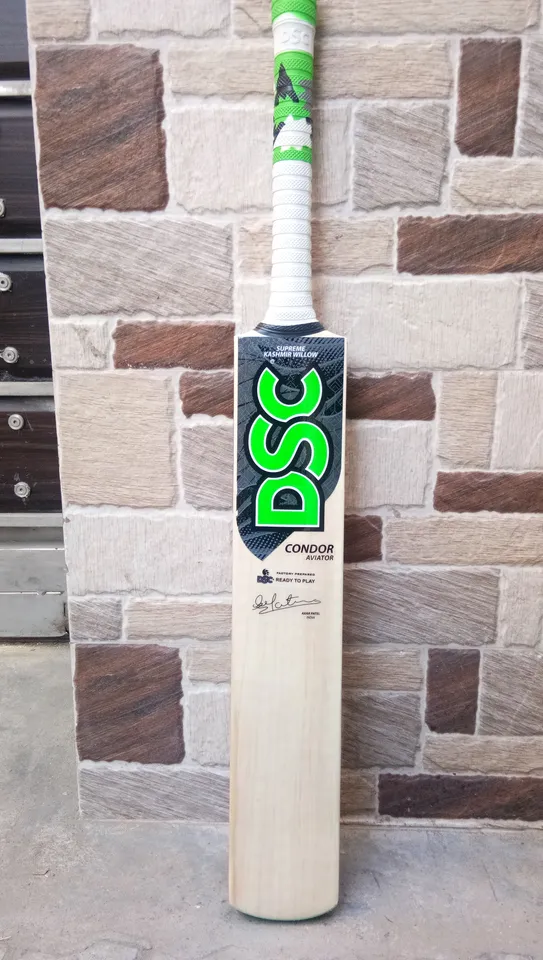
Batting-equipment illustration, not Tilak Varma’s personal bat or a product recommendation.
What does a required rate measure?
A simple required run rate relates the runs still needed to the remaining legal-ball opportunity under the model. It is not the same as the rate already achieved. A chase can therefore have a current scoring rate and a required rate that differ, with each answering a different question.
For an original simplified chase, thirty runs needed from eighteen legal balls corresponds to ten runs per over. If six are scored from the next six balls, twenty-four remain from twelve, giving twelve per over. The target has moved closer in absolute runs while the required pace has increased.
This example is not a real Varma chase and does not model revised-target rules or every match condition. It isolates the arithmetic. Always state the target and remaining opportunity before using a rate to describe the pressure in a specific fixture.
Why should wickets remain visible in a chase model?
Runs and balls are not the only resources affecting a batting situation. Remaining wickets matter, though a simple required-rate formula does not include them. Two fictional teams needing the same runs from the same balls can face different practical situations if one has many wickets and the other has very few.
For an original comparison, use twenty from twelve balls with eight wickets remaining and twenty from twelve with one remaining. The simple required rate is ten in both cases. The equal rate does not make the situations identical or prescribe the same decision on every ball.
Avoid turning the numerical model into a guaranteed tactical rule. A real decision depends on skill, conditions, opponents and the team's plan. The model teaches what a statistic includes and what lies outside its definition.
How do partnerships differ from individual innings?
A partnership measures runs added during a stand, not necessarily the sum of the two players' final innings scores. One batter may have scored before the stand began, and relevant extras can contribute under the scorecard's conventions. Read the partnership boundary before comparing it with whole-innings totals.
Use an original example in which Batter A has ten before Batter B arrives. They add fifty together, then the innings ends. A's final score and B's final score cover different personal spans from the stand's starting point. A simple sum can therefore answer a different question from the partnership total.
This distinction helps readers appreciate a supporting role without inventing a private strategy. A batter can contribute to a stand in several ways, but claims about who deliberately controlled the strike need the actual sequence or an attributed account.
Why keep IPL and international records separate?
They belong to different competitions and team settings. An IPL total is not a T20I total, and a domestic innings is not automatically an ODI innings. Similar match lengths do not remove the record category. A profile should preserve those headings rather than combine every familiar number into one unlabeled career figure.
For an original table, give a fictional player league runs, domestic runs and international runs in three columns. Ask which values answer a question about a particular competition. The combined total may be meaningful only if its inclusion rules are explicitly defined; otherwise it can mislead readers making a narrower comparison.
Current totals also need a date. This guide avoids freezing an automatically changing run count into a permanent introduction. Readers looking for the latest record should use the relevant official competition page and keep its update context with the number.
How should a young player's role be discussed?
Describe the verified assignment and opportunity rather than predicting an entire future career. A selected role in one squad does not guarantee the same position in every format. A short successful sequence can be encouraging without proving that later outcomes are certain.
For an original timeline exercise, separate an auction selection, a franchise appearance, a national-team call-up and an international debut. Each is a different event. A player can pass through several stages without those stages sharing one date or one statistical category.
Avoid private-life speculation when explaining selection or absence. A public profile can discuss official information and documented performances without inventing motives. The learning value comes from understanding the record, not from supplying an unsupported story about what a person must have been thinking.
How can students combine innings correctly?
Add the runs and balls across the chosen sample before calculating the aggregate strike rate. Averaging separately displayed match rates can give a different answer when innings lengths differ. Keep the denominator visible and choose the calculation that matches the question.
Use original fictional innings of twenty from ten and eighty from eighty. The individual rates are 200 and 100, but the combined hundred from ninety gives approximately 111.1. An unweighted average of 150 would overemphasise the shorter innings for a question about total scoring pace across all balls.
Now add a missing ball count. Do not replace it with zero or the player's usual number. The complete aggregate cannot be calculated from incomplete inputs without an explicit assumption, and that assumption should not be disguised as a recorded fact.
A final strike-rotation challenge
Create a fictional six-ball over using only legal deliveries, no wickets and run outcomes of one, two, zero, one, zero and one. Move two counters after the odd scores and track which batter faces each delivery. Then change the direction for the next over and identify the next striker under the simplified assumptions.
The exercise is a small state-machine problem as well as a cricket activity. The total runs alone does not determine every intermediate striker. You need the order of the events. That is why a detailed ball sequence contains information that an innings total cannot recover.
Explore more cricket learning articles for related examples. Varma's official profile supplies the real-world starting point, while the transferable skills are clear labels, compatible categories, visible assumptions and calculations that answer the actual question being asked.
For worked boundary and strike-rate calculations, read our Ishan Kishan guide.
Sources
- BCCI: Tilak Varma profile, for batting style, Hyderabad context and international-format milestones.
- Official IPL: Tilak Varma profile, for franchise context.
- Mumbai Indians: player profile, for the club's player information. All innings, targets and counter-based strike-rotation sequences above are fictional simplified teaching models, not additional player statistics or personal coaching advice.
Image credits: cover: Naren.Ayinala, source, CC BY 4.0. Resized and converted to WebP. inline: Arv94, source, CC BY-SA 4.0. Resized and converted to WebP.
Found an error or an outdated detail? Report a correction with the article URL and original source.