
Trabzonspor vs Gaziantep: 2-0 Result and Added Time Guide
Explore Trabzonspor vs Gaziantep with clear explanations, worked examples, source checks and practical questions for independent student learning.
Trabzonspor beat Gaziantep FK 2–0 on 1 November 2026 in the Turkish Süper Lig. Trabzonspor's official report places the match at Papara Park and credits Stefan Savić at 45+2 and Ernest Muçi at sixty-one minutes. The score is a two-goal home victory with a team clean sheet, not the result of an earlier reverse fixture.
This guide was checked on 2 November 2026. It explains added-time notation, a two-stage scoring sequence and the difference between a match result and a season claim. It does not invent possession, expected goals or a full tactical account. Additional fixtures and data exercises are fictional.
What does the official report establish?
The club's dated report identifies the opponent, competition round, venue, final score and two scorers. Those fields are enough to create a clear basic result card. They are not a complete statistical description of every shot, foul or substitution, and this article does not pretend otherwise.
The goal labels show an opener in first-half added time and a second goal in the second half. That gives a simple sequence: level, Trabzonspor ahead by one, then ahead by two in the completed record. A result summary can explain those changes without inventing the passes or intentions behind either goal.
Keep the publication date separate from kickoff time. A news timestamp can indicate when the report was published rather than when the match began. Do not convert it into a fixture time without a source explicitly identifying that field. Different pages can display several time-related values for the same event.
What does 45+2 mean?
It identifies an event in added time at the end of the first half, using the source's displayed minute notation. It is not the second minute of the match or necessarily an exact stopwatch timestamp. The period label matters because first-half added time and the early second half are different parts of the game.
For an original example, compare fictional events at 45+2 and 47. Depending on the provider's convention, a bare 47 can be ambiguous without a period field. A robust timeline stores the half and added-time information rather than relying only on a number that looks easy to sort.
Do not claim that subtracting 47 from 61 gives the precise elapsed real-world time between this fixture's goals. Half-time intervenes, and displayed minute labels are not exact timestamps. The arithmetic can compare labels, but it does not automatically measure a continuous interval of play or clock time.
Why does added time differ from extra time?
Added time extends a period to account for time lost under the match officials' application of the rules. Extra time is a separate procedure used in some competitions when required to decide a match. A routine league goal at 45+2 is not automatically an extra-time goal.
Use an original fictional comparison: a league match has a first-half event at 45+3, while a knockout match later reaches an additional extra-time period. The two labels refer to different structures. A beginner-friendly report should explain the distinction instead of using the words interchangeably because both involve minutes beyond a familiar number.
This article does not claim that the Trabzonspor fixture required extra time. The official result is the completed league score. Keeping the terminology precise prevents a normal added-time goal from becoming an inaccurate story about a longer knockout contest.
How can the scoring sequence be represented?
Use a step timeline with a separate score state after each valid goal. The home side's total rises from zero to one and later to two, while the away total remains zero in the final record. A step chart is more appropriate than a smooth line because goals change the score at discrete events.
For an original classroom exercise, give students cards labelled start, first goal, interval, second goal and finish. Ask them to place the score beside each confirmed state. If no additional event is supplied, they should not invent one to fill a gap in the diagram.
A score-state chart does not measure pressure or possession. Those concepts need their own evidence and definitions. A colourful curve rising after a goal may look exciting, but it should not be labelled momentum as though a measured quantity had been supplied when only the score is known.
What is the difference between a lead and a win?
A lead describes an intermediate state; a win describes the completed outcome. At 1–0, a side is ahead but has not necessarily won. A later equaliser or reversal remains possible until the match's final status is established. A live component should preserve that distinction rather than publishing a final verdict too early.
In an original fictional match, a team leads 2–0 and finishes 2–2. The earlier lead was real, but a statement that it had already won would have been premature. Another team can lead 1–0 and win 3–0. The initial state does not determine the entire later sequence.
For this fixture, the completed official record confirms the 2–0 victory. That allows a final-result headline. The same language would not be justified by a live snapshot alone, even if the score at that moment looked likely to remain unchanged.
How do margin, total and clean sheet relate?
The winning margin is the difference between the goals, while the total is their sum. In 2–0, both happen to equal two. The team clean sheet means no goal was conceded. These descriptions are related but distinct and should not be treated as one universal formula.
Compare original fictional results of 2–0, 3–1 and 2–2. The first two share a two-goal margin but have different totals. The first and third share the home side's two goals but have different outcomes. A table becomes easier to read when each quantity has its own label.
Do not infer a goalkeeper's exact save count from a clean sheet. The result supplies goals conceded, not every attempt faced. A fuller performance discussion needs the appropriate match statistics or observations rather than an assumption based on the zero in the final score.

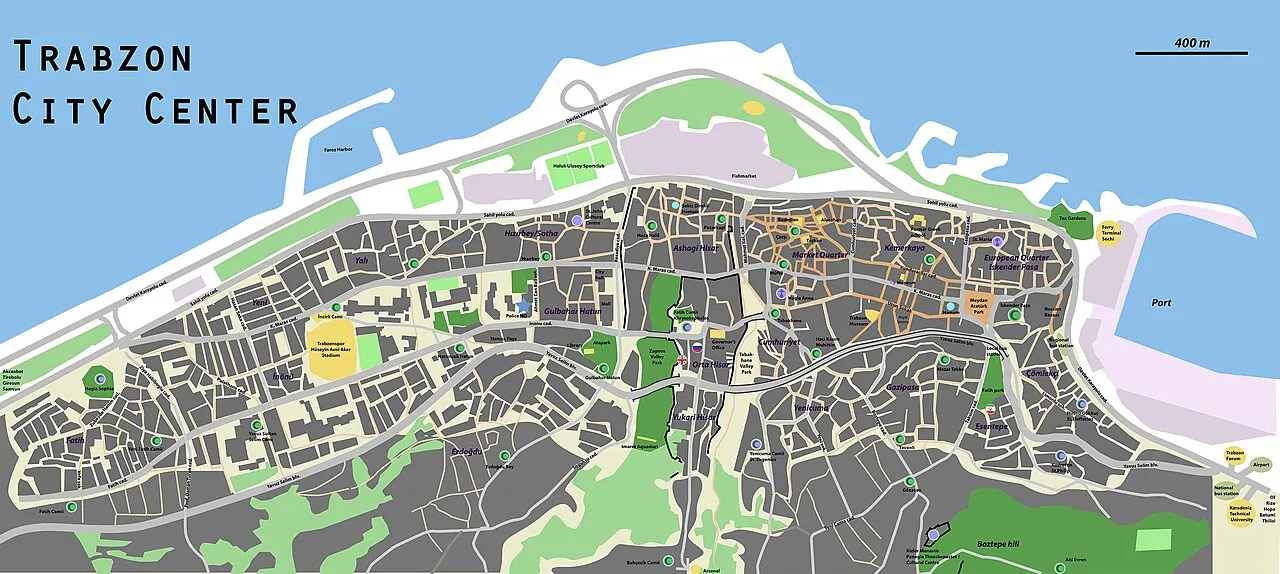
Historical opponent-venue context; the reported fixture was at Papara Park in Trabzon.
Why can venue information conflict?
Stadiums may have sponsorship names, complex names or historical names, and a data provider can retain an old or incorrect field. A discrepancy should be checked, not silently repeated. The official club report identifies Papara Park for this fixture, so that is the venue used here.
For an original data-cleaning exercise, give a fictional ground a current public name and a historical alias. Store both under one verified venue identifier when they genuinely refer to the same place. Do not merge two physically different stadiums merely because they have hosted the same club at different times.
A venue photograph needs the same care. A historical image can illustrate the club's home context without documenting this specific match. A caption should not present a different stadium or year as direct evidence of a goal, crowd condition or current facility arrangement.
How should names with diacritics be handled?
Keep a player's official spelling where practical, and recognise that search queries may omit accents. Savić and Muçi can appear in simplified forms on some keyboards or data feeds. A spelling variation should not automatically create a second player record or make a correct source appear unrelated.
For an original programming exercise, store a display name separately from a stable player identifier and optional search aliases. Searching without an accent can then find the intended record while the display preserves the preferred spelling. Do not remove meaningful characters from every name merely because one input method is limited.
This is a general information-design lesson rather than a claim about the club's internal database. Names, identities and display conventions serve different purposes. A dependable result page keeps the connection clear instead of relying on a single text string to do every job.
What do the three points tell us?
Under the standard league system, a win contributes three points, while the two scored goals contribute to the goal record. Scoring twice does not mean earning only two points. A season table combines the relevant completed results under the organiser's rules and cannot be reconstructed from this fixture alone.
Use an original fictional side beginning on fourteen points. A win moves it to seventeen. If a post-match report already lists seventeen, adding three again would double-count the result. Identify whether a table is pre-match or post-match before performing an update.
This article does not infer a permanently current league rank, title probability or future qualification from one win. Those claims need a complete dated table and a defined method. A match result is certain within its record; a forecast belongs to a different category of analysis.
How can tactical claims be kept honest?
Begin with a question that the available evidence can answer. The two goal times establish when the score changed. They do not prove a formation, a planned pressing pattern or the reason for every substitution. Those explanations need footage, an attributed account or another appropriate source.
For an original example, a fictional substitute enters before a goal. Chronology shows the substitution preceded the scoring event, but it does not alone prove causation. The substitute's actual involvement and any observed change in play would help evaluate the proposed explanation.
Avoid assigning private motivation from the result. A losing player did not necessarily stop trying, and a winning player did not necessarily predict every outcome. Clear match writing describes the recorded events and supports interpretation without inventing access to participants' thoughts.
What should a reliable match-data card contain?
Use date, competition, home team, away team, status and score as the essential fields. Add goal events with player identity and period where verified. Keep unavailable statistics explicitly missing. A scheduled match should not become a false 0–0 result because a programmer converted blank values to zero.
Test an original fictional card through scheduled, live and finished states. During play it can show a leader; after confirmation it can show a winner. A correction to a goal event should update the relevant score without duplicating the same incident as another goal.
Then read the card without badges or colours. The labels should still communicate the result correctly. A good visual design supports meaning; it does not force the reader to infer the winner from a background colour while the underlying numbers remain ambiguous.
A final added-time exercise
Create a fictional event list with goals at 45+1 and 72. Record the first as first-half added time and the second as second-half play. Ask learners to explain why a simple numerical subtraction does not provide exact real-time separation. The interval break and the granularity of the labels are both relevant.
Next change only the final status from live to finished. Discuss which sentences become justified: “leads by two” and “won by two” are not interchangeable at every stage. This combines chronology with the language of evidence, a skill useful beyond football reporting.
Explore more football learning guides to practise the same method. The verified Trabzonspor–Gaziantep result is straightforward, but its notation offers a useful lesson: preserve period, date, venue and status so that a compact score does not lose the context needed to understand it accurately.
How can the timeline be checked independently?
Give another learner only the event labels, periods and final score. Ask them to reconstruct the sequence without seeing the article. The first-half added-time label should stay attached to its period, and the second-half goal should remain a separate event. If the reconstructed score differs from the recorded total, inspect the event count and home-away orientation before changing any number.
This is a useful quality check because it tests the meaning of the labels, not simply whether a page looks attractive. A clear timeline should remain understandable when copied into a plain-text note or read without its visual decoration.
For a separate example of changing score states, see our Getafe–Sevilla guide.
Sources
- Trabzonspor: official 1 November 2026 report, for the 2–0 result, Papara Park venue and scorer labels.
- Trabzonspor: official match page, for fixture context. All other event lists, tables and software examples are original fictional exercises rather than additional match data.
Image credits: cover: User:NeoRetro, source, CC BY-SA 3.0. Resized and converted to WebP. inline: YG01, source, CC BY-SA 4.0. Resized and converted to WebP.
Found an error or an outdated detail? Report a correction with the article URL and original source.