
West Indies A vs England Lions: Teams and Tour Guide
Explore West Indies A vs England Lions with clear explanations, worked examples, source checks and practical questions for independent student learning.
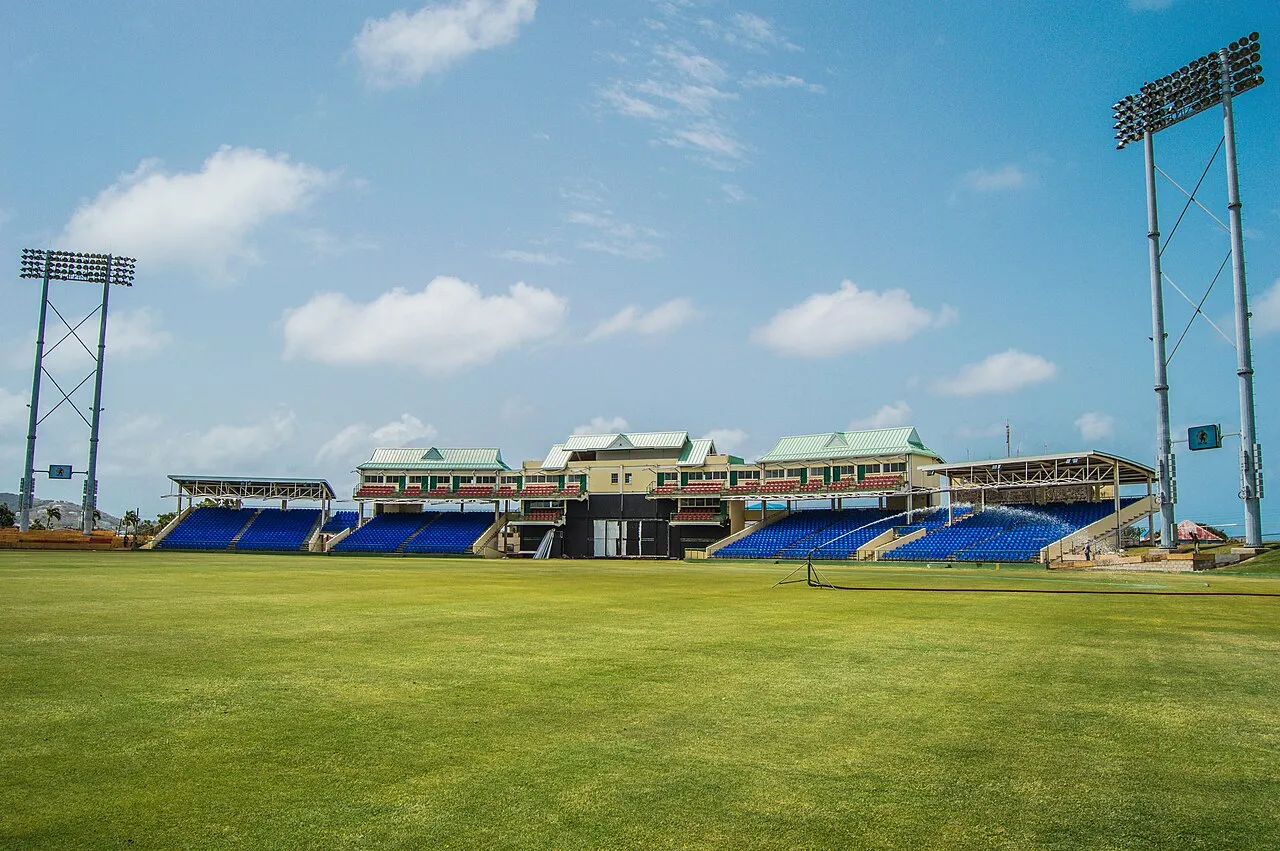
West Indies A vs England Lions refers to a development-team contest, not automatically a senior West Indies–England international. Official cricket-board material confirms a Caribbean white-ball programme in November 2026. This guide explains the teams, the tour context and how to read the associated fixtures. It does not present an incomplete score as a finished result or substitute a senior-team record for an A-team match.
Information was checked on 2 November 2026. Cricket West Indies lists upcoming matches at Conaree on 3 and 4 November, while its squad announcement describes the wider programme. Schedules can change. Use the official match listing for the specific fixture you want, and keep the team category visible whenever you share a score.
Who are the two teams?
West Indies A and England Lions are development or representative sides distinct from their countries' or region's senior first-choice teams. A player may have senior experience and still appear in such a programme. The label describes the side in that competition, not a rule that every participant must be a complete beginner.
The ECB's September announcement appointed Jonathan Trott to lead the Lions winter programme, including the Caribbean tour. It describes preparation for higher-level cricket and a substantial fifty-over focus. That provides context for the programme's purpose, rather than a guarantee that an individual participant will later earn or retain a senior place.
Avoid shortening a result so aggressively that its identity disappears. “England beat West Indies” can imply a senior international when the actual match involved England Lions and West Indies A. Retaining the complete team names is a small editorial choice that prevents a large misunderstanding.
What has been announced about the November programme?
Cricket West Indies' squad announcement identifies Keacy Carty and Alick Athanaze as leaders for the respective white-ball groups and describes matches against the visiting side. Its programme includes twenty-over and fifty-over cricket. The ECB's broader winter notice places the West Indies tour period from 27 October to 21 November 2026.
Those tour-window dates are not a claim that a match occurs on every day in that interval. A touring programme can contain arrival, preparation, training and rest days as well as fixtures. A fixture table answers a different question from a travel or tour window and should be consulted separately.
As checked for this article, CWI's upcoming list shows Conaree fixtures on 3 and 4 November. The guide deliberately avoids reconstructing a completed first-match result from partial search snippets. A running chase total can look close to a target without yet representing the final score, so a finished-match claim needs a completed record.
Why do some listings say England A?
Different listings may use a development side's formal programme name or a more general A-team description. Match identity should be checked through the date, opponent, venue and competition, not only the abbreviation. The CWI announcement's title uses England A, while the programme is widely identified through the England Lions name.
For an original database exercise, imagine two providers using “Lions” and “England A” for the same scheduled fixture. Do not merge records from the name alone. Compare the organiser's fixture, date and venue, then retain any useful alternative label as an alias. That preserves clarity without creating an imaginary second match.
The reverse caution also matters: two matches with similar names are not automatically identical. Different dates, formats or team groups can make them separate events. An accurate guide uses enough fields to distinguish the actual contest rather than hoping a familiar abbreviation will resolve every ambiguity.
Are these matches T20Is and ODIs?
A match's length and its official record status are separate questions. A twenty-over A-team game is not automatically a senior T20 international, and a fifty-over game is not automatically an ODI. Some media use “unofficial” labels to communicate that distinction, but the organiser's competition classification should guide how statistics are recorded.
Imagine an original score of 160/6 in a twenty-over development match. It can be a valid team innings without being added to a player's senior T20I career record. The performance still has sporting value. Correct classification preserves that value in the appropriate category rather than inflating another record.
When building a chart, keep match format and match status in separate fields. “Twenty overs” describes intended length; “senior international” describes a category. The separation helps beginners understand why two similar-looking scorecards may belong to different statistical records.
What changes between twenty-over and fifty-over cricket?
The available innings length changes how a side can distribute risk and resources. A twenty-over innings has fewer legal deliveries than a fifty-over innings under the standard six-ball representation. That arithmetic affects the time available to recover from a slow period, but it does not prescribe one correct tactic for every match.
For an original classroom calculation, twenty complete overs contain 120 legal balls and fifty contain 300. A fictional team needing 180 from 120 has a required rate of nine per over. The same target over 300 legal balls corresponds to 3.6 per over before considering any match-specific restrictions or interruptions.
These are simplified examples, not predictions for the tour. Real matches involve wickets, conditions, changing targets and competition regulations. Use the arithmetic to understand the basic resource difference, then consult the relevant scorecard and rules before making a tactical or statistical claim.

Historical host-region geography, not a match venue or evidence of a tour result.
How should a Pakistan reader interpret a fixture time?
Read the time zone alongside the clock time. A listing may show local Caribbean time, UTC or a device-adjusted time. Those are different displays of the same moment, and occasionally the calendar date changes during conversion. A bare “2 pm” without a zone is not enough information to produce a dependable Pakistan time.
For an original example, suppose a fictional fixture is explicitly scheduled for 18:00 UTC. Pakistan Standard Time is UTC+5, so the displayed Pakistan time is 23:00 on the same date. If the UTC time were 22:00, the Pakistan time would be 03:00 the following day. Carry the date as well as the hour.
Do not apply that worked example to an actual fixture unless its source supplies the matching timestamp. A guide can teach conversion without inventing a match time. When an official site adjusts to your device, inspect the label so that you do not add five hours to a time that is already localised.
How do you distinguish a live score from a result?
A live score records a changing match state. A completed result includes a clear finished status and the final outcome under the relevant conditions. A chasing side can be near its target without having won, and a scheduled match can remain listed even if a separate result page has already been updated.
Consider an original fictional chase of 100. At 94/2, the batting side still needs six to reach the target. Publishing “won by eight wickets” at that point would anticipate an outcome rather than report one. The innings could finish in several ways, and the actual result needs the completed match record.
This distinction is particularly important when search engines retain a partial score. A snippet can be accurate for an earlier moment but unsuitable for a final-result article. Verify the page's status and final totals instead of deciding that a plausible near-finished score is close enough.
What should a useful scorecard summary contain?
Include the exact team names, date, venue, format or status, innings totals and result. If a revised target or special condition applies, preserve that note. A short summary can be concise without stripping away the fields needed to distinguish one development fixture from another.
For an original example, write “Imaginary A XI 150/7; Imaginary Lions 151/4; Lions won by six wickets,” then label the match as fictional. Explain why the wicket margin refers to wickets remaining in the chase, not the number of wickets taken by the winning side during the first innings.
Next remove the overs and ask which questions can no longer be answered. You cannot calculate the completed chase's run rate precisely without its legal-ball count. A summary may still establish the result while lacking enough information for another statistic. Recognising that limit is better than inventing an over figure.
How can development performances be evaluated fairly?
Begin with the role and the opportunity. A batter entering near the end of an innings has a different task from one opening the batting. A bowler's short spell may be used for a specific phase. A raw total can be accurate while providing an incomplete comparison of what two players were asked to do.
Create a fictional batting comparison: thirty runs from twenty balls and forty from forty. The first strike rate is 150, the second 100. That does not automatically settle which innings better served its team. Add the target, wickets, phase and conditions before drawing a larger conclusion.
Development programmes can also involve evaluating skills beyond one final score. That is a general observation about the purpose described by the organiser, not a claim to know the coaching staff's private assessments. Avoid declaring that one match guarantees promotion or proves a player's entire potential.
What can students learn from a tour calendar?
A calendar is a useful exercise in dates, intervals and document updates. Put each officially listed fixture in a row with its source and last-checked date. Keep travel-window information separate. If a listing changes, record what changed rather than silently combining old and new venues into a schedule that no organiser actually published.
For an original activity, imagine matches on the third, fourth and seventh of a month. There is one day between the first two dates and three between the next pair. That arithmetic does not imply equal rest time, because start times, match duration and travel can differ. Dates are useful but do not contain every operational detail.
Do not infer a cancellation from an empty results page alone. The page could be filtered, delayed or organised under another category. Seek a direct notice or a clearly updated fixture. The same habit helps with exam timetables, school events and any public schedule that can change over time.
Questions readers often ask
Is England Lions the senior England team? It is a distinct development programme. Does a fifty-over game automatically count as an ODI? No; official status must be checked. Can a partial chase total be published as the final result? No. Does a tour window give every fixture date? No; use the actual schedule for that purpose.
Should an older player be excluded from an A-team description? Do not invent eligibility rules from the label. Use the announced squad and competition requirements. Can this page promise a live stream? No. A broadcast claim requires an identified authorised provider and territory; this guide does not supply an unverified viewing link.
For more context, explore our cricket learning guides. Keep the full team names, the date and the record category with every score you read. Those small details help a development tour remain understandable and prevent a search snippet, an abbreviation or an unfinished innings from becoming a misleading match report.
Keep a small update log for a developing tour: the source, the field checked, the previous value and the newly confirmed value. That log helps explain why a fixture preview and a later result page differ. It also avoids silently treating an old scheduled status as evidence that no match occurred. A public guide becomes more dependable when changes are recorded narrowly, with the date and team category preserved, rather than rewriting every paragraph from an isolated search snippet.
Record the source date too.
For the regional identity behind the team name, read the West Indies cricket introduction.
Sources
- Cricket West Indies: A-team squad and programme announcement, for the leadership and white-ball programme context.
- ECB: Lions winter programme and coach announcement, dated 17 September 2026, for the development purpose and broader tour window.
- Cricket West Indies: official fixtures, checked on 2 November 2026, for the upcoming Conaree listings. No incomplete score snippet is represented here as a completed result. All classroom scorecards are fictional.
Image credits: cover: St Kitts & Nevis Government; permission: https://www.flickr.com/photos/skngov/14733563912, source, CC BY 2.0. Resized and converted to WebP. inline: Image taken by Clark Anderson/Aquaimages, source, CC BY-SA 2.5. Resized and converted to WebP.
Found an error or an outdated detail? Report a correction with the article URL and original source.