
Anshul Kamboj: The 10/49 Ranji Innings and Bowling Records Explained
Understand Anshul Kamboj’s 10/49 for Haryana against Kerala, the ten-wicket innings record and the right way to interpret bowling statistics.

Anshul Kamboj is an Indian cricketer associated with Haryana whose ten-wicket innings against Kerala became a notable Ranji Trophy achievement. In November 2024, he took all ten wickets for 49 runs. The ICC's annual report records the feat and identifies him as the third bowler to take every wicket in a Ranji innings.
That record is the clearest starting point for understanding his name in cricket searches. It is a historical performance, not a claim that he has just repeated it in a current international match. This guide explains the achievement, the notation behind 10/49 and the limits of using one extraordinary spell to judge an entire career.
Who is Anshul Kamboj?
Kamboj is a pace-bowling cricketer whose domestic record is connected with Haryana. His best-known milestone is the complete ten-wicket haul against Kerala in the 2024/25 Ranji Trophy. When checking a current team or performance, use the dated squad announcement and scorecard rather than assume that a historical record establishes today's selection.
The spelling of the surname is Kamboj. Searches sometimes contain Kamboj or other letter-order variations, but the competition record should be checked against the exact player identity. This is especially important when several domestic players share similar first names or when a social-media caption has been copied repeatedly.
A useful profile separates three questions: who the player is, what the verified achievement was and what happened in the latest fixture. Those questions may appear together in a search result, but they require different evidence. A biography cannot substitute for a live scorecard.
What does taking all ten wickets mean?
In an ordinary completed eleven-player innings, ten dismissals leave no partner for the final batter. A bowler taking all ten wickets therefore receives credit for every dismissal in that innings. It is an individual bowling achievement within a team sport, not a statement that no fielder or teammate contributed.
This is different from taking ten wickets across a match. In multi-innings cricket, a bowler can take wickets in both opposition innings. A match total of ten might be divided, for example, into six in one innings and four in the other. A ten-wicket innings means the full set came in a single innings.
It is also different from a team taking ten wickets with several bowlers sharing them. Every all-out team effort has ten dismissals under ordinary circumstances, but only a very unusual one credits all ten to the same bowler. That distinction explains why Kamboj's performance attracted attention beyond its numerical total.
How should 10/49 be read?
The notation records ten wickets for forty-nine runs conceded by the bowler. The first number is wickets and the second runs in this common bowling-figures format. It is not a team score of ten runs for forty-nine wickets, and it is not a batting score.
| Notation | Meaning |
|---|---|
| 10/49 | Ten wickets, forty-nine runs conceded |
| Five-wicket haul | At least five wickets in one innings |
| Ten wickets in a match | Combined wickets across the relevant match innings |
| Ten wickets in an innings | Every wicket credited to one bowler in that innings |
Scorecard conventions can place team totals in a different order, so read the column heading. A beginner who learns only to recognize the slash can easily confuse team wickets lost with a bowler's wickets taken. The labels tell you which side of the contest the number describes.
Why is the record rare?
A bowler needs more than one excellent delivery. The opportunity to take every wicket depends on repeated effectiveness, enough bowling time and teammates not taking a wicket at the other end before the innings ends. Those conditions make the achievement unusual even among very successful bowlers.
The fielding side still works collectively. Catches must be completed when they are offered, the captain must manage the bowling allocation and other players contribute pressure and support. Crediting Kamboj with the ten wickets does not require pretending that the innings was played without a team around him.
Chance also shapes the distribution of wickets. A fine edge may be caught or missed; another bowler may produce an equally threatening delivery that does not take a wicket. Recognizing those factors does not diminish the record. It explains why exceptional individual outcomes should be celebrated without assuming that every related contribution can be measured by wickets alone.
Which dismissals count for the bowler?
Bowled, caught and leg-before-wicket are familiar examples of dismissals credited to the bowler. A run-out is not credited in the same way. This means that ten opposition dismissals do not automatically produce ten wickets in the combined bowling figures if one or more dismissals belong to categories not credited to a bowler.
For a claimed ten-wicket innings, inspect the dismissal column and bowling table together. The completed record should establish the achievement. A team total alone is insufficient because it shows how many wickets the batting side lost, not how those wickets were distributed among bowlers and other dismissal types.
The important habit is to let the scorecard's structure guide the interpretation. Do not force every event into a simplified formula merely because the team was all out. Cricket statistics are consistent when their categories are read correctly; confusion often begins when different categories are merged.
A worked bowling-average calculation
For the recorded 10/49 innings, dividing forty-nine runs by ten wickets gives 4.9 runs per wicket for that innings. This calculation describes the spell's wicket-based return. It is not Kamboj's career bowling average and should never be presented as such.
A career average combines runs conceded and wickets across the relevant record category. One extraordinary innings can improve that average, but it does not replace every earlier or later performance. A comparison with another player must use the same competition scope and a meaningful sample.
For example, a hypothetical bowler conceding 300 runs while taking fifteen wickets has an average of twenty. Another conceding 100 for five wickets also averages twenty, but the workloads differ. The same average can summarize different amounts of evidence. Sample size remains relevant even when the arithmetic is correct.
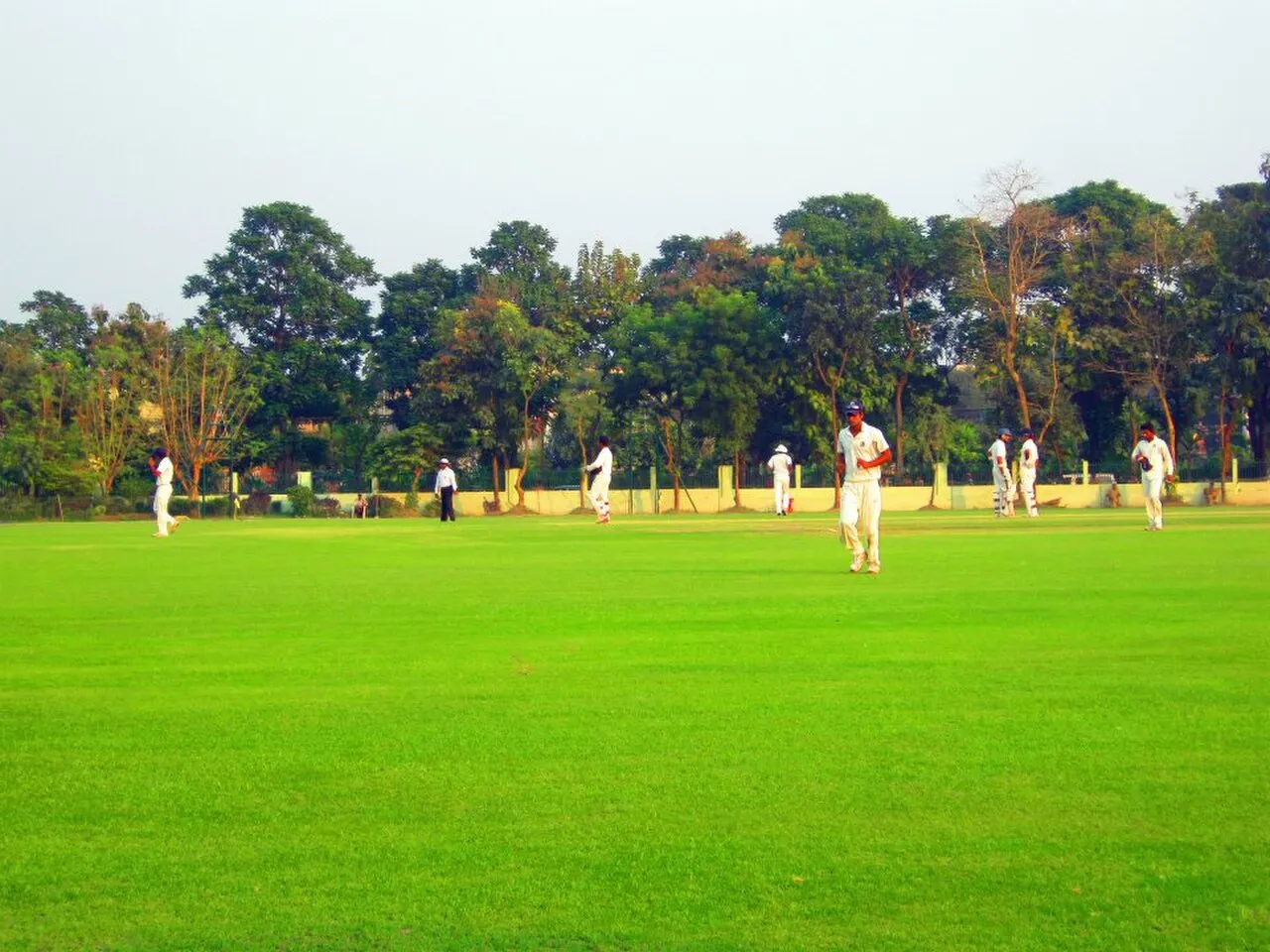
A historical Ranji Trophy fixture between Bengal and Madhya Pradesh; competition context, not Haryana versus Kerala.
Economy and strike rate answer different questions
Economy measures runs conceded per over. Bowling strike rate measures legal deliveries per wicket. A bowler can be economical without taking many wickets, or take wickets while conceding runs at a relatively high rate. Neither measure alone describes every useful aspect of a performance.
To calculate them, use verified overs or legal-ball totals from the scorecard. Do not invent the length of Kamboj's spell from the fact that he took ten wickets. The 10/49 headline supplies wickets and runs, but not every other number required for a complete statistical analysis.
This is a useful example of knowing when not to calculate. A formula does not justify filling missing inputs with guesses. If the data needed for an economy rate or strike rate has not been checked, leave the result unavailable and explain which input is missing.
Why overs notation can mislead beginners
The notation 12.3 overs means twelve overs and three legal balls, or seventy-five legal deliveries. It is not 12.3 ordinary decimal overs. Calculations using the displayed number as a decimal can therefore produce incorrect economy rates.
Use a hypothetical spell of twelve overs and three balls for fifty runs. Convert the overs to seventy-five legal balls, then divide fifty by seventy-five and multiply by six. The economy is four runs per over. Dividing fifty by 12.3 would give a different answer because the units would be wrong.
This teaching example is not attributed to Kamboj's record innings. Its purpose is to demonstrate the conversion. Keeping the example separate from the reported achievement makes the article useful without adding an unsupported detail to the historical scorecard.
What can young bowlers learn from a major haul?
Start with repeatable skills rather than the ambition to take ten wickets immediately. A bowler needs a useful line, an effective length and the ability to repeat the action under appropriate coaching. An exceptional record is an outcome, while practice should focus on actions the player can control.
Choose a small objective for a session, such as landing a safe, age-appropriate number of deliveries in a defined area. Record the result and discuss the pattern with a coach. Improvement becomes easier to understand when feedback concerns a specific action rather than a demand to produce international-level results instantly.
Do not imitate an adult professional's workload. Fast bowling places physical demands on the body, and safe training depends on age, preparation and qualified guidance. A highlight video can help observation, but it cannot prescribe an individual training volume or diagnose pain.
How to watch a spell more intelligently
Watch several consecutive deliveries rather than only the wickets. Note the line, length, batter's response and any change in the bowler's position. A wicket can be the culmination of repeated pressure, but it can also arise from an isolated error. The surrounding sequence helps distinguish those explanations.
Observe the field as well. A delivery may be designed to encourage a particular shot toward a protected area or an attacking catcher. If the field does not support the supposed plan, reconsider the explanation rather than insisting that every successful outcome proves a perfectly executed strategy.
Finally compare threatening deliveries that took wickets with similar ones that did not. This reduces outcome bias. A well-bowled ball can remain good even if it is safely defended, and a wicket-taking delivery can still benefit from a poor shot. The competitive result and the quality of the action are related but not identical.
Domestic success and international selection
A strong domestic record can establish a case for higher-level opportunities, but selection also depends on team needs, conditions, availability and the selectors' assessment. A historical achievement should not be turned into a guarantee of a place in every subsequent squad.
Likewise, one difficult international spell would not erase the domestic milestone. Different levels of competition present different challenges, and a player's development needs a wider sample than one good or bad day. Keep the record categories separate when discussing progress.
For current selection, check the relevant board announcement and match sheet. A search trend may reflect a new appearance, an older video resurfacing or general interest. The trend itself cannot establish which explanation is correct.
A question about team contribution
If one bowler takes all ten wickets, did the rest of the team contribute nothing? No. Catches, pressure from the other end, field placement and ordinary support can still be important. The individual statistic assigns wicket credit according to cricket's record categories; it does not measure every useful action performed during the innings. This is a helpful distinction when celebrating records: recognize the exceptional achievement while understanding what the statistic was designed to count.
Questions readers ask
Did Anshul Kamboj take all ten wickets in a Ranji innings?
Yes. The ICC annual report records his 10/49 for Haryana against Kerala and identifies him as the third bowler to achieve a ten-wicket innings in the Ranji Trophy. The event belongs to November 2024, not automatically to the match being discussed today.
Is a ten-wicket match the same achievement?
No. A match total can combine wickets from two innings. A ten-wicket innings means all ten came in a single innings. Both can be significant, but they describe different records and should not be substituted for one another.
Does 10/49 mean his career average is 4.9?
No. That calculation describes runs per wicket for the particular innings. A career average requires the full relevant career totals. Always identify whether a number describes an innings, a match, a season or an entire record category.
Where can I learn more about bowling figures?
Our Jacob Duffy bowling guide explains economy and strike rate with worked examples. The Kyle Jamieson guide explores bounce and release height. Use these to connect a numerical record with the skills behind it.
Sources
Image credits: cover: SpesBona, source, CC BY-SA 4.0. Resized and converted to WebP. inline: Rajarshi hore, source, CC BY-SA 3.0. Resized and converted to WebP.
Found an error or an outdated detail? Report a correction with the article URL and original source.