
Jesús de Miguel: Confirmed News, the Owono Collision and Respectful Reporting
Read the confirmed Jesús de Miguel news, the reported collision involving Owono and how to separate official updates from blame and speculation.
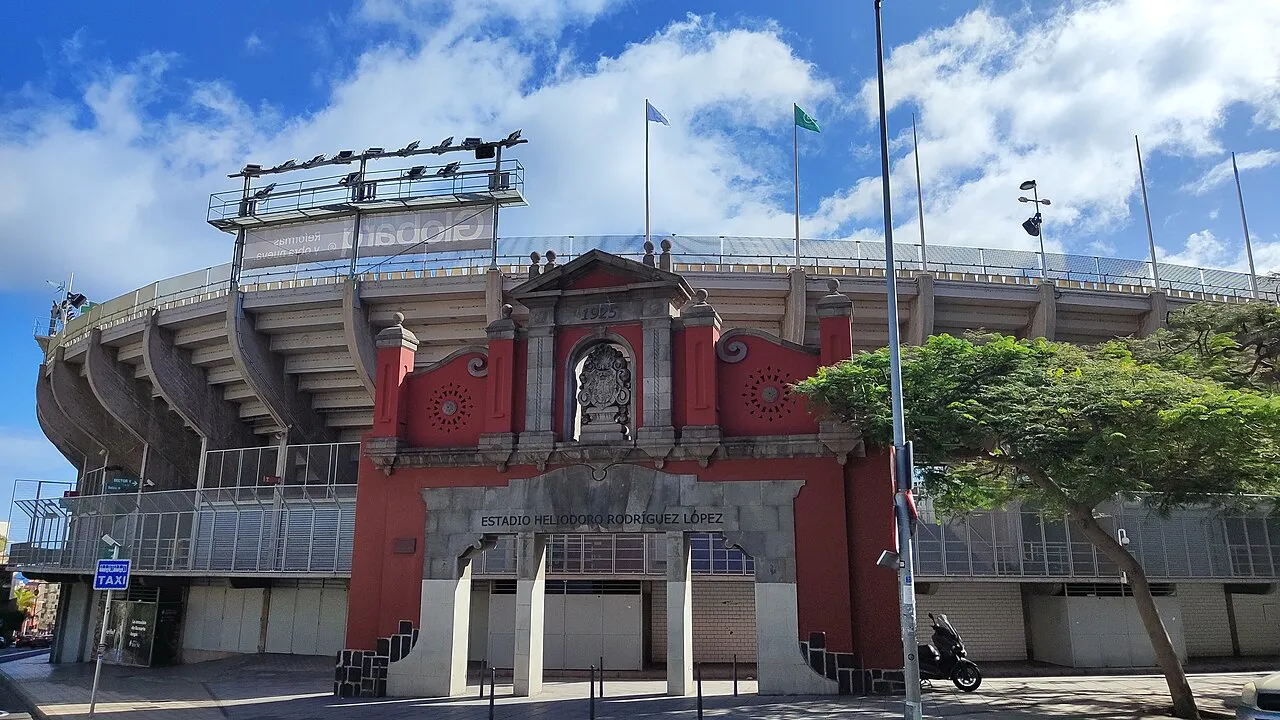
CD Tenerife announced the death of forward Jesús de Miguel on 3 November 2026, following an on-field collision during the previous day's match against FC Andorra. He was thirty. His club, the Spanish football federation and the Canary Islands government published statements mourning him, while European matches included tributes to his memory.
Reports also named Andorra goalkeeper Jesús Owono in connection with the collision and described a police investigation. That reporting does not establish a final finding of criminal responsibility. This guide brings the verified timeline and the related searches together without graphic footage, speculation about medical details or harassment of another player.
Who was Jesús de Miguel?
Jesús de Miguel Alameda was a Spanish forward playing for CD Tenerife. His career included time in Spanish domestic football before his Tenerife spell. The club's official statement establishes the identity of the player whose death was announced; readers should not confuse him with another person sharing part of the name.
His football career deserves to be distinguished from the final incident. A player is not only the subject of the last video that circulated about him. Club records, teammates' memories and earlier career coverage provide context that a short account of the collision cannot contain.
At the same time, a responsible profile should not invent achievements, quotations or personal stories to make an obituary longer. Where a career total or milestone has not been checked, it is better to leave it out than attach an unsupported statistic to someone's life.
What does the confirmed timeline show?
The match against FC Andorra took place on Monday 2 November. The collision occurred during that fixture. Tenerife announced the player's death on Tuesday 3 November, and official sporting and government statements followed. The date of the incident and the date of the death announcement are therefore not identical.
| Date | Verified stage of the public record |
|---|---|
| 2 November 2026 | On-field incident during Tenerife versus Andorra |
| 3 November 2026 | Tenerife announces Jesús de Miguel's death |
| 3 November 2026 | Federation and government condolences are published |
| 3 November 2026 | Tributes take place around European fixtures |
Keep those dates attached to any summary. An earlier medical update can be overtaken by a later official statement without the earlier report necessarily having been false when issued. The checking time matters whenever a serious incident develops over several hours.
Why is Jesús Owono's name in the same searches?
Owono was the FC Andorra goalkeeper involved in the collision described in the reporting. That connection explains why the two names appear together. It does not justify treating every person named Owono as the same individual or attaching allegations to someone with a similar surname.
The distinction is not theoretical. Reporting described abuse directed at another footballer who shared the surname. A search result, profile photograph or social-media account must be checked against the exact identity before it is connected to an incident.
Even when the correct person has been identified, harassment is not evidence and does not help establish what happened. A football incident, a referee's decision and a legal investigation are separate processes. None gives spectators permission to threaten a player or target unrelated people.
What did the official organizations confirm?
Tenerife's statement confirmed the death and expressed the club's grief. The Spanish federation and the Canary Islands government also published condolences. These records are valuable because they provide direct confirmation rather than relying on an unverified post copied from account to account.
A condolence statement has a specific purpose. It is not a complete medical report, a reconstruction of every second of the incident or a judgment about legal responsibility. Readers should not make it establish claims outside that purpose.
The same principle applies to a player's or club's social-media response. It can document that a tribute or message was issued. It does not automatically establish the accuracy of every interpretation later attached to it by commenters.
What is known about the investigation?
The dated reporting reviewed for this guide says Spanish police opened an investigation after the death. An investigation is a process for establishing facts. It is not the same thing as a conviction, and the opening of a case should not be rewritten as a final conclusion about guilt.
This article does not assert a judicial outcome that the reviewed record does not establish. If later official findings become available, they should be checked as new evidence with their own date and scope. A headline written during the first day cannot settle every question that follows.
For readers, the useful habit is to keep the status verb precise: reported, investigated, charged, decided and convicted describe different stages. Do not replace one with another because a video provoked a strong emotional reaction. Legal responsibility requires the appropriate evidence and process.
A referee's red card and a legal finding are different
The reporting records a red card during the incident. A sporting disciplinary decision applies football's rules to the event within that setting. A legal inquiry addresses a different set of questions and standards. One should not be treated as an automatic substitute for the other.
This distinction does not minimize the seriousness of what happened. It prevents the description from becoming less accurate precisely because the event was so serious. A clear report can state the football decision while leaving legal conclusions to the relevant process.
Similarly, spectators should not diagnose intent from one camera angle alone. A clip may show an action clearly while still failing to establish what a participant perceived or intended. Observing contact is different from proving every claim about the state of mind behind it.
Why tributes appeared before Champions League matches
European fixtures on 3 November included moments of remembrance. Reporting described tributes at Spanish host grounds and at Old Trafford. Those gestures explain why people watching a different competition encountered De Miguel's name before kickoff.
The tributes should not be mistaken for evidence that he played for the Champions League clubs involved. Football communities often respond across club and competition boundaries after a death. A photograph on a stadium screen can therefore commemorate someone who was not a member of either team playing that night.
For the results of those fixtures, see our Barcelona–Aston Villa report and United–Roma comeback guide. They concern separate matches, while this page focuses on the player and the verified incident timeline.
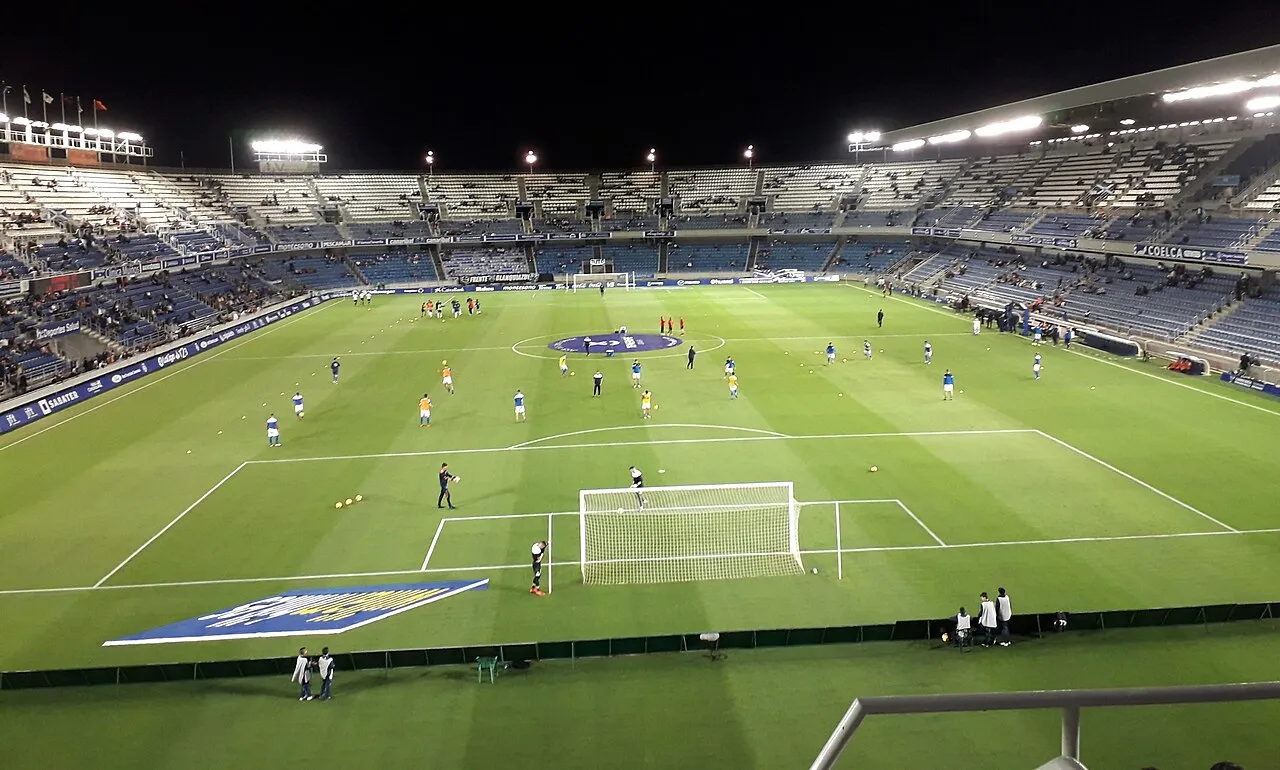
Another historical view of the Heliodoro stadium; no photograph of the collision is used.
Medical information should not be guessed from a video
Reports described a cardiac emergency after the collision. That does not permit a distant viewer to supply a detailed diagnosis, exact mechanism or claim about what a particular intervention would certainly have changed. Those questions require the appropriate medical evidence.
Avoid treating every unfamiliar medical phrase as interchangeable. A news report may describe an event at a broad level without publishing the clinical record. A responsible summary should preserve that limit rather than fill the gap with a confident explanation gathered from unrelated cases.
Graphic repetition is not necessary to communicate the seriousness of the incident. A written timeline, a non-graphic player photograph and official statements can inform readers without replaying a person's medical crisis as entertainment. Respectful presentation improves understanding rather than hiding the event.
What sports organizations can learn about preparation
The broader educational issue is emergency preparedness. Sports venues benefit from a clear emergency-response plan, trained personnel, suitable equipment arrangements and a known route for contacting emergency services. These are organizational responsibilities to plan before an incident rather than improvise entirely under pressure.
The American Heart Association provides a sports-facility emergency-response planning template. Such resources can help an organization structure training and responsibilities. They should be adapted through qualified local guidance rather than copied blindly from another country's emergency system.
This article does not instruct an untrained reader to diagnose a collapse from footage. In a real emergency, contact local emergency services and follow the dispatcher and trained responders. Schools and clubs should obtain appropriate first-aid training instead of treating a news article as a substitute for it.
How to read conflicting early reports
Begin by recording what each source actually says and when it was published. A report that a player was receiving treatment at one time can coexist with a later death announcement. The sequence matters more than the superficial appearance that two headlines disagree.
Next distinguish confirmation from inference. A club statement may confirm the player's identity and status. A news agency may report what police said about an investigation. A social-media post may contain a video without proving the caption attached to it. Each type of source has a different evidentiary role.
When correcting a mistaken post, identify the specific error and point to the appropriate record. Do not amplify the incorrect name or graphic clip more widely than necessary. Accuracy includes how a correction is presented, not only whether the final sentence is technically right.
A source-checking exercise for students
Create four columns: claim, date, source type and what remains unknown. Place the death announcement, the collision report, the investigation report and a tribute in separate rows. This prevents them from collapsing into one vague narrative in which every statement appears equally established.
For each row, ask whether the source directly establishes the claim or merely repeats it. Then write one sentence that stays within the evidence. For example, a statement confirming a tribute should not be expanded into a claim about the investigation's eventual outcome.
The exercise teaches a skill useful far beyond football. Serious public events often develop through partial information. Keeping the source, time and certainty visible helps readers remain informed without turning uncertainty into rumor or pretending that every unanswered question has already been settled.
Remember the people behind the search terms
Trending names can quickly become detached from the individuals they describe. A player, his family, teammates and opponents may be dealing with grief while strangers debate a few seconds of video. Public interest does not remove the need for restraint about private details or unsupported personal claims.
Focus on information that helps readers understand the event: identity, dates, official statements and the status of relevant processes. Avoid publishing addresses, private contact information or speculative accounts of family conversations. None is needed to explain the verified record.
It is possible to describe a tragedy clearly without sensational language. The seriousness is already present in the facts. Additional drama, invented quotations or repeated graphic imagery would not make the account more accurate or more respectful.
Questions readers are asking
Did Tenerife officially confirm Jesús de Miguel's death?
Yes. The club published its official announcement on 3 November 2026. The Spanish federation and the Canary Islands government also issued statements. Those are stronger confirmation routes than an unattributed social-media caption.
Did the collision and announcement happen on the same date?
The incident occurred during the 2 November match against Andorra. The death announcement followed on 3 November. Keep the dates separate when sharing a summary, especially where an older treatment update is circulating alongside later news.
Does the reported investigation establish a conviction?
No. The reporting describes an investigation, not a final conviction. This page does not assign criminal responsibility or claim a judicial outcome that has not been established in the reviewed record. Later official findings would require a separate dated check.
Why are both De Miguel and Owono covered on this page?
Their names are linked in searches about the same incident. Keeping the context together helps avoid duplicate rumor pages and mistaken identity. It also allows the article to explain the difference between the sporting event, the investigation and unsupported accusations.
Keep the update date visible
If you return to this story later, compare the date of a new official statement with the date of an older report before treating them as contradictory. A developing investigation may clarify a detail without changing the basic account of the loss. Preserve that distinction when sharing updates with other supporters.
Sources
- Tenerife official announcement
- Spanish federation statement
- Canary Islands government statement
- Investigation reporting
- European tributes report
- Sports-facility emergency planning resource
Image credits: cover: Mentxuwiki, source, CC BY-SA 4.0. Resized and converted to WebP. inline: JUAN BLAS tenerife, source, CC BY-SA 4.0. Resized and converted to WebP.
Found an error or an outdated detail? Report a correction with the article URL and original source.