
Manchester United 3-2 Roma: Cunha Comeback, Goals and the Late Red Card
Follow United’s 3-2 comeback against Roma, Fernandes’s penalty, Cunha’s two late goals and red card, with points and added-time terms explained.
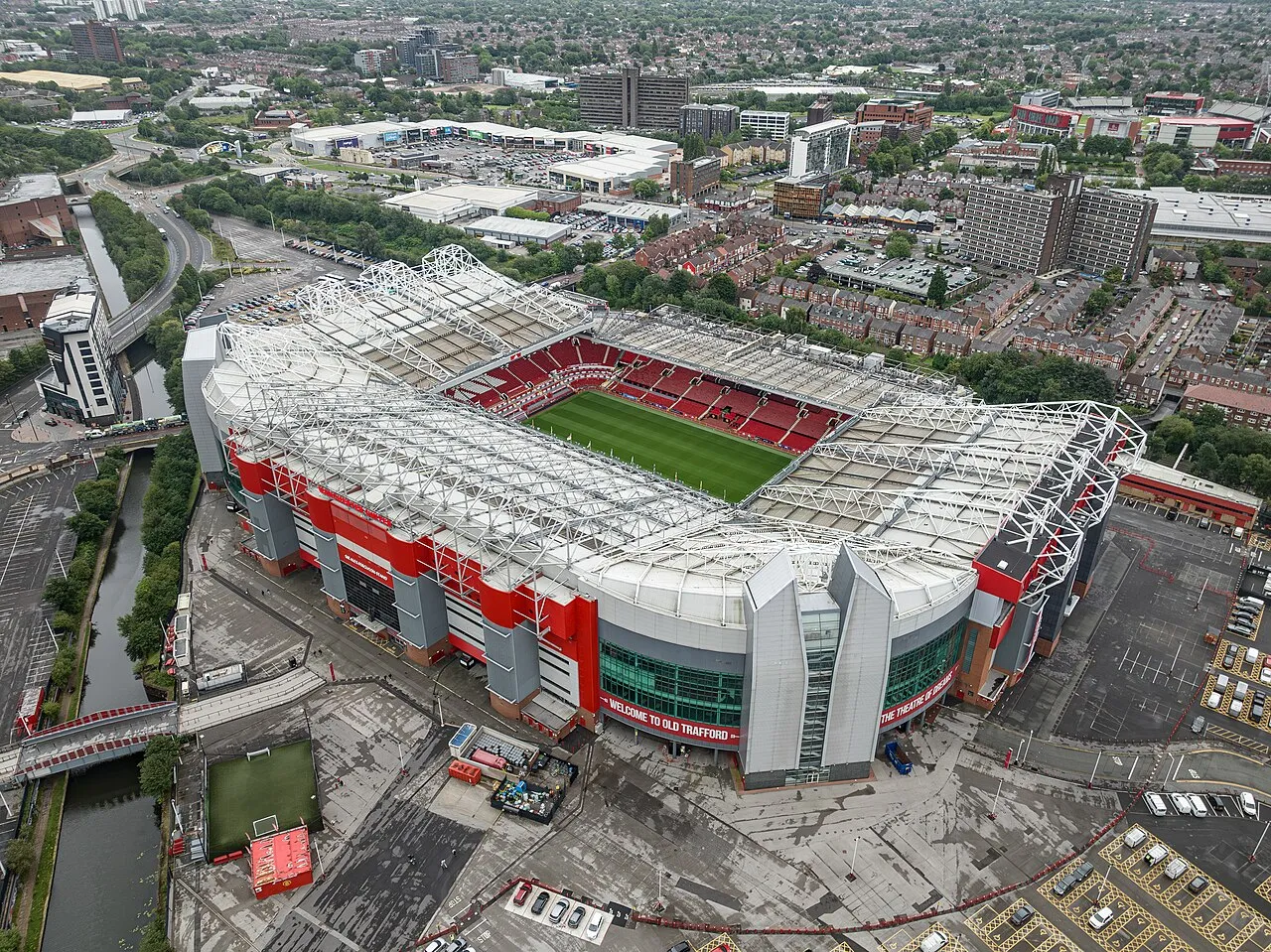
Manchester United defeated Roma 3-2 at Old Trafford on 3 November 2026 after trailing 2-0 at half-time. Bruno Fernandes scored a second-half penalty before Matheus Cunha supplied the equalizer and winner. Cunha was then sent off in added time, leaving United to protect their lead through a tense finish.
The comeback is the central story, but it should not conceal the first-half problems or turn one result into proof that every issue has been solved. This match guide follows the changing score, explains the points and disciplinary context, and shows how to separate a dramatic recovery from a claim about long-term form.
What was the final score?
The result was Manchester United 3, Roma 2. It was a UEFA Champions League league-phase match at Old Trafford, played on Tuesday 3 November. United's official fixture calendar records the completed result. This was not the famous 2021 Europa League semifinal between the same clubs, which produced a different score and belonged to another competition.
| Match detail | Record |
|---|---|
| Competition | UEFA Champions League 2026/27 |
| Stage | League phase, Matchday 4 |
| Home team | Manchester United |
| Away team | Roma |
| Half-time score | United 0-2 Roma |
| Full-time score | United 3-2 Roma |
The European evening kickoff also explains why Pakistani readers discussed the fixture on 4 November. Match dates and local reading dates can differ. Before sharing a result, retain the official fixture date, the venue and the competition so that a new report is not confused with an older meeting.
How did United turn the score around?
Roma established a two-goal lead in the first half. Fernandes reduced the deficit with a penalty in the 58th minute. Cunha equalized in the 83rd and scored again in the 86th. Those three United goals transformed a likely-looking defeat into a victory, although the late dismissal added another complication.
| Time | Change | Match state |
|---|---|---|
| Half-time | Roma lead by two | United need two goals to draw level |
| 58 minutes | Fernandes penalty | United 1-2 Roma |
| 83 minutes | Cunha equalizer | United 2-2 Roma |
| 86 minutes | Cunha winner | United 3-2 Roma |
| Added time | Cunha sent off | United defend the lead with fewer players |
Read the third column as carefully as the scorer names. At 1-2, United were still behind. At 2-2, they had recovered a draw but had not yet won. At 3-2, the immediate task changed again: the team now needed to preserve an advantage rather than chase another goal.
A comeback contains several separate achievements
Recovering from two goals behind first requires stopping the deficit from growing. Conceding a third can make the attacking response much more difficult. The next task is to create a first reply without exposing the team excessively. Only after that does an equalizer become a realistic immediate target.
United's scoring sequence shows those stages clearly. The Fernandes penalty changed the scoreboard and kept the possibility of a recovery alive. Cunha's first goal removed Roma's lead. His second turned the contest into a different problem for the visitors, who suddenly needed to attack rather than protect an advantage.
This is why calling the match simply a three-goal second half misses part of its meaning. Goals change incentives. Decisions that make sense while chasing can become unnecessary risks while leading. A useful analysis watches whether the team recognizes each transition rather than assuming that emotional momentum alone explains every action.
Why did the first United goal matter so much?
At 0-2, United needed two goals merely to restore parity. After the penalty, only one separated the teams. That smaller deficit can change the pressure on the side defending the lead: another mistake would now erase the advantage rather than merely reduce it.
There was still substantial normal time remaining after the 58th-minute goal. That created a different situation from scoring the first reply in the final seconds. United could continue building attacks instead of relying entirely on one final delivery into the penalty area.
However, psychological explanations should remain tied to evidence. A goal can energize a crowd and influence player confidence, but confidence is not directly measured by the scoreline. Describe the visible changes, such as territory, chances or decisions, before presenting a detailed claim about what every player was thinking.
Cunha's goals and the late red card
Cunha's two late goals were decisive because they changed a defeat into a draw and then a win. Their timing also left Roma relatively little normal time to respond. The equalizer and winner were separate events with separate effects, even though they occurred close together.
His dismissal afterward did not remove the goals from the match record. Disciplinary consequences and the validity of earlier goals are different questions. United still led 3-2, but the team had to manage the remaining play with fewer players available on the pitch.
When assessing the performance, recognize both sides of that contribution. Scoring decisive goals is significant. A late dismissal can still impose an avoidable burden on teammates. Praising the goals does not require pretending the red card was harmless, just as criticizing the dismissal does not erase the attacking contribution.
What does playing with ten change?
A team reduced to ten must redistribute its coverage. Spaces that were previously occupied by one player may need to be covered through narrower positioning, more coordinated movement or a change in which attacking outlets remain available. The exact response depends on personnel, time and the opponent's approach.
With a narrow lead late in a game, the immediate priority often becomes protecting dangerous central areas and dealing with deliveries into the box. But sitting deeper is not automatically safer if it allows repeated uncontested attacks. Holding the ball, winning a legitimate foul or maintaining an outlet can also relieve pressure.
Those are general principles, not an invented account of every United movement after the dismissal. To evaluate the actual closing sequence, watch the remaining minutes and identify the positions players occupied. A red card tells you that the numerical situation changed; footage explains how each side responded.
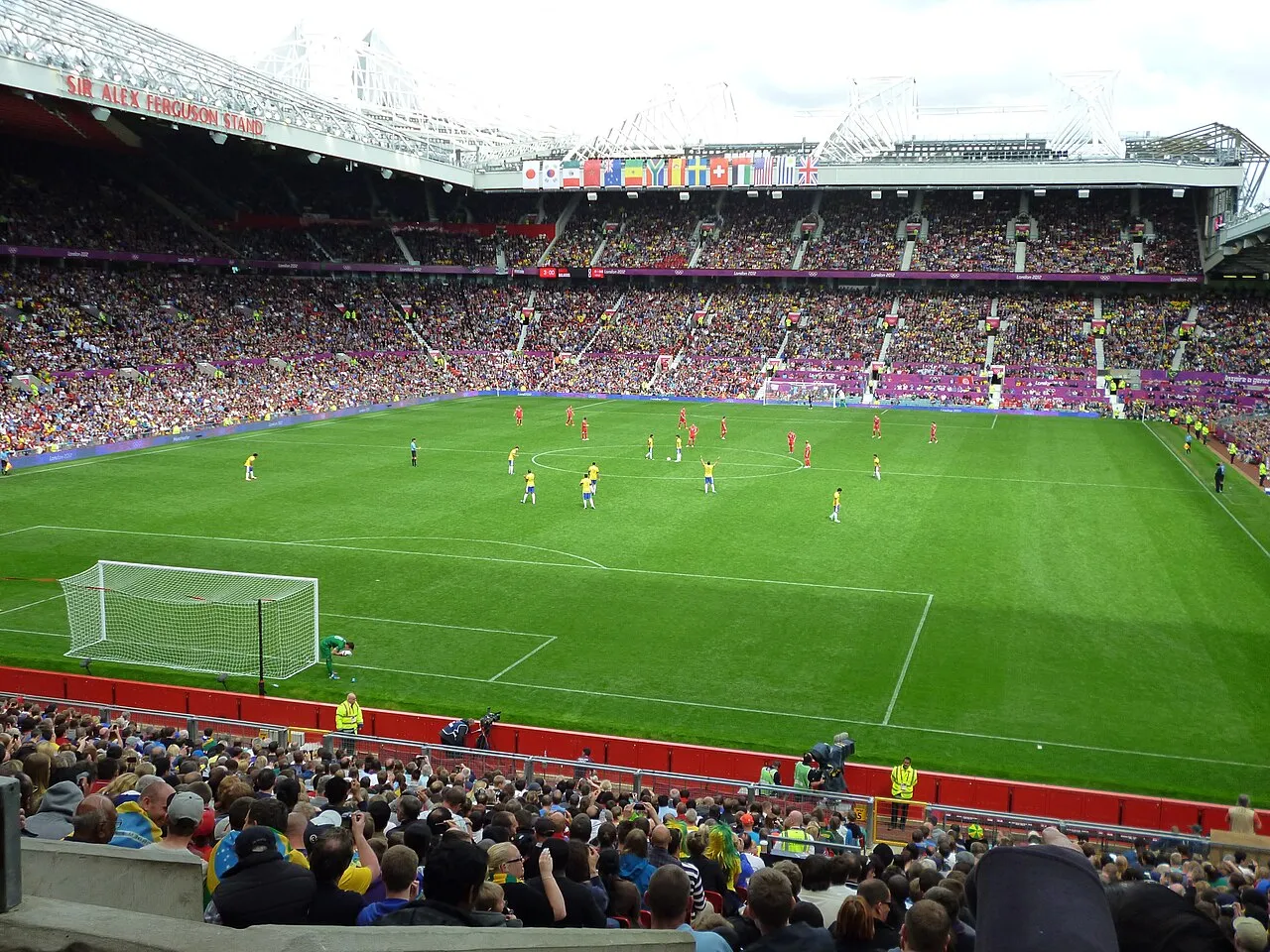
Brazil and Belarus at Old Trafford in July 2012; a historical view of the venue, not United versus Roma.
How many points did the result deliver?
United earned three league-phase points from the win. Roma earned none from the defeat. The result is part of the single league-phase table, not an aggregate knockout score. There was no requirement for a return leg against Roma to decide this particular contest.
United's opening four results in the competition included two wins and two defeats, producing six points. Roma's first four included a draw, a win and two defeats, producing four. These totals describe the record after the fixture and should be paired with a dated table when discussing rank.
Do not turn one night's position into a final qualification claim. Other matches affect the table, and more league-phase fixtures remained. A result can improve a team's prospects without guaranteeing a particular finishing place. Precision about that distinction makes a standings discussion more credible.
The goal-difference calculation
In this fixture, United added three goals scored and two conceded, improving their overall goal difference by one. Roma experienced the opposite change. A five-goal match therefore did not give the winner a five-goal improvement in goal difference. Only the difference between the teams' goals determines that change.
This is a useful exercise for students reading a league table. Write goals for and goals against separately, then subtract. If a team begins with eight scored and nine conceded, a 3-2 win moves those totals to eleven and eleven. The goal difference rises from minus one to zero.
That example is deliberately hypothetical rather than a claim about United's pre-match totals. The method applies to any club. Keeping examples clearly labeled avoids the common mistake of turning a teaching calculation into a supposed live standings statistic.
Why one emotional win does not settle a season
The match report described a difficult run before this victory. A recovery can be meaningful for players and supporters, but a single win cannot establish that every tactical or organizational concern has disappeared. The next performances provide additional evidence about whether improvements are sustained.
The opposite extreme is also unhelpful. Treating the comeback as meaningless because the first half was poor ignores the ability to change the outcome. A balanced review can acknowledge the early deficiencies, the second-half response and the uncertainty about what happens next.
For a useful post-match discussion, separate three questions: what went wrong, what changed and what still needs to improve? Answering all three produces a more accurate assessment than choosing between total praise and total dismissal. Dramatic results often invite exaggerated conclusions precisely because the emotions are so strong.
How to analyze the turning points
Choose one passage before the penalty and one after it. Observe the location of possession, the availability of forward passes and the way Roma defend the spaces near their penalty area. Compare what you can actually see rather than assuming that a goal automatically caused every subsequent improvement.
Then examine the equalizer. Was the opportunity created through a deliberate attacking pattern, an individual action, an opponent's mistake or a combination? Football events often have several contributing causes. Reducing them to one word, such as desire or luck, can hide useful detail.
Finally watch the response after the winner. The leading team's decision-making is now the subject. Did players recognize when to slow the game legally, retain possession or avoid unnecessary challenges? This is a different test from the attacking one that produced the comeback.
Penalties and retakes: follow the official sequence
The report records that Fernandes scored after a retake. A retaken penalty should be understood through the referee's decision and the applicable Laws, not through a cropped clip alone. The reason for a retake matters, and different infringements can produce different outcomes.
For the match result, use the goal recorded in the completed event log. Do not count both the original attempt and the retaken attempt as separate goals. They belong to one penalty sequence, whose final official outcome affects the score once.
If studying a disputed incident, watch the full sequence and consult the relevant rule before making a confident claim. A supporter can disagree with a decision, but the explanation should identify the specific rule and visible evidence rather than rely entirely on allegiance to one club.
Read the result without rewriting the first half
A useful summary should preserve both halves of the story: United were two goals behind at the interval and won after a three-goal response. Removing the first fact would hide the problems; removing the second would hide the recovery. The final outcome is most informative when the route to it remains visible.
Questions readers are asking
Who scored Manchester United's goals against Roma?
Bruno Fernandes scored the penalty that began the recovery, and Matheus Cunha scored the equalizer and winner. The goals came in the second half after Roma had reached the interval two goals ahead. Check the dated 2026 fixture rather than an older high-scoring meeting between these clubs.
Did Cunha's red card cancel his goals?
No. The dismissal affected the number of players United could use for the remaining play and may carry disciplinary consequences under the competition rules. It did not erase goals already validly recorded in the match. Those are separate parts of the event record.
Was the win decided in extra time?
No. The league-phase fixture ended 3-2 in normal match play, including added time. Added time at the end of a half is different from extra time used in some knockout matches. Keeping those terms separate helps explain why a late event can be recorded after the 90th minute without an extra-time period.
Where can I read more about United?
Our Manchester United history guide explains the club's wider background. The Chelsea–United match analysis provides a contrasting fixture. Compare the evidence in each match rather than assuming that one result tells the entire story of a team.
Sources
- United official fixture calendar
- Completed match report and event record
- UEFA fixture record
- IFAB Laws of the Game
Image credits: cover: Arne Müseler from Salzburg, AT, source, CC BY-SA 2.0. Resized and converted to WebP. inline: Oldelpaso, source, CC BY-SA 3.0. Resized and converted to WebP.
Found an error or an outdated detail? Report a correction with the article URL and original source.