
New Zealand vs India: Bay Oval ODI Dates, Squads and Time Check
Check New Zealand’s Bay Oval ODI dates, split-squad plan and the conflicting start-time listings, with clearly labelled Pakistan-time conversions.
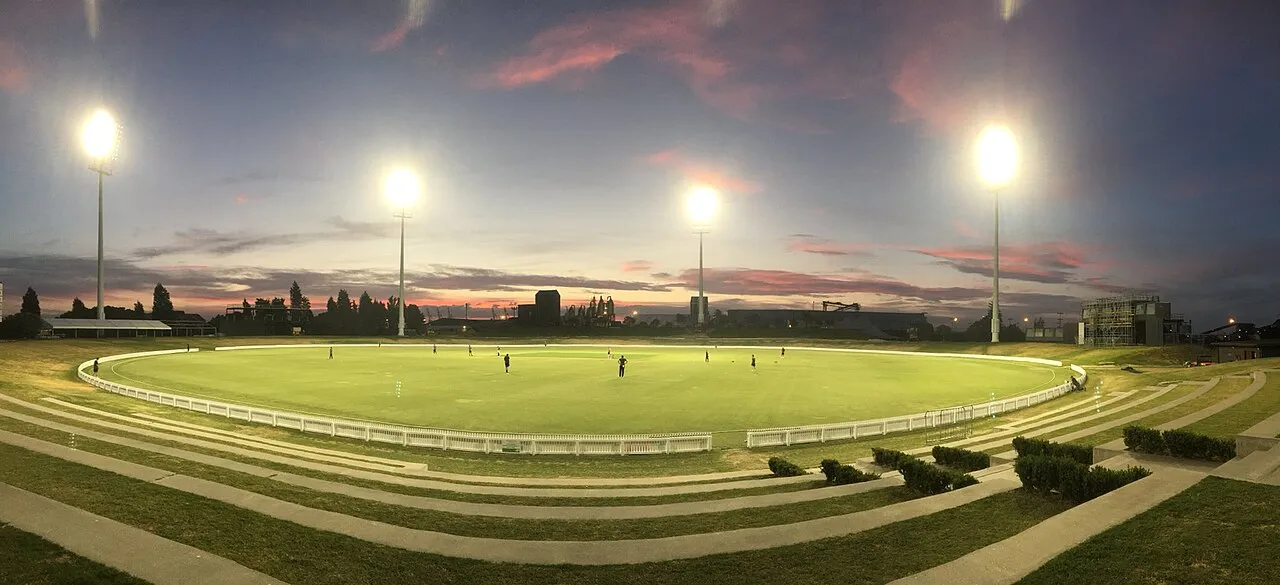
New Zealand's next India ODIs are at Bay Oval
New Zealand and India are scheduled to play the fourth and fifth ODIs at Bay Oval, Mount Maunganui, on Friday 13 November and Sunday 15 November 2026. Both the venue and the published international schedule confirm those dates. Their displayed start times differ, however, so the timing needs a fresh match-centre check before setting an alarm.
This preview focuses on the final two one-day matches, New Zealand's announced split-squad plan and what to watch in a fifty-over contest. It is not a report of a match that has already happened. Earlier Auckland and Hamilton articles cover different fixtures and should not be mistaken for this Bay Oval weekend.
For Pakistan-based readers, the practical questions are straightforward: which date, which ground, which squad and what time? The dates and ground are established. The two conflicting time listings are set out below without disguising the difference or treating one as a confirmed revision of the other.
The dates are clear; the published times need reconciliation
| Fixture | Date | Ground |
|---|---|---|
| Fourth ODI | Friday, 13 November 2026 | Bay Oval, Mount Maunganui |
| Fifth ODI | Sunday, 15 November 2026 | Bay Oval, Mount Maunganui |
Bay Oval's event page labels first ball as 2:30pm local time. BCCI's 16 October schedule lists 7:30am Indian Standard Time for both matches. During New Zealand daylight saving, those are not equivalent: 2:30pm in Mount Maunganui converts to 7:00am IST, while 7:30am IST converts to 3:00pm there.
The gap is thirty minutes. Neither page, as retrieved for this preview, explains it. It would be misleading to call it a confirmed delay, a corrected schedule or a toss time without further evidence. The venue explicitly calls its time “first ball”; an editor should not relabel it merely to make the figures agree.
Check the live match centre closest to the game and distinguish scheduled start from toss, gates opening and actual start. Weather or other conditions can change the last of those without changing the original fixture date.
Pakistan time: both conversions, clearly labelled
The November daylight-saving offset in mainland New Zealand is UTC+13; Pakistan uses UTC+5 and India UTC+5:30. Mount Maunganui is therefore eight hours ahead of Pakistan and seven and a half hours ahead of India. The New Zealand government lists the current daylight-saving period as 27 September 2026 to 4 April 2027.
| Source listing | New Zealand daylight time | Pakistan time | India time |
|---|---|---|---|
| Bay Oval event page | 2:30pm | 6:30am | 7:00am |
| BCCI published schedule | 3:00pm, calculated | 7:00am, calculated | 7:30am |
These are conversions of two published listings, not two different confirmed sessions. The date remains the same for these morning conversions. Until the organisers reconcile the discrepancy, readers should avoid sharing either Pakistan time without that qualification.
One useful habit is to create calendar entries with the venue's time zone rather than typing a remembered offset. That helps when following a tour across a daylight-saving boundary. It does not solve conflicting source times; the source value must still be checked first.
Why New Zealand announced two ODI squads
The ICC's 11 October announcement describes a split between ODIs one to three and ODIs four to five. Mitchell Santner was named captain of both groups. The plan allowed some red-ball players to leave for Wellington after the third ODI and prepare for the first Test, scheduled to begin on 19 November.
The announced final-two-match group included Finn Allen, Lockie Ferguson and Tim Seifert, alongside players continuing from the earlier games. The October list is a selection announcement, not a guaranteed playing eleven or a certificate that every selected player remains available on match day. Subsequent injury and replacement notices take priority.
A split squad can serve several purposes at once: protect preparation time, provide opportunities to other players and maintain options across formats. That does not automatically mean a match is less important. A replacement may be competing for a longer-term role, while a captain still has to field a balanced side.
For readers comparing team lists, attach the match range to the list. “New Zealand ODI squad” is too broad if one article refers to games one to three and another to games four and five. A missing name may reflect the announced changeover rather than a new injury or a disciplinary decision.
Squad selection is not the same as the playing eleven
The squad is the pool from which the match team is selected. The playing eleven identifies those chosen for a particular game. A player can be included in a squad without appearing, and a player omitted from an earlier match can still be selected later.
Wait for the official toss-time team sheet before describing someone as opening the batting or sharing the new ball. A predicted eleven is an opinion, even when it comes from a knowledgeable analyst. It should not be placed beside confirmed information without a clear label.
This distinction matters for scorecards too. A squad profile may show a player's career record while a match page shows no contribution because he did not play. Absence from the batting list does not, by itself, establish whether he was outside the eleven, did not need to bat or was affected by another match circumstance.
Our Auqib Nabi selection guide explains the difference between a call-up and an appearance in the context of India's tour. The same principle applies when reading New Zealand's announced changes.
What changes between a T20I, an ODI and a Test?
The same national sides can meet in three different formats during one tour. A T20I is built around a shorter innings; an ODI provides a longer limited-overs contest; a Test can develop across multiple days and innings. Their records should remain separate.
A strong innings in the preceding T20I series is relevant background, but it is not an ODI score. Similarly, a Test preparation decision does not establish that an ODI player has retired from another format. Check the competition label before comparing results, averages or team roles.
In an ODI, batters usually have more time than in a T20I to rebuild after early wickets. Bowlers also work with a different allocation and different phases of the innings. The general problem remains the balance between scoring quickly and preserving enough resources to finish strongly.
The Eden Park first-ODI report concerns the opening game of this ODI series. This article moves forward to the Bay Oval fixtures rather than republishing that result under another headline.
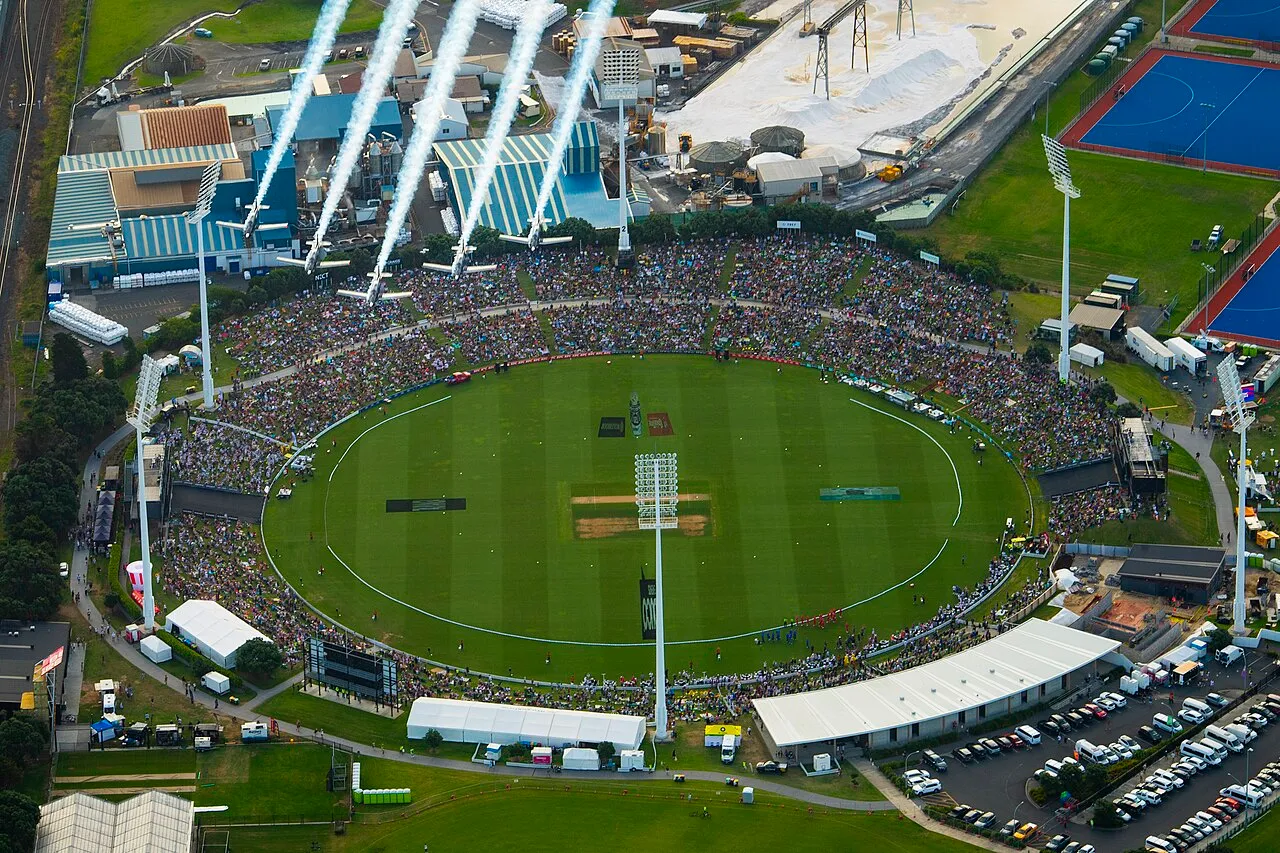
Archive: Bay Oval in January 2024. This image illustrates the venue, not the forthcoming matches or current pitch conditions.
Three questions to watch when New Zealand bat
First, can the opening pair establish scoring options without handing away wickets? This is not simply a choice between attacking and defending every ball. A well-judged leave, a single into space and a boundary from a poor delivery can all contribute to the same plan.
Second, how does the middle order respond if the early plan breaks down? A partnership after wickets may need to reduce risk temporarily. That phase becomes more useful if it creates an opportunity to accelerate later, rather than leaving every remaining batter to start under immediate pressure.
Third, who is available for the closing overs? A side with established batters at the crease can approach the finish differently from a side relying on its last pair. The total on the board is only one part of the position; wickets and deliveries remaining help explain what might still be possible.
These are watching questions, not assertions about an unplayed innings. There is no confirmed pitch outcome or guaranteed scoring pattern in this preview. Assess the actual conditions and decisions when the match begins.
Three questions to watch when New Zealand bowl
Begin with control: are the bowlers repeatedly reaching a useful line and length, or offering easy scoring opportunities? Pace alone cannot answer that. A fast delivery in the wrong place may be less effective than a controlled ball that makes the batter choose carefully.
Next, consider the partnership between bowlers. Pressure from one end can change the risks a batter takes at the other. A wicket belongs in an individual's figures, but the preceding spell may have helped create the situation. The scorecard and the sequence together give a fuller account.
Finally, watch how the field changes after a boundary or wicket. A captain may protect one area, bring a catcher closer or keep the existing arrangement. Those decisions reveal the problem being addressed, although they do not prove what the bowler and captain said privately.
Do not infer a player’s fitness from speed readings or a single short spell. That requires a reliable team update. Tactical observations should describe the visible cricket rather than becoming unsupported medical explanations.
Reading an ODI chase without confusing the arithmetic
Suppose a hypothetical team needs 90 from 60 legal deliveries. Its required rate is nine an over. If it then scores ten from an over, it needs 80 from 54 balls, or about 8.89 an over. The situation has changed even though the remaining target still looks substantial.
Wickets alter the interpretation. Two batters well set with eight wickets available face a different problem from a last pair needing the same number. The arithmetic provides the rate; the match situation provides the risk attached to reaching it.
Overs are not decimal fractions. An entry of 32.4 means thirty-two completed overs plus four legal balls. Treating it as 32.4 ordinary units produces an incorrect rate. Convert to balls first if doing a detailed calculation, then convert back to overs when needed.
Any worked numbers in this section are examples, not a forecast or a score from the Bay Oval matches. If rain changes an innings, use the officially revised target and remaining allocation rather than continuing with the original chase calculation.
Bay Oval and Mount Maunganui: identify the right ground
The venue identifies its location as Blake Park, Kawaka Street, Mount Maunganui, in Tauranga. “Bay Oval”, “Mount Maunganui” and a Tauranga location label can therefore refer to the same ground. They should not be mistaken for three separate fixtures.
Visitors should use the venue's current event and entry guidance rather than a generic city map alone. The ground's game-day page warns that nearby parking can be limited and encourages early arrival. It also lists conditions on what spectators may bring, including restrictions on hard chilly bins and bottle sizes.
Accessibility arrangements, transport and entry policies can change by event. Consult the current venue information before travelling, particularly if mobility access is required. An archive photograph can show the ground's appearance, but cannot verify today's gate arrangement or available seating.
The two photographs accompanying this preview show the actual venue in earlier years. Neither is presented as a picture of the forthcoming India games, a current pitch inspection or evidence of the weather expected on match day.
Scores, highlights and streaming are different services
A live scorecard can provide a legal-ball count, wickets, individual figures and match status without offering video. Highlights provide selected moments rather than the complete game. A broadcaster's live coverage is a third service with its own territorial rights and access conditions.
New Zealand Cricket links to its official scoring service. Use the match date and format to select the right fixture. A page for an earlier game or an A-team contest can otherwise look similar while describing a different event entirely.
This preview does not claim a verified free Pakistan video stream. Before subscribing to a service, check that the rights apply in your country and include this particular series. A general cricket channel listing or a free trial elsewhere is not enough to establish that access.
Avoid websites that demand unrelated downloads to show a score or promise unrestricted access without identifying an authorised broadcaster. The useful information is the verified fixture and match record, not a link that misrepresents what it supplies.
Questions about New Zealand's Bay Oval weekend
Are the two matches on consecutive days?
No. The published dates are Friday 13 November and Sunday 15 November, leaving Saturday between them. A two-match weekend description does not mean that both games take place on the same day.
Is the Pakistan start time confirmed at 6:30am or 7:00am?
The two official listings currently convert differently. The venue's time gives 6:30am Pakistan time; BCCI's published time gives 7:00am. Check the latest match centre before relying on either. The conversions are clear, but the underlying discrepancy remains unresolved.
Is the October squad announcement the final team?
No. It identifies the selected group for the specified match range. Later updates and the match-day eleven must be checked separately. Do not treat an announcement published weeks earlier as proof that no subsequent replacement has occurred.
Does this article establish the current series score?
No. Its purpose is the upcoming Bay Oval fixtures and the split-squad plan. It does not reconstruct the series position from incomplete or older reports. Consult the latest completed official scorecards for that separate question.
Sources
- Bay Oval: India ODI event dates and venue-listed first-ball time
- BCCI: 16 October ODI and Test squad announcement and schedule
- ICC: New Zealand split ODI squad announcement, 11 October 2026
- New Zealand Government: daylight-saving dates
- Bay Oval: game-day information
- New Zealand Cricket: official match and scoring links
Image credits: cover: Bradley-John Watling, source, CC BY-SA 4.0. Resized and converted to WebP. inline: NZDF, source, CC BY 4.0. Resized and converted to WebP.
Found an error or an outdated detail? Report a correction with the article URL and original source.