
New Zealand vs India First ODI: Kohli, DLS and the Five-Wicket Win
Understand India’s five-wicket DLS win at Eden Park, Kohli’s 74, New Zealand’s 185 and the revised target, with legal-ball calculations explained.
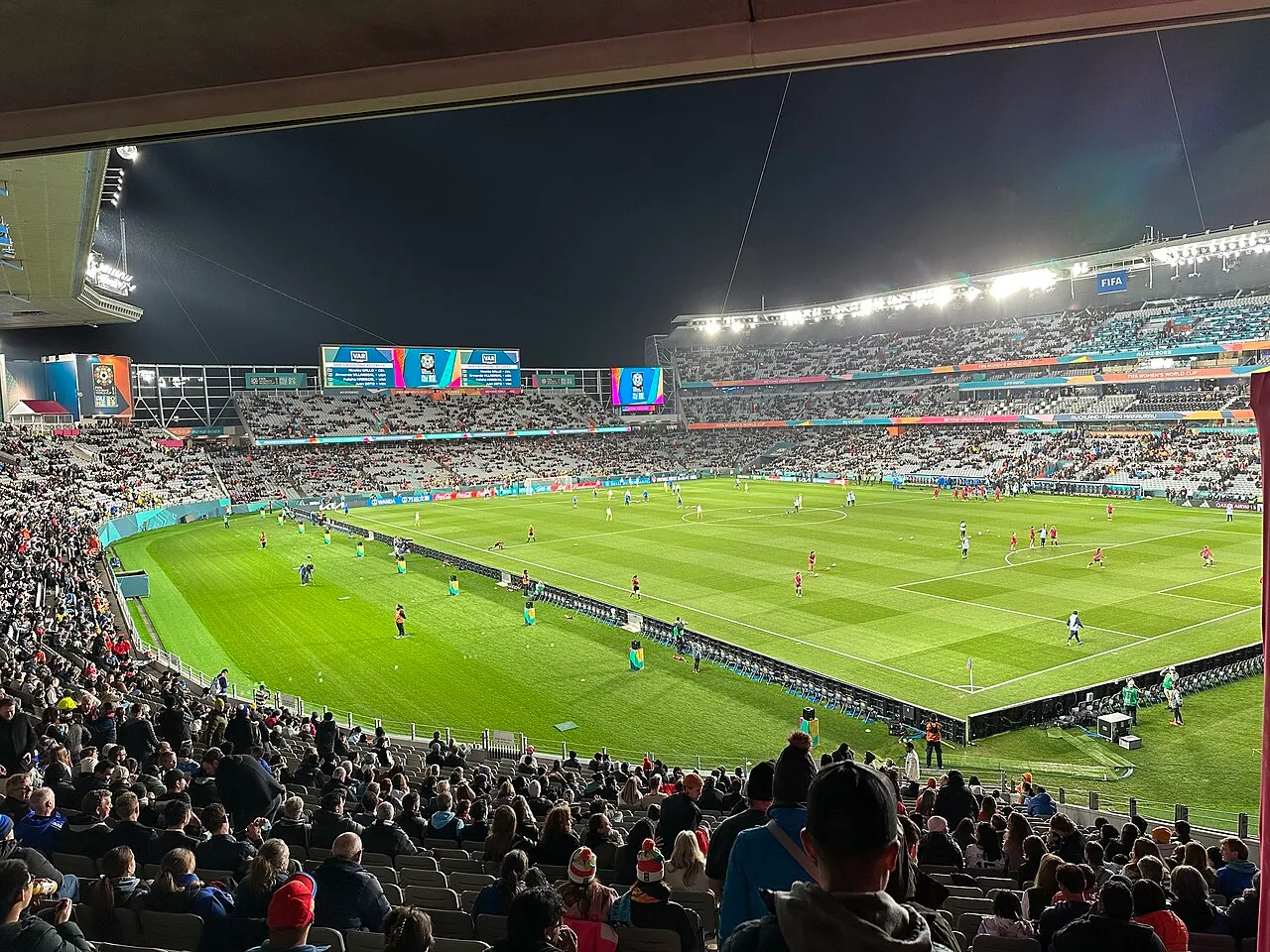
India beat New Zealand by five wickets under the DLS method in the first ODI at Eden Park on 4 November 2026. New Zealand were bowled out for 185, while India reached the rain-revised target with 143 for five. Virat Kohli's 74 was the main batting contribution in the chase.
The two team totals can look confusing if the revised target is omitted. India did not need to pass 185 after rain changed the available resources and the official target. This guide explains the scorecard, the bowling contributions and the difference between a revised target, a par score and a simple run-rate calculation.
What was the first ODI result?
The completed report records a five-wicket India victory by the DLS method at Eden Park in Auckland. The match was the opening game of a five-ODI series. It was not the earlier T20 international at the same venue, nor the fifth T20 at Hamilton.
| Item | Recorded result context |
|---|---|
| Date | 4 November 2026 |
| Format | One Day International |
| Venue | Eden Park, Auckland |
| New Zealand innings | 185 all out in 40.2 overs |
| India innings | 143/5 in 22.4 overs |
| Revised chase | 143 from 32 overs |
| Result | India won by five wickets, DLS method |
The format and venue matter because searches for New Zealand versus India return many fixtures. A T20 result from October or a January ODI played in India cannot answer what happened in this Auckland ODI. Always establish the date, country and competition before comparing the score.
Why could India win with fewer runs than New Zealand?
Rain-interrupted limited-overs cricket can require a revised target. The DLS method accounts for the resources available to the batting sides rather than simply demanding that the chasing team pass the original first-innings total regardless of how much playing time remains.
In this match, the reported revised requirement was 143 from 32 overs. India's 143/5 therefore completed the required chase. Comparing 143 directly with 185 while ignoring the official revision would describe the numbers accurately but interpret the result incorrectly.
This is a good example of why a scorecard needs its result note. Team totals are essential, but rain adjustments, target revisions and match conditions can affect what those totals mean. Removing the DLS label from the summary would hide the central reason the result is valid.
What does DLS measure?
DLS stands for Duckworth–Lewis–Stern. The method is used to revise targets in interrupted limited-overs matches through a resource-based approach. Overs remaining and wickets available are central to the idea of batting resources; it is not merely a proportional reduction based on time lost.
A side with many wickets left can generally approach its remaining overs differently from a side near the end of its batting resources. The timing of an interruption therefore matters. Losing overs before an innings begins is not automatically equivalent to losing the same number after a particular score and wicket position has developed.
For the official target, use the match officials' calculation and displayed result. A reader can understand the principle without pretending to reconstruct the exact professional calculation from incomplete inputs or an old public table.
Why simple proportional arithmetic is not enough
Imagine a fictional fifty-over innings shortened to twenty-five overs. Halving the original target may feel intuitive, but it overlooks the different way a team can use ten wickets across a shorter innings. The available overs and wickets interact rather than operate as unrelated quantities.
Likewise, two teams at the same score after the same number of overs can have very different resources if one has lost two wickets and the other has lost eight. A method that ignores wickets would treat those situations as identical even though their likely scoring opportunities differ.
These examples explain the principle, not the exact target in Auckland. The official 143-run requirement should be reported as the match target, not presented as the output of an improvised calculation made from a few headline numbers.
Par score and target score are different
A par score is associated with the tied comparison at a particular stage under the applicable method. A target is the total a chasing team needs to win. Confusing the two can create a one-run error in a summary even when the surrounding explanation is broadly correct.
For a live interrupted match, follow the official display and the result note. Do not substitute an old screenshot showing a previous stage of the chase. If wickets or overs change, the relevant comparison can also change.
This guide uses the reported revised target of 143 from 32 overs. It does not invent a separate par-score table or suggest that the same number would apply at every possible interruption point. A precise explanation identifies which number is being discussed and when it applies.
How did India's bowlers restrict New Zealand?
The innings report records Arshdeep Singh taking four wickets for seventy runs and Gurnoor Brar three for forty-four. Anshul Kamboj's contribution was two for twenty-two in the completed summary. Those figures describe different contributions to New Zealand's 185 all out.
Do not judge the spell only by the largest wicket total. Runs conceded, the phase of the innings and the quality of the chances created also matter. At the same time, taking wickets can directly reduce the batting resources available to the opposition, particularly when partnerships are beginning to develop.
| Bowler | Reported wickets and runs |
|---|---|
| Arshdeep Singh | 4/70 |
| Gurnoor Brar | 3/44 |
| Anshul Kamboj | 2/22 |
These selected figures are not a substitute for the entire bowling table. Consult the complete scorecard for every bowler, extras and dismissal details. A summary should identify its scope rather than imply that three rows reproduce the whole innings record.
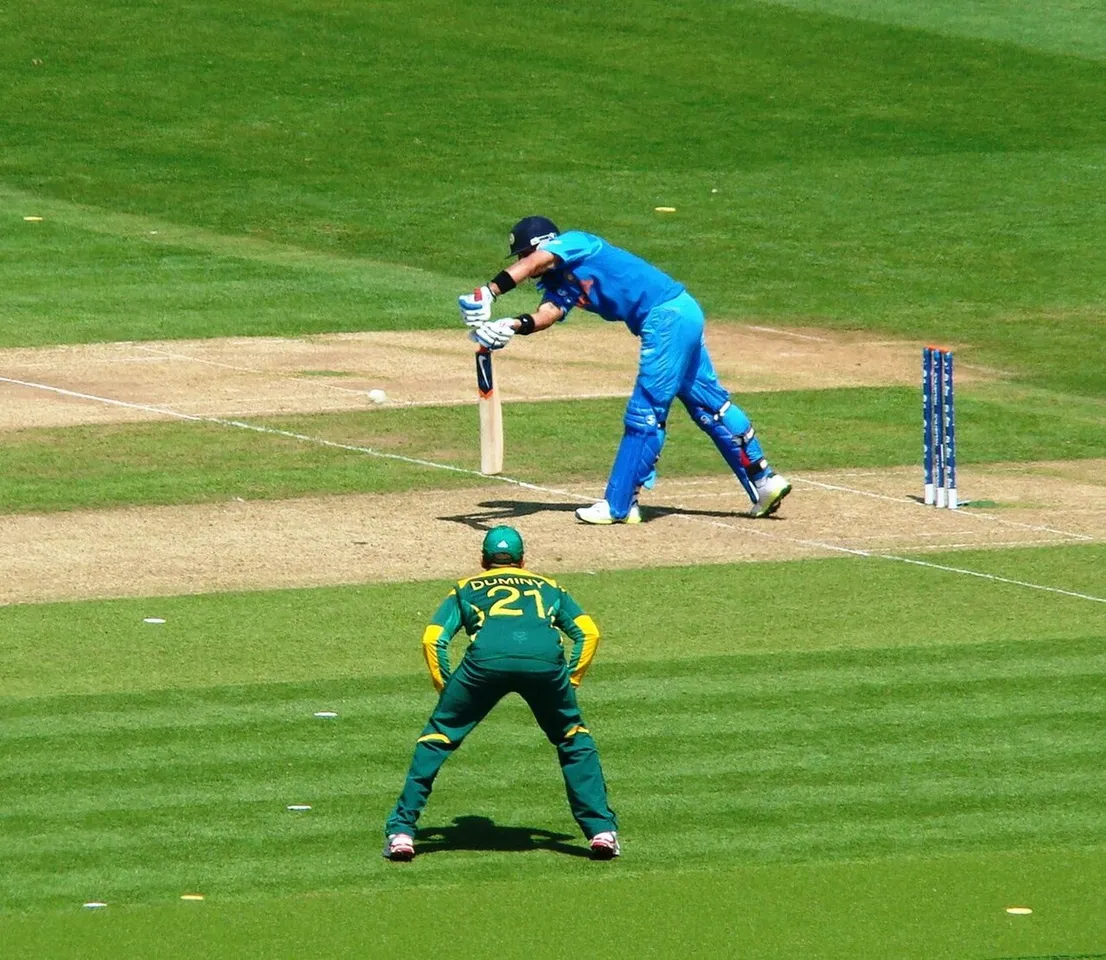
Virat Kohli batting in the 2013 Champions Trophy; historical player photograph, not this innings.
What did Kohli's 74 contribute?
Kohli supplied the largest reported contribution to India's completed chase. In a shortened innings, a substantial individual score can help keep the target manageable, but it should still be assessed against the required rate, wickets lost and the changing conditions.
The reported innings of seventy-four from fifty-one balls produces a batting strike rate of approximately 145.10. That is a calculation from runs divided by balls and multiplied by one hundred. It is not a career strike rate or a prediction of how the next innings will unfold.
For a fuller review, examine the partnerships and when the wickets fell. A personal total describes what one batter scored; the chase is completed by the team. The contribution can be central without requiring the other batters' work to disappear from the account.
What does a five-wicket win mean?
In an ordinary eleven-player chase, a side winning after losing five wickets has five wickets remaining. The margin describes those remaining wickets rather than the numerical difference between the two teams' run totals. That is why the result is not described as India winning by negative forty-two runs.
The revised target determines what India needed to reach. The wickets lost describe how many batting dismissals occurred while doing so. Those two pieces of information work together but answer different questions.
Similarly, a side batting first can win by a runs margin when the chase falls short under the applicable conditions. Do not transfer that wording automatically to a successful chase. Reading the result line carefully is the simplest way to avoid an incorrect margin.
Overs notation: 40.2 and 22.4 are not decimals
New Zealand's 40.2 overs represent forty overs and two legal deliveries, or 242 legal balls. India's 22.4 represent twenty-two overs and four legal deliveries, or 136 legal balls. Treating the displayed figures as ordinary decimal numbers would produce incorrect calculations.
For example, 22.4 multiplied by six is not the correct ball count. Convert the completed overs and remaining balls separately: twenty-two times six, plus four. The same method applies whenever an innings or bowling spell ends partway through an over.
This matters for economy and run-rate comparisons. A calculation can look precise to two decimal places while still be wrong because the units were mishandled. Correct units are more important than decorative precision.
Why wickets remaining matter in a revised chase
A chasing side must manage both the scoring requirement and the risk of running out of batters. A comfortable-looking rate can become harder if several wickets fall, while a stable partnership can preserve options for the later overs. Rain adds another reason to remain aware of the official match situation.
That does not mean a player should guess future weather or treat every DLS comparison as a reason to abandon the chase's main objective. Follow the information provided through the official match process. A spectator's forecast screenshot is not an official target revision.
For students, separate the known numbers from the assumptions. The target, overs allocation and current score can be recorded. Whether rain will return, whether a batter will accelerate and whether a particular bowler will take wickets remain uncertain until the events occur.
How this ODI differs from the earlier T20 series
The same teams and some of the same players can appear in both formats, but the innings structure and tactical demands differ. An ODI normally offers more overs for rebuilding and rotation, while a T20 compresses the time available. A rain-shortened ODI still belongs to its recorded format and playing conditions.
Our Hamilton T20 scorecard context concerns a different fixture. Keeping the pages separate helps readers find the correct result rather than changing an older article's identity whenever the teams meet again.
For player background, see Arshdeep Singh's bowling guide and Anshul Kamboj's ten-wicket record. The historical Kamboj achievement and this ODI contribution should not be merged into one supposed current spell.
Questions readers are asking
Who won the first New Zealand–India ODI on 4 November?
India won by five wickets under the DLS method at Eden Park. New Zealand made 185, and India's reported revised target was 143 from 32 overs. The chase finished at 143 for five.
Why was the target lower than New Zealand's total?
Rain affected the available playing resources and the official target was revised. DLS is not simply a demand to pass the original total after any reduction in overs. Report the official target rather than improvise a proportional calculation.
Did 22.4 overs mean twenty-two point four overs?
No. It means twenty-two overs and four legal balls, equivalent to 136 legal deliveries. Cricket's notation uses the part after the dot to count balls within the over, not a decimal fraction of an over.
Where should I check the next match?
Use the current official board or venue calendar. The tour schedule identifies further ODIs after the Auckland opener, but readers should check the live official listing before planning travel or viewing. A completed match guide is not a guarantee that every future scheduling detail remains unchanged.
Work through the remaining-ball calculation
The revised allocation of 32 overs represents 192 legal balls. India's finishing notation of 22.4 represents 136 legal balls, calculated as 22 multiplied by six, then four more. Subtracting 136 from 192 leaves 56 legal balls, or nine overs and two balls. This describes unused legal deliveries in that revised chase. It does not describe the margin of victory, which is expressed here in wickets.
That distinction is worth practising because several different numbers can all be correct while answering different questions. Five wickets describes India's remaining wickets when the target was reached. Fifty-six describes unused legal balls under the revised allocation. Neither number is a substitute for the official DLS calculation that established the target. When explaining the result to a friend, start with the match outcome, then identify the allocation, the finishing score and the units used in each calculation. Keeping units beside numbers prevents a surprisingly large share of scorecard mistakes.
Sources
- BCCI first ODI match record
- ICC match listing
- Completed innings and result report
- Contemporary first-innings report
- ICC DLS questions and methodology
- Official venue event information
Image credits: cover: Wendy Harman from Washington DC, USA, source, CC BY 2.0. Resized and converted to WebP. inline: Dee03, source, CC BY-SA 4.0. Resized and converted to WebP.
Found an error or an outdated detail? Report a correction with the article URL and original source.