
Pakistan U19 vs India U19 Final: 14 November Schedule, Pakistan Time and Preview
Pakistan and India meet in the U19 Asia Cup final on 14 November. Check Pakistan time, Oman venue, qualification routes and what remains unconfirmed.
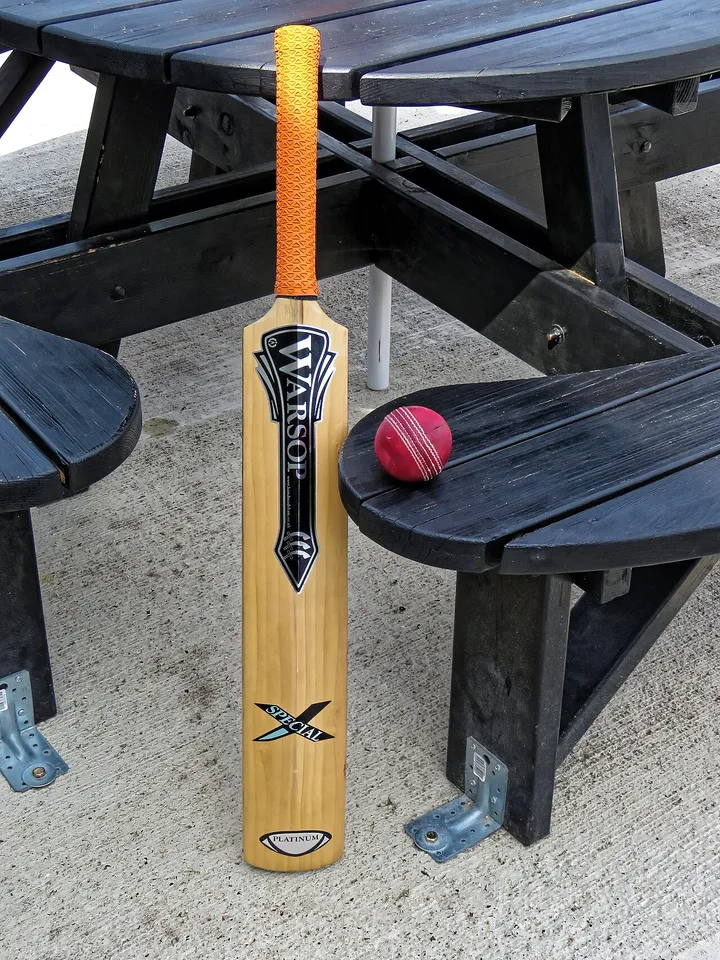
Pakistan U19 and India U19 are scheduled to meet in the ACC Men's U19 Asia Cup final on Saturday, 14 November 2026, in Oman. The reviewed fixture listings give a start of 05:00 GMT, equivalent to 10:00 am in Pakistan, at the Al Amerat Cricket Ground's Ministry Turf 2 venue. Check the current match centre for any change before play.
This is a preview checked on 13 November, not a final result. Pakistan reached the title match by beating Bangladesh in their semi-final, while India advanced against Afghanistan. Both teams now face a separate knockout match; earlier results provide context but do not decide who will lift the trophy.
The guide explains the timing, tournament format, route to the final and the information worth checking on match day. It does not invent a toss, confirmed playing eleven, weather forecast or Pakistani broadcast arrangement that was not verified. The final's scheduled start and actual start remain different things if conditions or organisers change the plan.
Final date, time and venue
The final is listed for 14 November at Al Amerat in Oman. A 05:00 GMT start converts to 09:00 in Oman, 10:00 in Pakistan and 10:30 in India. These are descriptions of the same scheduled moment, not three different match sessions.
When a score website displays 10:30 without a timezone, a Pakistan reader should not assume it means 10:30 PKT. Check the site's location or timezone setting. A half-hour difference can come from the display using Indian time rather than from an actual schedule change.
The specific ground designation also matters because an event can use neighbouring venues. Match the final's listing rather than copying the ground from an earlier group or semi-final match. A tournament being in the same city does not establish that every fixture uses the same playing surface.
What kind of tournament this is
The PCB's tournament announcement describes an eight-team, 50-over event. Pakistan, India, UAE and Nepal began in Group A, while Afghanistan, Bangladesh, Sri Lanka and Malaysia were in Group B. The top two sides from each group progressed to the semi-finals before the final.
That format distinguishes this event from a T20 tournament and from a senior international series. Keep the age category and competition name attached to the fixture when searching. “Pakistan versus India” alone can return matches from different teams, formats and years that have no direct connection with this final.
For students learning cricket, the format affects how the innings is understood. A 50-over allocation creates a different planning framework from a 20-over game. However, the allocation should not be treated as proof that every innings will use every available over; wickets and match conditions still matter.
How Pakistan reached the final
The reviewed completed semi-final listing records Pakistan beating Bangladesh by nine wickets on 12 November. That result establishes their place in the final. It is distinct from the earlier group-stage schedule and from a preview written before the semi-final was played.
Our Pakistan–Bangladesh semi-final guide provides earlier context. A reader arriving at that page should keep its stated stage and date in mind. The final is a new fixture requiring its own result rather than a renamed version of the semi-final.
Pakistan also beat India in their group meeting according to the reviewed tournament record. That gives the final an existing encounter to discuss, but it does not create a points advantage inside the final itself. A previous win is historical evidence, not runs already placed on the scoreboard for a later match.
How India reached the final
India's completed semi-final result was an eight-wicket win over Afghanistan. The India–Afghanistan semi-final article concerns that match and its context. The final now brings the two semi-final winners together rather than comparing separate group positions indefinitely.
Do not combine the two semi-final margins into a prediction. A nine-wicket win and an eight-wicket win occurred against different opponents and in different match situations. The margins describe those completed chases; they are not a formula proving which finalist must win the next contest.
A useful preview can identify the route taken without inventing a complete tactical assessment. Understanding how teams qualified is worthwhile on its own. Detailed player-form claims, injury reports or expected selections should be added only when they are supported by the relevant current sources.
Defending champions and the current final are separate records
The PCB's announcement identifies Pakistan as defending champions entering the 2026 event. That description concerns the preceding title. It should not be mistaken for a report that the 2026 final has already been completed or that the trophy has been retained automatically.
This distinction is easy to lose when an old celebration photograph or previous final score circulates without a date. Always check which edition a graphic describes. A genuine historical result can still mislead if it is presented as today's outcome.
For a simple record, use columns for edition, date, teams and result. Leave the current final's result blank until the match is actually completed. An empty field is more accurate than filling it with a prediction because an older title gives one team an appealing narrative.
Why the toss and playing eleven should remain unconfirmed
A scheduled fixture does not establish the toss result. Likewise, a tournament squad is not the same as the eleven selected for a particular match. Those details become available through the relevant official match-day process, so a preview should label them according to their actual status.
If you make your own match notes, separate confirmed information from a possible team. A predicted lineup can be discussed as a prediction, but it should not be copied into a scorecard as though every player has been named. The label changes what the reader can reasonably rely on.
This guide does not supply a speculative eleven simply to make the page look fuller. The confirmed fixture, timing and route to the final answer useful questions without pretending to know a selection decision that has not yet been announced.
Where to check the current match state
Use the ACC's current match centre, the relevant PCB match information and the linked fixture records. Look for the date, competition and final designation. A search result carrying the correct team names may still refer to the group meeting or an earlier edition.
Read the status as well as the score. “Scheduled,” “innings break” and “finished” describe different states. A total displayed during the first innings should not be turned into a final result because the page happens to have a dramatic headline or a shareable graphic.
If different pages show different update times, preserve that context. One source may still display an earlier stage. The sensible next step is to check the current record, not to average two scores or choose whichever number supports a preferred prediction.
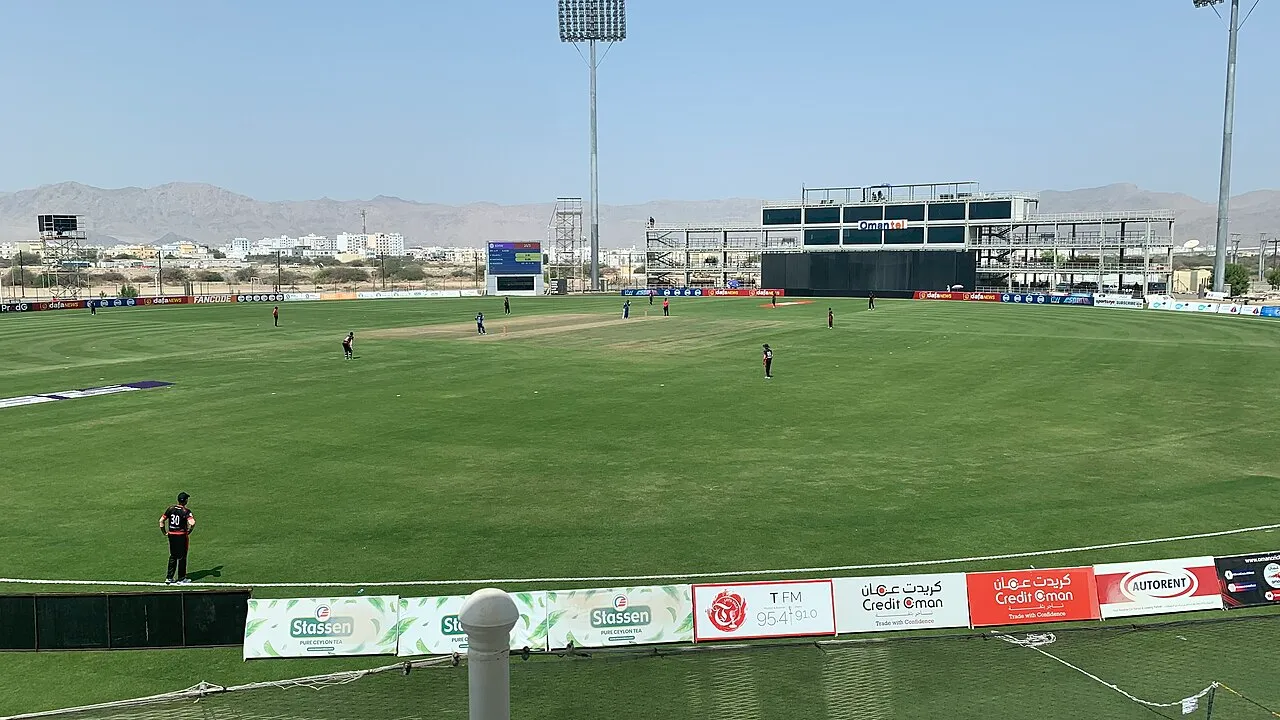
Archive cricket-ground photograph illustrating the sporting setting. It is not presented as a photograph of the scheduled 2026 final.
Broadcast availability needs its own confirmation
This guide does not confirm a Pakistani television channel or streaming application for the final. A fixture existing in Oman does not establish the rights or availability of a service in every country. Check current official listings for your location rather than relying on a generic “watch live free” claim.
Do not enter payment details or account credentials into an unknown page merely because it carries a match poster. The relevant question is whether the service is legitimately authorised and available to you. A cricket score article should not become a reason to trust an unrelated sign-in form.
Highlights and live coverage are also different products. A link to an official highlights video after play does not prove that the same channel carried the entire match live. Keep those descriptions distinct when sharing a viewing suggestion with friends.
What a final preview can usefully explain
Begin with the facts that remain useful before play: date, time, venue, format and qualification route. Then identify what the reader should check later, such as the toss, confirmed eleven and current match status. This approach gives the preview a clear purpose without pretending it is a live scoreboard.
It also avoids manufacturing a predicted winner from a handful of headline numbers. Tournament cricket involves an actual new contest, not a replay of whichever earlier margin looked larger. A balanced preview can be engaging while leaving the outcome open.
For young players, the final is an opportunity to observe how an innings develops over time. Watch how the match state changes rather than assuming that one early boundary or wicket settles everything. Any detailed technical explanation should be tied to what is actually observed during the match.
A simple score-reading exercise for match day
Use a fictional 50-over example: a team makes 240 and the chase is unchanged. The target to win is 241. If the chasing side finishes on 241 for six, the margin is four wickets. If it is all out for 220, the defending side wins by 20 runs.
These invented figures are not a forecast for the final. They demonstrate why the innings order and target matter when interpreting the result. Subtracting two totals is appropriate for a completed defending victory in this example, while a successful chase uses wickets remaining.
Write the innings status beside every number in your notes. A score of 220 during an ongoing chase means something different from 220 all out. The same digits can describe a match still developing or a match already finished, depending on the surrounding information.
Keep over notation separate from decimals
If an innings shows 21.5 overs, that means 21 completed overs and five legal balls, or 131 legal balls. It does not mean 21.5 decimal overs. This is important when calculating run rate or comparing how long a chase lasted.
For practice, convert 18.2 to 110 balls and 30.4 to 184 balls. Then explain why the second digit is a count within an incomplete over. Understanding the notation prevents a calculator from producing a plausible but incorrect rate based on an ordinary decimal denominator.
Again, these are learning examples, not a report of the final. A preview can teach readers how to understand the next day's scorecard while keeping fictional exercises clearly separate from actual match information.
Age-group cricket deserves accurate context
Keep the U19 label visible rather than treating the final as the senior men's national teams meeting in another competition. Age-group tournaments have their own players, selection context and records. A senior team's reputation does not automatically describe the current under-19 lineup.
When discussing young players, focus on verified sporting information. There is no need to invent personal stories, future contracts or guaranteed international careers to make a performance interesting. A good innings or bowling spell can be appreciated as the achievement it actually is.
For supporters, that also means avoiding sweeping conclusions from one difficult passage. The final can produce pressure and changing situations, but a public score update should remain factual. A measured description serves readers better than exaggerated praise or personal attacks based on a single moment.
A practical checklist before the scheduled start
Confirm that the listing says final, 14 November 2026 and the correct Al Amerat venue. Check the timezone on your device. Then review whether the match has a current start update, toss announcement or confirmed teams. Keep those facts separate from older previews.
If you plan to follow through a broadcast service, check its current listing independently. If you plan to use live scores, identify the legitimate match page beforehand. These small preparations are more useful than searching through several unrelated “live” links after play has begun.
More cricket and educational guides are available here. The information to retain from this preview is the scheduled Pakistan–India U19 final in Oman on 14 November, with a listed 10:00 am Pakistan start, subject to the current match-day record.
Common questions
Is the final already finished?
This article was checked on 13 November and is a preview of the scheduled 14 November final. It does not report a winner, toss or confirmed eleven. Consult the current match centre once play begins.
Why do some listings show 10:30?
The reviewed 05:00 GMT start is 10:00 in Pakistan and 10:30 in India. Check the displayed timezone before deciding that the fixture time changed. A localised clock can describe the same scheduled moment differently.
Does the group-stage result decide the trophy?
No. The final is a separate knockout fixture. Earlier results explain the tournament route and background but do not award runs, wickets or a title in advance. The winner must be established by the actual final and applicable competition rules.
Sources
- PCB: official tournament announcement and format
- ACC: official tournament and match information
- Final fixture: Pakistan U19 versus India U19, 14 November
- Completed semi-final and final fixture listings
- Schedule and Pakistan-time cross-check
Image credits: cover: Acabashi, source, CC BY-SA 4.0. Resized and converted to WebP. inline: Rhn.khn, source, CC BY-SA 4.0. Resized and converted to WebP.
Found an error or an outdated detail? Report a correction with the article URL and original source.