
Real Madrid vs Paris FC 3-0: Goals and Women’s Champions League Context
Read the Real Madrid-Paris FC 3-0 result, goals from Caruso, Beerensteyn and Caicedo, and what six points mean in the Women’s Champions League.
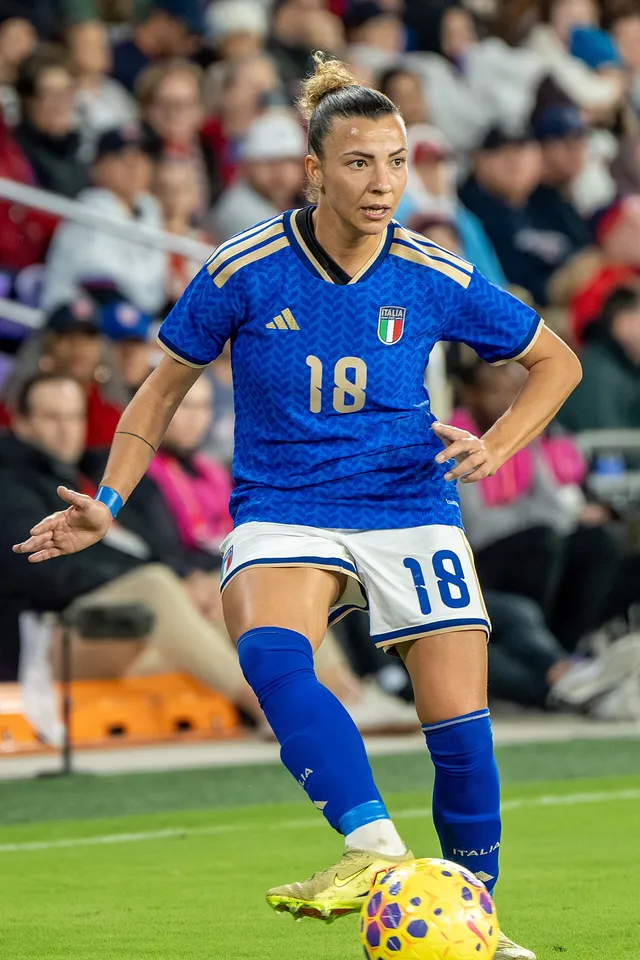
Real Madrid beat Paris FC 3–0 in the Women's Champions League
Real Madrid defeated Paris FC 3–0 at the Alfredo Di Stéfano on 10 November 2026. Arianna Caruso scored in the 55th minute, Lineth Beerensteyn in the 65th and Linda Caicedo in the 81st. This was a UEFA Women's Champions League league-phase match, not a men's fixture and not a meeting with Paris Saint-Germain.
The result gave Madrid their first victory of this European campaign after three draws. It was a decisive second half after a goalless opening period. The scoreline answers the immediate search question, but the sequence also offers a useful football lesson: how a rebound, a pass between defensive lines and attacking substitutions can change a match.
This guide separates the confirmed events from tactical interpretation. It also explains what a league-phase win means, why a temporary table position is not qualification and how to find the right fixture when similar club names appear in search results.
The confirmed result and scoring sequence
| Match detail | Confirmed information |
|---|---|
| Competition | UEFA Women's Champions League, 2026/27 |
| Stage | League phase, matchday four |
| Date | 10 November 2026 |
| Venue | Alfredo Di Stéfano, Madrid |
| Full-time score | Real Madrid 3–0 Paris FC |
| Half-time score | 0–0 |
| Goals | Caruso 55, Beerensteyn 65, Caicedo 81 |
Madrid's match report identifies Schröder's attacking involvement in all three scoring moves. Her initial shot was saved before Caruso converted the rebound; passes from her then released the other two scorers. Laia's late save against Sangare helped preserve the clean sheet.
That is the essential match record. No possession percentage, expected-goals figure or complete tournament table is attached here without an independently checked data source. A detailed-looking number is not useful if its origin, definition or update time is unclear.
Paris FC is not Paris Saint-Germain
Paris FC and Paris Saint-Germain are separate clubs. UEFA's list for this season includes both Paris FC and Paris SG, so shortening every French capital-based opponent to “Paris” can lead to the wrong result. The complete club name is part of the fixture's identity, not an optional detail.
The same applies to men's and women's teams. A club's shared name or badge does not make its squads interchangeable. Check the competition name first, then the team, opponent and date. Here, the women's competition and the Paris FC name identify the relevant match.
For example, a search result about an earlier meeting can contain the same two clubs but a different score and stage. It should not be combined with this November result. A knockout tie from another season does not explain the points earned in a present league-phase match.
Why a goalless first half need not mean a passive attack
An unchanged scoreboard tells you that no goal has been awarded, not that the match has contained no useful attacking work. Teams can reach promising positions without finishing. Equally, frequent possession in the attacking half does not prove that the opposition goalkeeper has been seriously tested.
The club's account describes Caruso hitting the crossbar before the interval and another headed opportunity for Andersson. Those chances provide context for the later breakthrough. They should not be expanded into an invented claim that every minute was one-sided or that the eventual result was inevitable.
When analysing an opening half, ask where opportunities are being created. Are passes reaching players inside the penalty area? Is the attack forcing hurried clearances? Are attempts coming from difficult distances? These questions reveal more than counting attacks without examining their quality.
A useful comparison is between two hypothetical shots: one from a crowded central area and another from far outside the box. Each counts as an attempt, yet the difficulty differs. Without an event dataset or the footage, assigning numerical probabilities to them would be guesswork.
Caruso's breakthrough: why following a shot matters
The first scoring move ended with a rebound. The general attacking principle is simple: an initial save does not necessarily end the opportunity. An attacker who follows the play can reach a loose ball before defenders have reset their positions.
This requires more than standing near goal. Timing matters because the attacker must remain available without moving too early, while the goalkeeper's intervention can send the ball in an unexpected direction. The defender is solving the same problem from the opposite perspective: clear the danger and recover shape.
For a learner watching highlights, pause just before the first shot rather than only at the finish. Notice who continues into a possible second-ball area and who stops moving. Then follow the ball after the save. This exercise focuses on positioning without pretending that one still image explains every player's instructions.
The goal is also a reminder that a midfielder can arrive to finish an attack. A positional label describes a role, not a rule forbidding movement into another area. The balance comes from teammates covering spaces as others advance, which is why isolated player clips rarely show the whole structure.
Beerensteyn and the value of a pass between the lines
Beerensteyn entered after the interval. Liga F's account describes her goal following Schröder's turn and pass. The useful coaching concept is the connection between receiving the ball, drawing defensive attention and finding a teammate beyond the nearest pressure.
“Between the lines” normally refers to space between units, such as midfield and defence. It is not a painted area on the pitch. A player who receives there may force a defender to choose between stepping forward and protecting the space behind.
Imagine a simple practice diagram with two defenders and a runner. If both defenders follow the ball, the runner can become available. If one tracks the runner, space may open for the player in possession. These are possible decisions in an exercise, not a reconstructed tracking map of this match.
The finish is only the last action. The pass must have suitable weight, the receiver must time her movement and the surrounding players must create enough room for the move to develop. A goal highlight can illustrate the outcome, while repeated viewing helps identify those supporting actions.

Archive: Linda Caicedo during Chelsea versus Real Madrid on 24 January 2024. This is not a photograph of her goal against Paris FC.
Caicedo's goal and the different jobs of a substitute
Caicedo added the third goal after coming on during the second half. A substitute can affect a match through fresh running, a different receiving position or a new combination with teammates. The effect is not limited to an immediate goal, even when a goal is what attracts most attention.
There are several reasons a coach might change an attacking player: seek a new route forward, respond to the opposition's shape or manage a player's workload. A match report does not establish every reason behind the decision. Avoid treating a successful outcome as proof of a private conversation or a predetermined plan.
Watch the defender's starting position when a fresh attacker receives the ball. Does the defender stay narrow or move toward the touchline? Does a teammate offer a short pass? Those choices influence the space available for the next action, regardless of whether the move ends in a shot.
This is also why a substitute should not be judged solely on minutes played. A short appearance can include a decisive contribution, while a longer appearance can involve valuable work away from the ball. Goals are highly visible evidence, but they are not the complete description of performance.
The work hidden behind a clean sheet
A clean sheet means the team conceded no goals in that match. It is shared defensive work, involving the goalkeeper, defenders, midfielders and attackers who help control space or pressure the ball. It should not automatically be assigned to one individual.
Late concentration matters even when a side leads comfortably. A team may have to recover its shape after losing possession, defend a second ball or deal with a shot while players are tired. The late save recorded in this match is a concrete reminder that an established lead does not make defending unnecessary.
For a watching exercise, follow the nearest player after the attacking team loses the ball. Does she challenge, block a passing route or recover into position? Then look one line farther back. The most important defensive action may occur before a shot becomes possible and never appear in a short goal compilation.
Avoid assuming that zero goals conceded means zero chances allowed. Those are different measures. A scoreline reports the successful finishes; a chance record describes the opportunities. Both can be useful, provided the evidence supports the statement being made.
What the win means in the 18-team league phase
UEFA's current format places 18 clubs in one league table. Each plays six different opponents, with three home matches and three away. A win earns three points, a draw one and a defeat none. The top four progress directly to the quarter-finals; fifth through twelfth enter two-legged play-offs, while thirteenth through eighteenth are eliminated.
Madrid's three earlier draws plus this win produce six points: one plus one plus one plus three. Liga F described eighth place as temporary in its immediate report. A position during an incomplete matchday is a snapshot, because other teams may still have fixtures to play.
That distinction prevents two common mistakes. First, being inside a qualification zone before the final round is not the same as having secured qualification. Second, remaining unbeaten does not automatically produce a top-four position. A sequence containing many draws can yield fewer points than a mixed record with more wins.
For a hypothetical comparison, four draws produce four points; two wins and two defeats produce six. The unbeaten side has avoided losses, but the other side has more points under this scoring system. The example explains the arithmetic without predicting the final order of this tournament.
Goal difference, points and the limits of one result
A three-goal win improves a team's goal difference for that match by three. Goal difference is goals scored minus goals conceded. It is a different column from points and does not turn three league points into an extra bonus point.
Suppose an invented team has scored five and conceded four before a 2–0 win. Its totals become seven scored and four conceded, producing a goal difference of plus three. This is a calculation exercise, not Madrid's full seasonal record.
When teams are level on points, consult the competition's actual tie-breaking rules rather than importing a rule from another league. Different tournaments can use different sequences of criteria. A single result is not enough to reconstruct every team's ranking or every possible qualification scenario.
The UEFA Nations League guide covers a separate national-team competition. Its fixtures and standings should not be merged with this club tournament. The word “league” appears in both settings, but the participants and structures differ.
Caruso's arrival and why old photographs need dates
Caruso joined Madrid from Bayern Munich under an agreement announced on 24 August 2026, with a contract running to June 2030. Her earlier club and international appearances explain why archive photographs may show her wearing a different shirt.
The same principle applies to Caicedo. An archive photograph can identify a player accurately without showing the match being reported. Captions should state that distinction plainly. Neither image in this article is presented as a photograph of the November meeting with Paris FC.
A player's previous shirt does not invalidate the photograph, but leaving its context unexplained can mislead a reader. Check the caption and date before using an image as evidence of a transfer, lineup or particular goal celebration.
How to watch the highlights with a clearer purpose
Start with the complete match identity: women's competition, two club names and date. Then use the club's official video platform or an authorised rights holder. Access to a highlight clip does not establish that a full live broadcast is free or available in Pakistan.
On a first viewing, follow the ball to understand the sequence. On a second, watch the player who makes the final pass. On a third, watch a supporting runner or a defender. This changes a short clip from a score reminder into a practical lesson in movement and decision-making.
Keep the limitation in mind: highlights select moments. They cannot demonstrate every pressing sequence, every defensive adjustment or a player's consistency across ninety minutes. Strong analysis distinguishes what the footage shows from what a viewer merely suspects.
For a different example of a close international result, our India–Maldives report explains group-stage points and a decisive penalty. That is a separate South Asian tournament, offered as related football reading rather than part of Madrid's campaign.
Questions about Real Madrid versus Paris FC
Was this a Champions League knockout victory?
No. It was matchday four of the league phase. The result earned league points; it was not an aggregate victory over two legs and did not itself settle a quarter-final place.
Did Paris Saint-Germain play in this match?
No. The opponent was Paris FC. Read the full team name in the fixture and competition record, particularly when searching for a result involving a city with multiple clubs.
Does “first win” mean Madrid had lost all their earlier games?
No. Their earlier three matches had been draws. “Winless” and “defeated” are not equivalent descriptions. A draw prevents a victory while also avoiding a defeat, which is why the full record matters.
Is eighth place a final league-phase position?
Not in this immediate report. It was described as temporary. Later fixtures can change the table, so a final standing requires the completed league phase rather than an early matchday snapshot.
Sources
- Real Madrid: official match report, 10 November 2026
- Liga F: match account and immediate points context
- UEFA: 2026/27 Women's Champions League format and calendar
- Real Madrid: Arianna Caruso signing announcement
- Real Madrid official video platform
Image credits: cover: Bryan Berlin, source, CC BY-SA 4.0. Resized and converted to WebP. inline: Katie Chan, source, CC BY-SA 4.0. Resized and converted to WebP.
Found an error or an outdated detail? Report a correction with the article URL and original source.