
Villarreal 0-6 PSG: Six Goals, the Early Burst and League-Phase Context
Explore PSG’s 6-0 win at Villarreal, the four-goal opening burst, Fabián Ruiz’s brace and how the result affects points and goal difference.
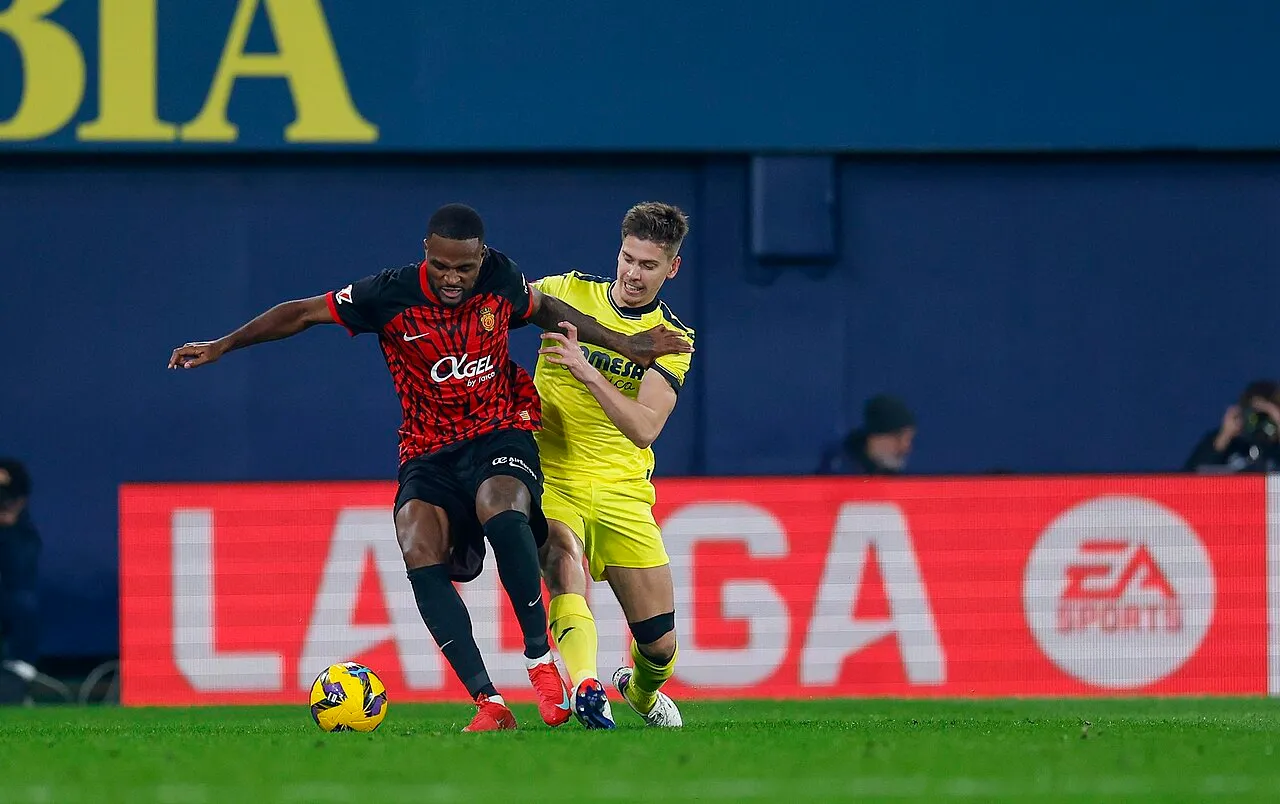
Paris Saint-Germain beat Villarreal 6-0 at the Estadio de la Cerámica on 3 November 2026 in the Champions League league phase. Four Paris goals arrived inside the opening seventeen minutes. Fabián Ruiz finished with two goals, while João Neves, Désiré Doué, Senny Mayulu and David Boly also scored.
The result is striking not only because of the six-goal margin, but because Villarreal faced a major deficit so early. This guide explains the goal sequence, the effect on the league-phase record and the difference between an emphatic scoreline and the detailed evidence needed to describe every tactical cause.
What was the Villarreal versus PSG score?
The completed result was Villarreal 0, Paris Saint-Germain 6. The fixture was played in Spain on Matchday 4 of the 2026/27 UEFA Champions League. Villarreal's own report and the official Spanish league match record confirm the score. It was an away victory for Paris rather than a match at the Parc des Princes.
| Detail | Record |
|---|---|
| Date | 3 November 2026 |
| Home side | Villarreal |
| Away side | Paris Saint-Germain |
| Ground | Estadio de la Cerámica |
| Competition | UEFA Champions League |
| Result | Villarreal 0-6 Paris |
A late European kickoff can appear in Pakistani discussion on the following calendar day. Retain the official fixture date when searching for the report or comparing it with other Matchday 4 games. A local reading date is not a reason to relabel an older match as a different fixture.
Who scored the six Paris goals?
The match record lists João Neves in the ninth minute, Doué in the twelfth, Mayulu in the thirteenth and Ruiz in the seventeenth. Ruiz scored again early in the second half, before Boly added the sixth later in the game. The sequence makes the scale of the opening spell clear without requiring an invented description of the players' private thoughts.
| Minute | Scorer | Score afterward |
|---|---|---|
| 9 | João Neves | 0-1 |
| 12 | Désiré Doué | 0-2 |
| 13 | Senny Mayulu | 0-3 |
| 17 | Fabián Ruiz | 0-4 |
| 50 | Fabián Ruiz | 0-5 |
| 78 | David Boly | 0-6 |
The opening four goals arrived over an eight-minute span between the first and fourth scoring events. That does not mean Paris scored four goals in the first eight minutes of the match. The distinction is simple but important when a dramatic timeline is compressed into a headline or a social-media caption.
Why did the opening spell matter so much?
At 0-1, Villarreal needed one goal to restore parity. At 0-4, they needed four while preventing further damage. The match had moved through several very different states before twenty minutes had been played. Each additional goal increased the cost of mistakes and the difficulty of balancing attack with defensive security.
An early large deficit can tempt a team to force the next action. A hurried pass or an overly ambitious attack may then create another transition to defend. That is a general risk in such situations, not a claim that every Villarreal decision followed the same pattern. The match footage is needed to evaluate the individual sequences.
For Paris, the opening advantage created options. The visitors no longer needed to chase the game, but they still had to manage possession and prevent an immediate response. A comfortable score can encourage concentration or complacency depending on how a side handles it; the score alone cannot tell you which mental state every player experienced.
What does the clean sheet add?
Paris combined six goals with none conceded. The defensive outcome matters because a large attacking total does not automatically ensure a clean sheet. A side can score heavily while still allowing dangerous opportunities, and those opportunities deserve examination even when the opponent fails to convert them.
To understand the defensive performance, look at where Villarreal obtained possession, how quickly Paris recovered their shape and what happened after attacks broke down. Those questions identify specific football actions. Simply saying the winner wanted it more explains very little about how chances were limited.
Equally, do not infer that Villarreal created nothing just because the final goals column is zero. Read the event record or watch the match before making a claim about chance quality. A result is the most important competitive outcome, but it is not a complete inventory of every promising attack.
How the result affected Paris's campaign
Paris's club report described a fourth win from four league-phase matches and retention of top spot at that reporting point. Four wins produce twelve points under the three-points-for-a-win system. That is a strong opening record, but it remains a dated snapshot rather than a guarantee about the final table.
Other clubs' matches can change the standings picture as a round is completed. Always attach a checking date and avoid presenting a partial evening table as the definitive final Matchday 4 ranking. A reader looking several days later should be able to see when the statement was accurate.
The result also left Villarreal with a damaging defeat in its own campaign. To discuss exact qualification prospects, use the full remaining schedule and table rather than treating one six-goal loss as mathematical elimination. A severe setback and a formally settled outcome are different claims.
Goal difference after a 6-0 match
The winner's goal difference improves by six; the loser's worsens by six. Both changes arise from the same six goals. They do not mean that twelve goals were scored. This becomes particularly relevant when comparing two clubs directly, because their relative goal-difference gap changes by twelve.
Consider a hypothetical table. Team A begins on plus two and Team B on plus one, a gap of one. If A beats B 6-0, their new figures become plus eight and minus five, a gap of thirteen. The original gap has increased by twelve even though the match contained six goals.
This example teaches the arithmetic without pretending to reproduce every pre-match total from the competition. To calculate the real standings, begin with verified goals for and against for all relevant matches. Never mix a hypothetical teaching example with an unlabeled live table.
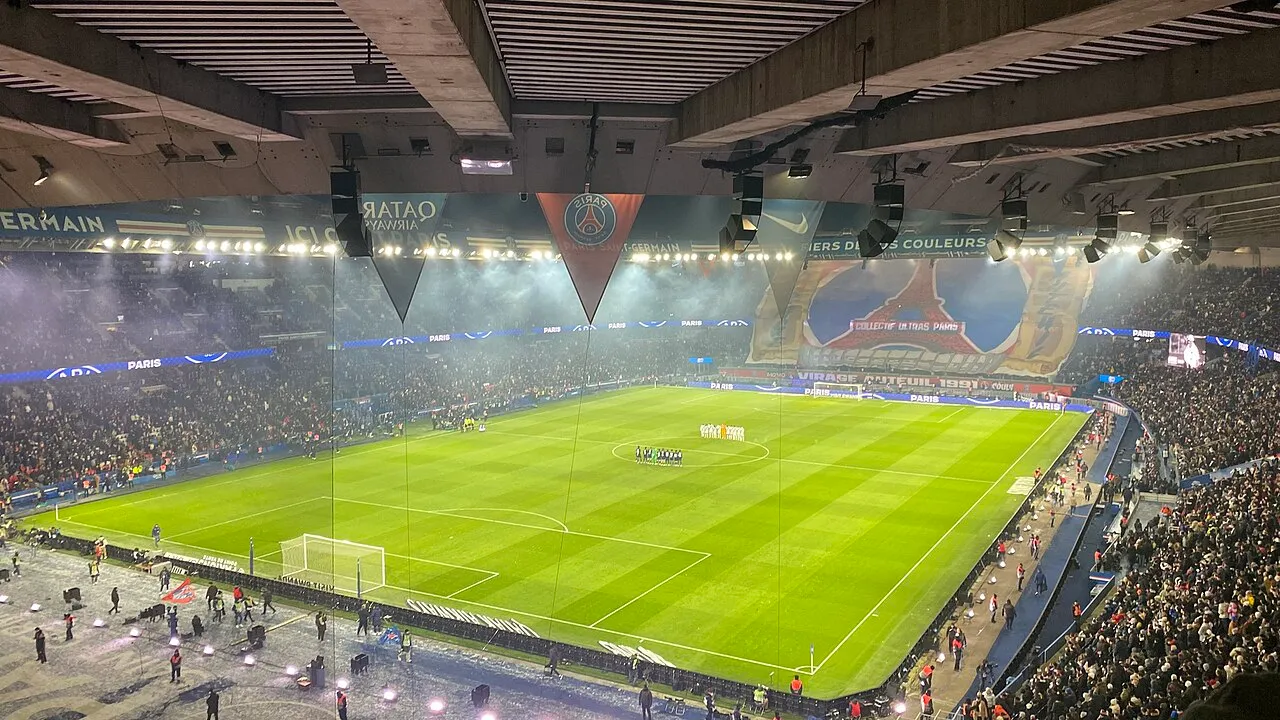
Parc des Princes viewed from the visiting section; Paris club context, while this match was played in Spain.
Why league-phase results are not aggregate scores
This was one league-phase match, so the 0-6 score belongs to a single fixture. It should not be described as Paris winning a two-leg tie by six goals. There was no second-leg aggregate attached to this result in the way readers might expect from a knockout round.
Competition stage determines how a result is interpreted. A league-phase win adds points and changes goals for and against. A knockout result may also interact with another leg or progression rules. Applying the wrong stage can lead to incorrect claims about qualification, away goals or extra time.
When a search result uses only the club names, confirm the season and competition before reading further. Clubs can meet in different tournaments or years. The right names with the wrong date are still the wrong match for the question you are trying to answer.
What can the goal sequence teach a young player?
The first lesson is to respond to the current situation rather than to the emotional weight of the previous mistake. After conceding, a team still has to defend the next attack. Dwelling on the last goal can make organization more difficult just when clear communication is most valuable.
The second lesson concerns risk. A trailing team needs to create chances, but not every forward action offers a sensible trade-off. The availability of support behind the ball matters. An attack that repeatedly leaves defenders isolated may increase the deficit faster than it creates a realistic route back.
The third lesson is about the leading side. A large advantage should not remove the need for sound decisions. Passing accuracy, positioning and defensive responsibilities remain relevant at 4-0 or 5-0. Good habits are easier to assess when you watch the less dramatic minutes as well as the goals.
How to study the opening seventeen minutes
Create a short timeline with each goal, the possession immediately before it and the location where the attack began. Mark only what the footage shows. If the available highlight begins halfway through an attack, note that the earlier build-up is missing rather than inventing a turnover to complete the story.
Next examine the spaces around the ball. Were defenders dealing with a numerical disadvantage, a late runner or a misplaced clearance? These are distinct problems. A useful analysis describes which one appears in a particular sequence instead of applying a fashionable tactical label to every goal.
Finally compare the scoring attacks with one that did not produce a goal. The comparison helps identify which features were repeated and which were unusual. It also protects against outcome bias, where the same decision is praised when the shot goes in and dismissed when it narrowly misses.
Why a heavy defeat should not produce invented statistics
A 0-6 result encourages readers to assume that every statistical category must also be overwhelmingly one-sided. That assumption is unnecessary. If possession, expected goals or shot totals have not been checked, leave them out rather than creating numbers that merely feel consistent with the score.
Expected-goals values also depend on the provider's model. Two services can produce different figures from the same match without either simply changing the final score. When using such a measure, identify the source and explain what it estimates rather than treating it as a second official result.
The strongest summary begins with verified goals and the dated result, then adds only the statistics that have been checked. More numbers do not automatically make an article more informative. Relevant, well-defined numbers do.
What should supporters check next?
Look at the next scheduled fixture, the completed league-phase table and any official disciplinary or availability updates. Those records answer different practical questions. A match report explains what happened; a fixture calendar tells you what is next; a squad announcement establishes who is available when it is issued.
For a team that has won heavily, the next game tests whether the performance level can be sustained under different conditions. For the defeated side, it tests the response. Neither question can be answered conclusively by replaying the same six goals.
Avoid turning post-match emotion into a permanent player ranking. An excellent night is evidence of an excellent night. A difficult one identifies problems worth investigating. Broader conclusions require a wider sample and attention to the level of opposition, role and conditions.
One final check on the scoring timeline
Paris had four different scorers in the opening seventeen minutes, but finished with five different scorers across the match because Ruiz scored twice. Team goals and individual scorers are different counts. Retaining that distinction makes a short summary clearer and avoids mistakenly describing a six-goal result as six separate players scoring.
Common questions
Did Fabián Ruiz score a hat-trick?
No. He scored twice in the recorded 6-0 result. João Neves, Désiré Doué, Senny Mayulu and David Boly supplied the other goals. A brace means two goals; a hat-trick means three. Keep the scorer breakdown separate from the team's overall total.
Was the match played in Paris?
No. Villarreal were the home side at the Estadio de la Cerámica. Paris Saint-Germain won away. The order of the club names in a standard fixture listing often reflects that home-and-away relationship, but the venue field is the clearer confirmation.
Did the result settle the Champions League title?
No. It was a league-phase match in November. It added points and affected the table, but it was not the final and did not award the trophy. A dominant result can strengthen a campaign without resolving the competition.
Where can I compare another European match?
Our Barcelona club guide explains one of Paris's recent opponents, while the Milan derby analysis shows a different scoring pattern. Use comparisons to ask better questions, not to assume that every high-scoring game follows the same script.
Sources
- Villarreal official report
- Paris official match record
- Official Spanish match commentary
- Paris campaign report
Image credits: cover: FotosLaLiga, source, CC BY-SA 4.0. Resized and converted to WebP. inline: Zakarie Faibis, source, CC BY-SA 4.0. Resized and converted to WebP.
Found an error or an outdated detail? Report a correction with the article URL and original source.